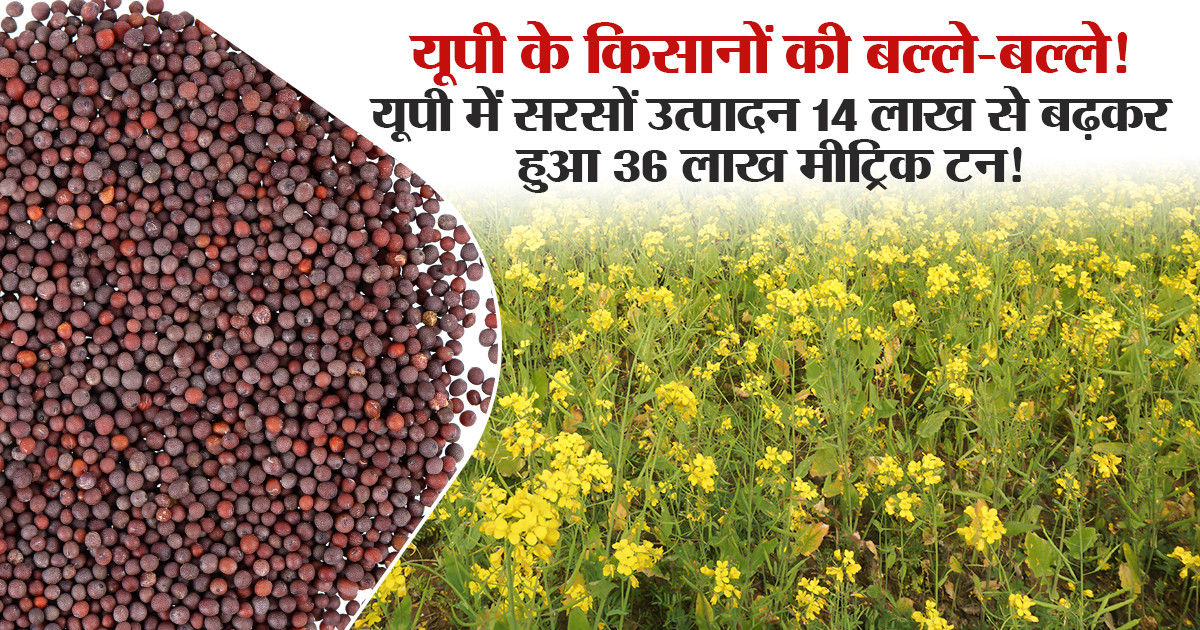
The Uttar Pradesh government is taking rapid strides to boost farmers’ income and make the agriculture sector self-reliant. The state has achieved a remarkable milestone by increasing mustard production to 36 lakh metric tonnes, up from just 14 lakh metric tonnes during previous governments. This sharp rise highlights the combined result of farmers’ hard work and the government’s effective agricultural policies.
To strengthen agricultural investments, promote technological innovation, and encourage millet cultivation under the Shri Anna Rejuvenation Scheme, a Joint Divisional Rabi Production Workshop 2025 was organized in the Varanasi-Mirzapur region. Agriculture Minister Surya Pratap Shahi attended the event as the chief guest.
Minister Shahi emphasized that both the central and state governments are committed to addressing farmers’ challenges. He noted that DAP fertilizer prices have remained stable for the past 11 years, and adequate availability of seeds and fertilizers is being ensured so that farmers can complete sowing on time.
The minister instructed officials to ensure timely distribution of subsidized seeds to farmers. He stated that the government’s target is to complete wheat sowing by November 25 to boost productivity. He also urged that the sowing cycles for Kharif and Zaid crops be started on time, citing that Western Uttar Pradesh has higher productivity due to greater awareness among farmers.
Minister Shahi informed that the state has sufficient food grain storage capacity. However, since the country still depends on imports for pulses and edible oils, he appealed to farmers to promote pulses and oilseed cultivation, suggesting that mustard be grown in vacant spaces within sugarcane fields to maximize land use and income.
The minister highlighted that the state has adequate fertilizer stock, with 12.5 lakh metric tonnes of urea currently available. He directed all CDOs to review fertilizer supply in their respective districts and advised farmers to use NPK fertilizers for pulse and oilseed crops in balanced quantities to maintain soil health. He also encouraged farmers to adopt natural farming practices.
Minister Shahi instructed officials to open paddy procurement centers promptly to ensure that farmers get fair prices for their produce. The government will also procure gram and lentil crops. He added that the ₹1 lakh crore Agriculture Infrastructure Fund, announced by the Prime Minister, has infused new energy into the sector. Promoting millets under the Shri Anna Rejuvenation Scheme remains a top government priority to give Indian grains global recognition.
Subsidy Considered for DSR Paddy Sowing: Agriculture Production Commissioner Deepak Kumar stated that several schemes are being implemented to improve productivity. The department is considering providing subsidies for paddy sowing using the DSR (Direct Seeding of Rice) method. He also mentioned upcoming meetings with banks to resolve investment-related issues and enhance financial access for farmers.
UP Agris Projects to Boost Crop Productivity:
Commissioner Kumar further said that UP Agris Projects are being implemented to enhance crop yields across the state. Meanwhile, Cooperative Secretary Saurabh Babu announced that the number of cooperative societies in UP has increased from 6,900 to 8,100. Farmers purchasing IFFCO fertilizers through these societies also receive insurance benefits of ₹1 lakh in case of accidents.
Subsidy Support for Food Processing and Solar Fencing:
Additional Secretary of Horticulture B.L. Meena shared that the state is offering subsidies for food processing units, millet processing units, and solar fencing projects to promote agri-based entrepreneurship.
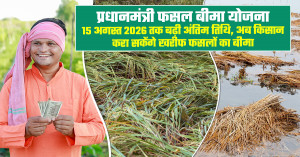
4,300 Farmers in Varanasi Receive Crop Insurance Claims: Agriculture Secretary Indra Vikram Singh addressed farmers’ queries and shared that under the Pradhan Mantri Fasal Bima Yojana, 4,300 farmers in Varanasi district have received a total of ₹99 lakh in insurance claims, ensuring financial security and trust among farming communities.
Read More-