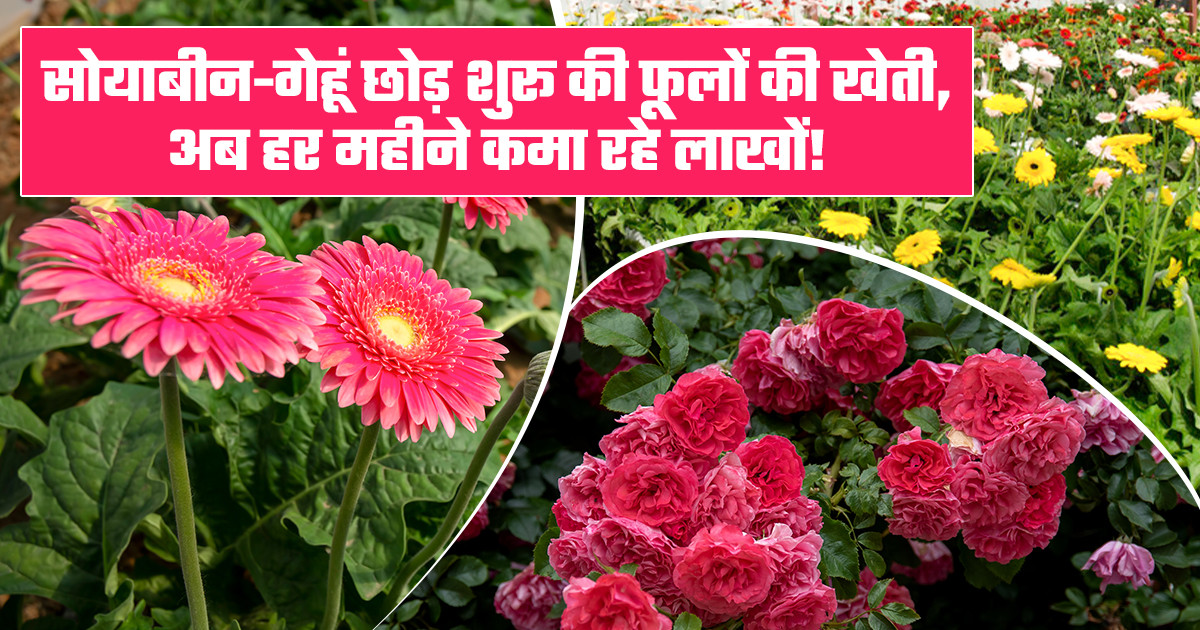
Fanda region of Bhopal district, in the village of Barkheda Bondar, Mr. Ramsingh Kushwah once relied solely on traditional crops like paddy, wheat, and soybean, earning only a modest income. Today, through modern horticulture and innovative practices, he earns lakhs of rupees every month by cultivating flowers and fruits. His journey is not just a story of financial success but also a compelling example of farmer empowerment and innovation.
For generations, Mr. Kushwah’s family practiced conventional farming. Rising costs and limited profits made it increasingly challenging to sustain their livelihood. During this period, he learned about the Integrated Horticulture Development Scheme, launched by the Department of Horticulture. Taking advantage of this national development initiative, he built a polyhouse spanning 1,000 square feet to grow flowers such as roses and gerberas.
In 2023–24, he expanded his polyhouse cultivation to one acre, planting nearly 30,000 rose, gerbera, and marigold plants. Currently, Mr. Kushwah earns between ₹4,000 and ₹6,000 daily by selling 4,000 cut flowers.
To boost production and reduce costs, he recently installed a sensor-based automation system in his polyhouse. The total investment for this system was ₹4 lakh, with a government subsidy of ₹2 lakh. This advanced setup ensures precise 24x7 distribution of water, fertilizers, and pesticides, saving both time and resources.
Mr. Kushwah has now become Bhopal’s first farmer to transition entirely from traditional farming to fully automated horticulture. His roses and gerberas are supplied to markets in Lucknow, Delhi, and Jaipur, reflecting the growing reach of his enterprise.
By planting 30,000 hybrid gerbera plants on one acre and adopting drip and sprinkler irrigation systems, Mr. Kushwah benefited from a 50% subsidy. Leveraging modern technology and scientific farming practices, he now produces 1,500 to 2,000 flowers daily, earning ₹4,000–₹5,000 each day. Modern flower and fruit cultivation has not only strengthened his financial standing but also serves as an inspiring model for innovation and high-income opportunities in rural areas.
FAQs:
1. What crops does Mr. Kushwah grow in his polyhouse?
He grows roses, gerberas, and marigolds.
2. How did Khetivyapar help in his success?
Khetivyapar provided guidance on modern horticulture techniques, technology adoption, and market connections.
3. What is the role of automation in his polyhouse?
Automation ensures 24x7 precise distribution of water, fertilizers, and pesticides, reducing costs and increasing efficiency.
4. How much income does he earn daily?
He earns between ₹4,000 and ₹6,000 daily from flower sales.
5. Which markets does he supply his flowers to?
His flowers are sold in major cities like Lucknow, Delhi, and Jaipur.