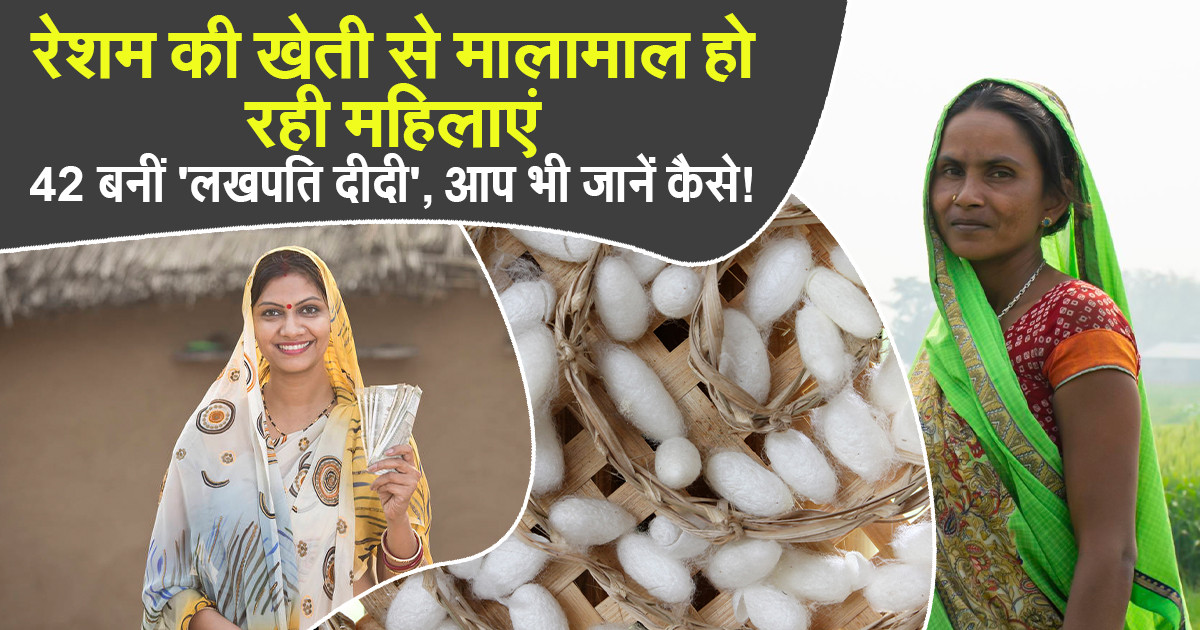
Minister of State (Independent Charge) for Cottage and Village Industries, Shri Dilip Jaiswal, said that the state is actively promoting silk production to create new employment opportunities in rural areas. Over the past two years, the Directorate of Sericulture has undertaken fresh mulberry plantations across 231 acres in the private sector and 200 acres at government sericulture centers. Through these initiatives, 3,600 mulberry cocoon growers and 850 tasar cocoon farmers have been linked to self-employment activities.
Shri Jaiswal informed that during the last two years, the state recorded the production of 2.64 lakh kilograms of mulberry cocoons and 31.51 lakh tasar cocoons. During this period, nearly 5,000 farmers were trained in modern cocoon production techniques, significantly enhancing their productivity. He added that 42 women have so far been identified as ‘Lakhpati Didis’ through silk production, marking a major milestone in women’s empowerment.
The Minister stated that over the next three years, the state aims to increase mulberry cocoon production from the current 1.50 lakh kilograms to 4 lakh kilograms. Similarly, tasar cocoon production is targeted to rise from 40 lakh to 70 lakh units. In addition, mulberry plantation will be expanded by another 3,500 acres.
He also announced that a Silk Interpretation Centre will be established at Pachmarhi in Narmadapuram district. To strengthen marketing, silk products will be sold through e-commerce platforms. New natural silk showrooms will also be opened in Gwalior, Jabalpur, and Indore.
Focus on ‘Sericulture Prosperity’ Action Plan: The ‘Sericulture Prosperity Action Plan’, Shri Jaiswal said that 6,200 beneficiaries will receive skill upgradation training over the next three years. Nurseries for mulberry plantations will be developed across 150 acres, along with fresh mulberry plantations over 3,500 acres. Additionally, 16 new seed units will be established to further strengthen the silk production ecosystem in the state.
1. What is the significance of silk production in rural employment?
Silk production provides sustainable self-employment opportunities for rural communities, especially women, boosting local economies.
2. How can farmers get training for modern cocoon production techniques?
State sericulture departments conduct training programs to educate farmers on improved methods and increase yield.
3. What types of cocoons are produced in Madhya Pradesh?
Madhya Pradesh mainly produces mulberry and tasar cocoons.
4. How can silk products be marketed effectively?
Through e-commerce platforms and new natural silk showrooms, producers can reach wider markets.
5. How does Khetivyapar support silk farmers?
Khetivyapar provides resources, expert advice, and helps in linking farmers with buyers and government schemes.