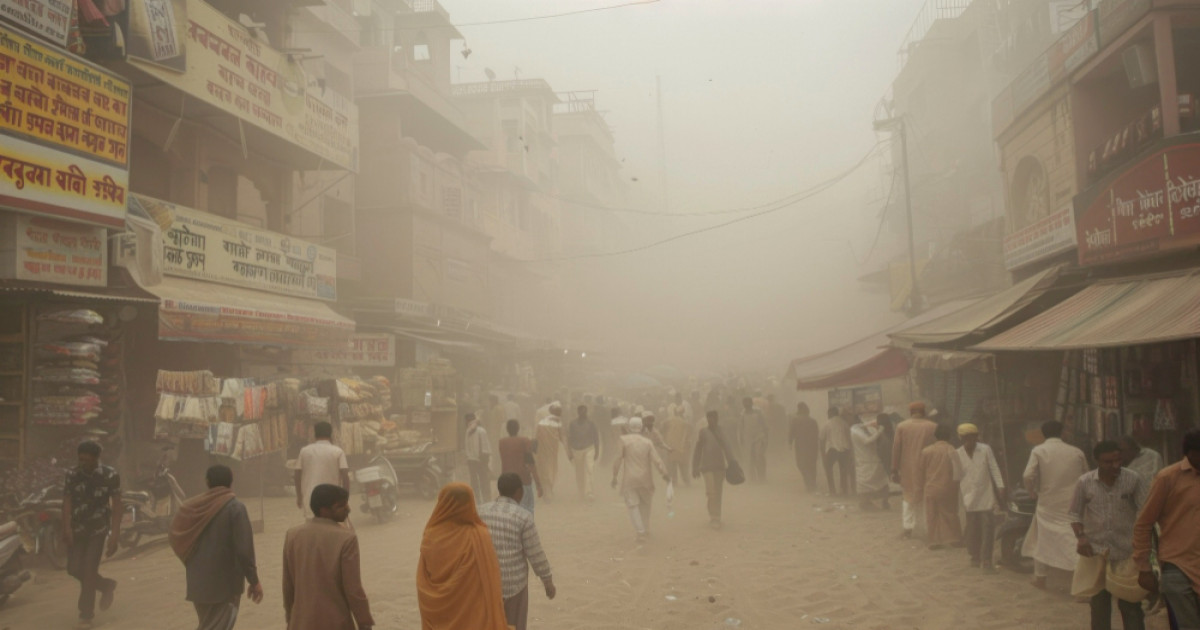
Air quality across Delhi–NCR has deteriorated significantly with the arrival of winter. A combination of falling temperatures, slow wind movement and the accumulation of dust and smoke has pushed pollution levels to alarming heights. On Wednesday, Delhi, Noida, Ghaziabad, Gurugram and several cities in western Uttar Pradesh recorded air quality in the ‘very poor’ category, indicating a worrying trend for the weeks ahead.
Fresh data from the Central Pollution Control Board (CPCB) reveals that most NCR cities are facing severe pollution stress. Noida recorded the highest AQI in the region at 350, followed by Ghaziabad at 329 and Delhi at 327. Greater Noida and Muzaffarnagar both stood at 322, while Meerut registered 306. Experts note that during early winter, pollutants become trapped near the ground due to low temperatures and reduced wind speed, causing air quality to degrade rapidly.
The pollution problem extended beyond NCR, with several cities across India witnessing hazardous air conditions. Hapur recorded the highest AQI in the country at 366, placing it in the severe category. Other heavily polluted cities included Manesar (331), Rohtak (325), Visakhapatnam (310), Baghpat (309), Bhubaneswar (308) and Cuttack (308). These figures highlight a nationwide air quality concern rather than a region-specific issue.
Air quality in major state capitals varied substantially. Mumbai recorded a moderate AQI of 198, while Ahmedabad (173), Jaipur (159), Lucknow (176), Patna (147), Hyderabad (110) and Chennai (103) also fell in the moderate range. Bengaluru remained comparatively cleaner with a satisfactory AQI of 96. On the other hand, Bhopal (243) and Kolkata (219) reported poor air quality, showing a sharp contrast in pollution trends across different zones of the country.
Why Air Quality Declines During the Winter Season: Meteorologists point out that the November–December period sees a natural spike in pollution due to sharp drops in temperature, heavy air and minimal wind movement. As the atmosphere becomes heavier, particulate matter such as dust and smoke remains suspended close to the surface instead of dispersing. This recurring winter pattern is the main reason behind the annual surge in pollution levels across North India.
Read More- Red Alert! IMD warns of heavy rain, weather worsens in these 4 states