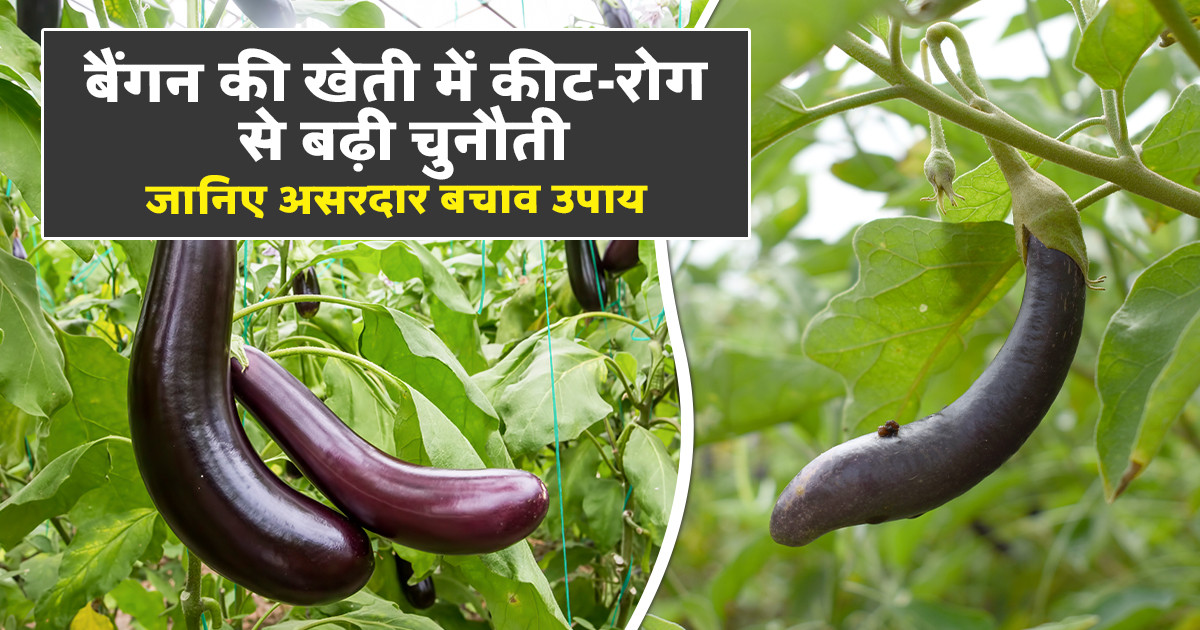
Brinjal cultivation is widely practiced across most parts of the country, as it remains a popular vegetable with year-round demand. However, the crop is highly vulnerable to a range of pests and diseases. In many cases, infections spread rapidly and cause severe damage, sometimes affecting the entire field. Timely identification and proper management are therefore crucial for farmers.
Whether brinjal is grown in open fields, kitchen gardens or pots, understanding the major diseases and insect pests and taking preventive steps is essential for ensuring a healthy yield. Here is a detailed look at the most common problems and how to control them effectively.
Identification: Plants affected by damping-off begin to wilt. The lower portion of the stem turns brown or black and starts rotting, causing the plant to collapse. Roots appear brown, decayed and weak. This disease is mainly caused by soil-borne fungi such as Pythium and Rhizoctonia.
Preventive Measures:
Identification: Infected plants develop unusually small leaves, and branch growth becomes stunted. The plant takes on a bushy appearance and fails to produce flowers and fruits.
Preventive Measures:
3. Fruit and Shoot Borer:
Identification: Infestation by this pest causes shoots to wilt and hang down before drying up. When fruits develop, larvae bore into them and feed internally, leading to rotting and reduced market value.
Preventive Measures:
For successful brinjal cultivation, regular field monitoring, balanced irrigation and timely application of control measures are essential. By identifying problems early and adopting appropriate management practices, farmers can protect their crop from major losses and achieve better productivity.
(FAQs)
1. What is the most common disease in brinjal cultivation?
Damping-off and little leaf disease are among the most common problems in brinjal cultivation.
2. How can farmers prevent damping-off in brinjal cultivation?
Seed treatment, proper drainage, crop rotation and biological control methods help prevent damping-off.
3. What causes little leaf disease in brinjal cultivation?
Little leaf disease is caused by phytoplasma and spreads through leafhopper insects.
4. How do you control fruit and shoot borer in brinjal cultivation?
Remove affected parts and apply recommended insecticides at the early stage of infestation.
5. Why is regular monitoring important in brinjal cultivation?
Regular monitoring helps detect pests and diseases early, ensuring effective brinjal disease management and better yield.