Most farmers across the country have completed paddy transplantation, while in some regions, farmers are still engaged in sowing late varieties. However, many farmers are unaware of the correct timing and quantity of irrigation after transplantation, which can harm the crop. Let’s understand the right irrigation practices and pest management methods for paddy, as advised by agricultural experts.
Before paddy transplantation, fields should be filled with water and ploughed using a rotavator. At the time of transplanting, there should be about 5 cm of standing water in the field. This water level should be maintained for the next 20 days. If not, weeds start growing, and drying soil can cause the plants to turn yellow and stunt their growth.
Around 25 days after transplanting, tillering (growth of new shoots) begins. At this stage, excessive irrigation is not required, but adequate moisture must be maintained in the soil. In the absence of rainfall, light irrigation should be provided to prevent cracking of the soil and disruption of plant growth.
When panicles (bali) start emerging, the field must have 3–4 cm of water.
This is the stage when grain formation begins and plants require more water.
Timely irrigation during this period enhances grain quality and overall yield.
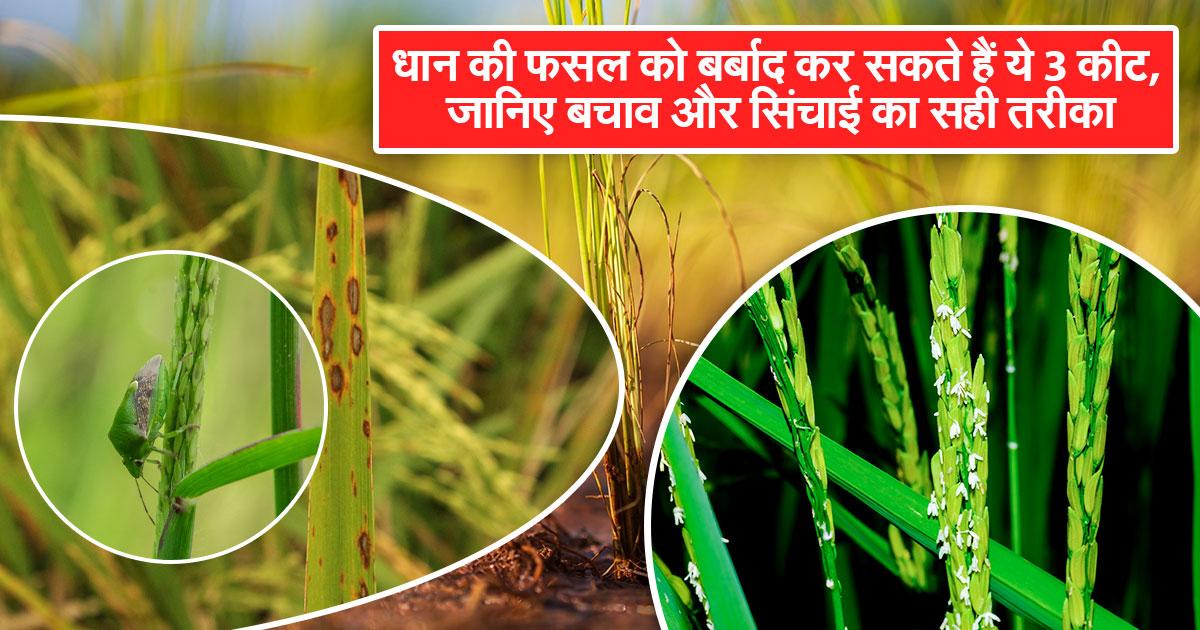
Major Pests Damaging Paddy Crops and How to Control Them
1. Leaf Folder The larva folds the leaf by tying its edges with silk-like threads and feeds on the green chlorophyll inside. Affected leaves turn white and netted, eventually drying out.
Control: If infestation is visible, drag a long rope across the crop from both ends of the field. This disturbs the larvae, causing them to fall into the water and die.
2. Stem Borer This pest bores into the stem and eats the core, causing “dead heart” or “white ear” symptoms.
Control: Use Carbofuran 3G at 20 kg/ha or Cartap Hydrochloride 4G at 18 kg/ha.
3. Plant Hopper Nymphs of plant hoppers, which are brown or white, can be seen on the leaves. Eggs appear as crescent shapes on the midrib. Leaves begin turning yellow or orange.
Control: Avoid excessive nitrogen fertilizers, remove weeds, and limit use of chemical insecticides. Provide sufficient irrigation once a day so that only the plant tips remain visible—this helps keep pests off the plants.
Paddy Acreage Up, But So Is the Risk of Pest Attacks: According to a recent report, the total area under paddy cultivation in Kharif 2025 has reached 24.51 million hectares, which is 13.4% higher than last year. While this is a positive development, it also increases the need for effective pest management to safeguard the growing crop.