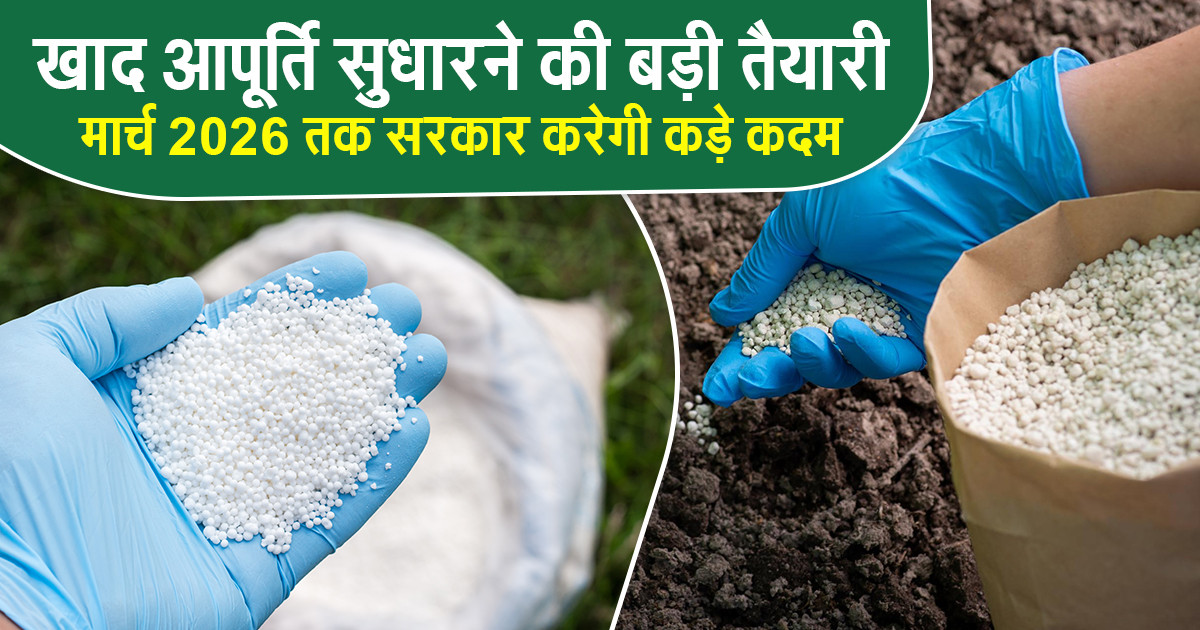
To tackle fertilizer shortages and curb the misuse of subsidized inputs, the Government of India is preparing to roll out significant reforms in the coming months. Union Chemicals and Fertilizers Minister JP Nadda informed the Rajya Sabha that a pilot project will soon be launched to link the quantity of subsidized fertilizers provided to farmers with the size of their cultivated land. The primary aim is to prevent diversion, illegal sales, and hoarding of fertilizers.
The proposal has been under discussion for several years, but concerns over possible backlash from farmers reportedly delayed its implementation.
Speaking at the annual conference of the Fertilizer Association of India (FAI), Fertilizer Secretary Rajat Mishra stated that several crucial reforms—benefiting both the industry and farmers—will be implemented over the next four months. He also noted that the government is seeking inputs from the industry to curb the non-agricultural misuse of subsidized urea.
Highlighting the new approach in Parliament, Minister Nadda explained that the pilot project will assess how much land a farmer owns and how much fertilizer he actually needs. He said:
“If a farmer requires only 10 bags of fertilizer based on his land size but purchases 50 bags, it is clear that the excess is being diverted elsewhere. Such practices must be stopped with strict monitoring.”
Under normal circumstances, farmers are allowed to purchase any quantity of subsidized fertilizer. However, due to shortages during the last Kharif season, the government had temporarily imposed purchase limits.
Nadda added that despite adequate supply to states, artificial scarcity is often created. Complaints of diversion to non-agricultural sectors and large-scale hoarding have also increased.
5,371 Fertilizer Licenses Cancelled, 649 FIRs Filed:
In a major crackdown against black marketing, hoarding, and distribution of substandard fertilizers, the government has canceled the licenses of 5,371 fertilizer companies in the past seven months. Additionally, 649 FIRs have been registered during this period.
During the FAI event, Secretary Mishra announced that the government is working on a proposal to revise the fixed cost payments for gas-based urea manufacturers by the end of the year. These costs have remained unchanged for nearly 25 years.
Fixed costs include:
These components form the basis for calculating subsidy and determining retail prices. The industry has long demanded an upward revision of these costs.
Currently, companies receive a reimbursement of ₹2,800–₹3,000 per tonne, along with an additional ₹350 per tonne increase implemented in March 2020.
Read More- How PKVY and MOVCDNER Support Organic Farmers Across India