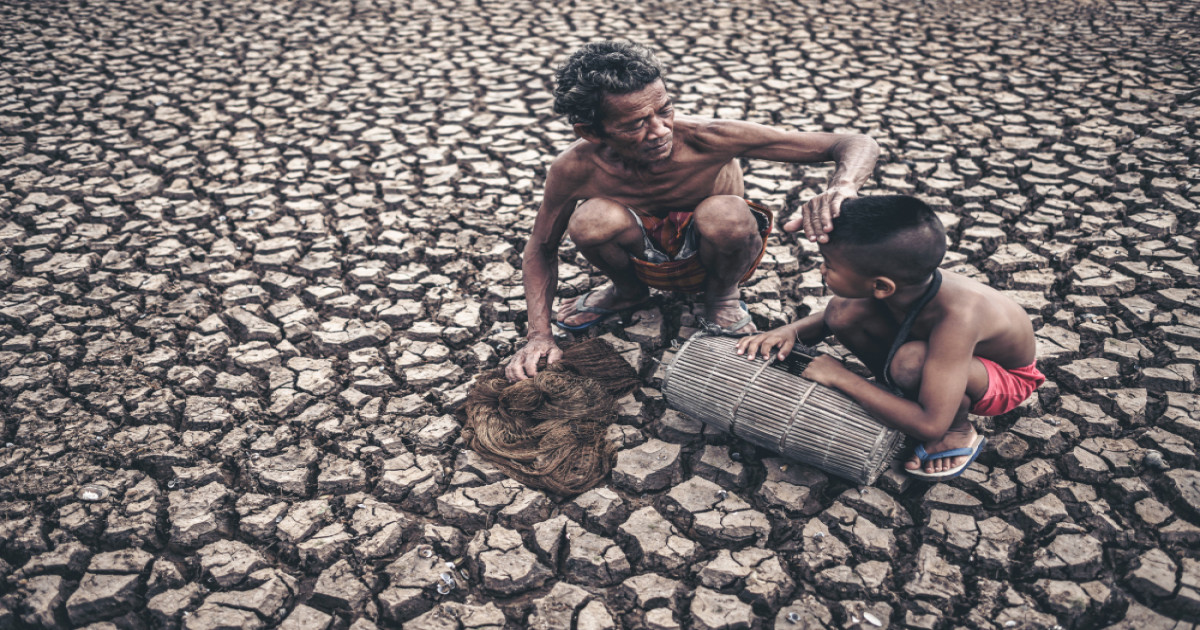
Weather experts have indicated that El Niño conditions may develop again during the second half of 2026, potentially disrupting weather patterns across India and much of South Asia. El Niño occurs when sea surface temperatures in the Pacific Ocean rise above normal levels, weakening the monsoon system and increasing the risk of below-average rainfall, drought-like conditions, and intense heatwaves. Meteorologists believe the situation could become serious if the phenomenon strengthens between June and September, a period that is crucial for India’s agriculture sector.
India has already experienced the damaging effects of El Niño several times in the past, including in 2014, 2018, and 2023-24. During 2024, several parts of the country recorded unusually high temperatures, which affected the production of paddy and pulses. Lower crop yields pushed food prices higher and increased pressure on household budgets. Agricultural experts now fear that another strong El Niño phase could once again disturb traditional farming systems and reduce crop productivity in major agricultural states.
Experts say that conventional long-duration paddy varieties may become increasingly difficult to sustain under changing weather conditions. These crops require large quantities of water and remain in the field for a longer period, making them more vulnerable during weak monsoon years. According to agricultural estimates, producing one kilogram of rice can consume thousands of liters of water. Short-duration paddy varieties generally require around 3,000 liters of water, while medium-duration crops may consume between 3,500 and 4,000 liters. Traditional long-duration varieties can use as much as 5,000 liters for the same output. Because of this, scientists are encouraging farmers to shift toward modern, short-duration rice varieties that require less water and mature faster.
Paddy crops typically take 120 to 150 days to mature. The longer the crop stays in the field, the greater the water demand becomes. This is why short-duration varieties are now being promoted as a safer and more sustainable option. For example, traditional varieties such as Basmati 370 require significantly more water compared to improved varieties like Pusa Basmati 1509, which can mature faster with lower irrigation needs. These newer varieties also reduce production risks during drought conditions.
A major share of India’s rice production comes from Uttar Pradesh and Bihar, where agriculture remains highly dependent on seasonal rainfall. In eastern and western Uttar Pradesh, paddy cultivation requires millions of liters of water per acre during the growing season.
Bihar, many farmers still rely heavily on rainfall due to limited access to advanced irrigation systems. Although the region’s loamy and clay-rich soils can retain moisture for longer periods, weak monsoon activity could still create major challenges for farmers.
Groundwater Levels Falling Rapidly in Punjab and Haryana:
Punjab and Haryana are known for highly mechanized farming systems, but intensive paddy cultivation has led to a sharp decline in groundwater levels. Sandy soil conditions and extreme summer heat cause water to evaporate quickly, increasing irrigation demand. Several regions in these states are already facing severe groundwater depletion and have been categorized as “dark zones.” To address the problem, authorities and agricultural experts are promoting low-water and early-maturing paddy varieties.
Water-Saving Farming Techniques Becoming More Important:
To reduce the impact of water scarcity and possible El Niño conditions, experts are recommending modern cultivation practices. One of the most effective methods is Direct Seeded Rice (DSR), where seeds are sown directly into the field instead of traditional transplantation. This technique can help save nearly 18% to 28% of water. Another widely recommended practice is Alternate Wetting and Drying (AWD), which allows fields to dry periodically instead of keeping them continuously flooded. This approach can reduce water use by nearly 37%.
Timely Decisions Will Be Critical for Farmers:
Experts believe that weather uncertainty may increase in the coming months. Farmers are therefore being advised to adopt scientific farming methods, diversify crops, and use water-efficient technologies instead of relying entirely on traditional practices.
FAQs:
Q1. What is El Niño in simple terms?
El Niño is a climate pattern where Pacific Ocean temperatures rise, affecting rainfall and weakening the monsoon.
Q2. How does El Niño affect paddy farming?
It reduces rainfall, increases drought risk, and lowers paddy crop productivity.
Q3. Which paddy varieties are better during weak monsoon years?
Short-duration and drought-resistant rice varieties are more suitable.
Q4. What is Direct Seeded Rice (DSR)?
DSR is a method where seeds are directly sown in the field, saving water and labor.
Q5. How can farmers save water in paddy cultivation?
Using DSR, AWD techniques, and improved irrigation systems can significantly reduce water usage.