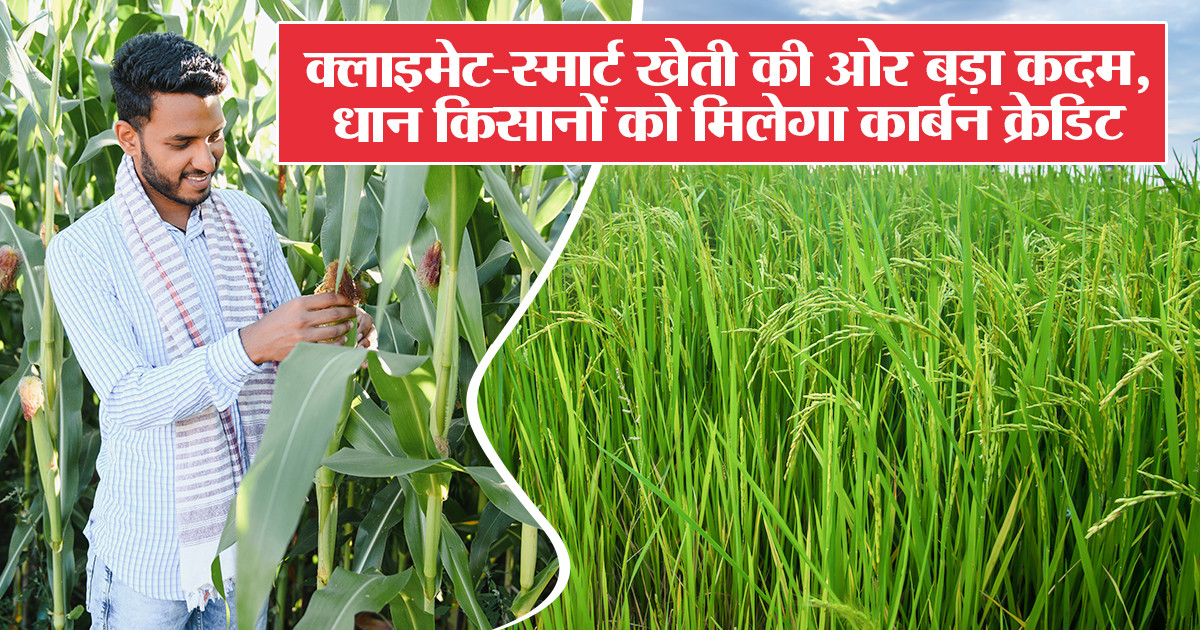
In a landmark initiative to promote environmentally sustainable agriculture, rice farmers in Punjab and Haryana will begin receiving carbon credits by the end of FY 2025–26. This marks the first time that small and marginal farmers are being directly incentivised for adopting climate-friendly farming practices.
Under the first phase, around 30,000 acres across Punjab and Haryana have been brought under the programme. By adopting eco-friendly practices such as Direct Seeded Rice (DSR) and low-tillage farming, more than 50,000 carbon credits are expected to be generated. There are plans to rapidly expand the initiative to other crops and states in the coming years.
The carbon credit-based farming programme was launched in 2022 by Grow Indigo, a joint venture between leading Indian seed company Mahyco and US-based Indigo.
Once the carbon credits are issued, Grow Indigo will aggregate and sell them to buyers in international markets. Of the total revenue generated, 75% will be directly passed on to farmers, ensuring a sustainable boost to their incomes.
The programme has successfully completed its audit under the Verra carbon standard protocol, a globally recognised voluntary framework for reducing greenhouse gas emissions. Grow Indigo Executive Director Usha Barwale Zehr said that the approval, received after a rigorous audit and review process, is a significant step towards improving smallholder farmer livelihoods in a sustainable manner. She added that the initiative will also help farmers address climate-related challenges.
Higher Incomes Along with Improved Soil Health:
According to Zehr, these internationally recognised carbon credits will not only enhance farmer incomes but also contribute to better soil health. The company aims to generate one million carbon credits annually by 2027.
One Carbon Credit Per Acre Annually: Grow Indigo’s Carbon Division COO Umang Agarwal said that farmers enrolled in the programme can earn one carbon credit per acre each year. Currently, the value of a single carbon credit ranges between $10 and $40, equivalent to a reduction of one tonne of CO₂ emissions.
Encouraging Shift from Rice to Maize: At present, Grow Indigo is working with over 100,000 farmers across nearly one million acres in Punjab and Haryana on sustainable farming practices. Going forward, farmers will be encouraged to gradually shift from water-intensive rice cultivation to less water-consuming crops such as maize.
Verra Methodology Considered Among the Most Rigorous: Scientists note that Verra’s carbon credit methodology is regarded as one of the most stringent and reliable standards globally for smallholder farmers in land management, significantly enhancing the credibility and impact of this initiative.