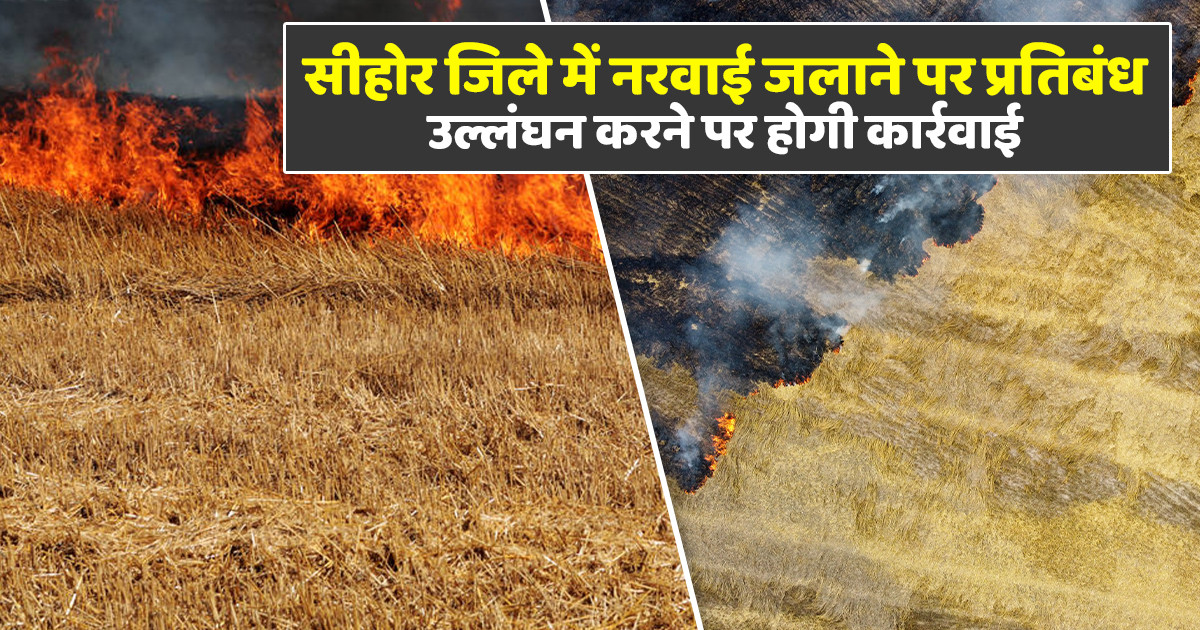
The district administration has imposed a ban on burning crop residue (stubble) in agricultural fields. According to an order issued by Sehore District Collector and District Magistrate Balaguru K., some farmers set fire to crop residue after harvest to prepare their fields for the next crop. However, this practice releases harmful gases into the atmosphere and has a negative impact on the environment.
Burning stubble also reduces soil fertility and destroys beneficial microorganisms present in the soil. In addition, it can damage public property and natural vegetation, while the risk of accidental fires and other incidents also increases. The administration has informed that alternative farm equipment such as rotavators and other residue management tools are available in the district, which can be used to clear fields without burning the residue.
As per the order, financial penalties will be imposed to compensate for environmental damage caused by stubble burning. Farmers with less than 2 acres of land will face a fine of ₹2,500 per incident, those owning 2 to 5 acres will be fined ₹5,000 per incident, and farmers with more than 5 acres of land will have to pay ₹15,000 per incident as environmental compensation.
Collector Balaguru K. has appealed to farmers to avoid burning crop residue in the interest of environmental protection and public welfare and instead adopt suitable alternatives for residue management.
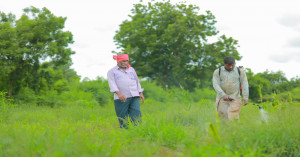
Following the collector’s directions, the Agriculture Department has launched an awareness campaign across rural areas of the district to inform farmers about proper stubble management. Officials and field staff are visiting villages and using loudspeaker announcements to advise farmers against burning crop residue.
The department is also educating farmers about scientific and modern methods of crop residue management. These practices help maintain soil fertility, reduce environmental pollution, and improve agricultural productivity. Farmers have been urged to adopt these alternative methods and contribute to protecting the environment.
FAQs:
1. What is the stubble burning ban?
The stubble burning ban is a government order that prohibits farmers from burning crop residue in agricultural fields to prevent pollution and environmental damage.
2. What is the penalty for stubble burning?
Farmers may face fines ranging from ₹2,500 to ₹15,000 per incident, depending on the size of their landholding.
3. Why is crop residue burning harmful?
Crop residue burning releases harmful gases, increases air pollution, reduces soil fertility, and destroys beneficial microorganisms in the soil.
4. What are the alternatives to stubble burning?
Farmers can use machines like rotavators and residue management equipment to clear fields without burning crop residue.
5. What steps are being taken to stop stubble burning?
The Agriculture Department has launched an awareness campaign in villages to educate farmers about modern crop residue management techniques and the environmental risks of stubble burning.