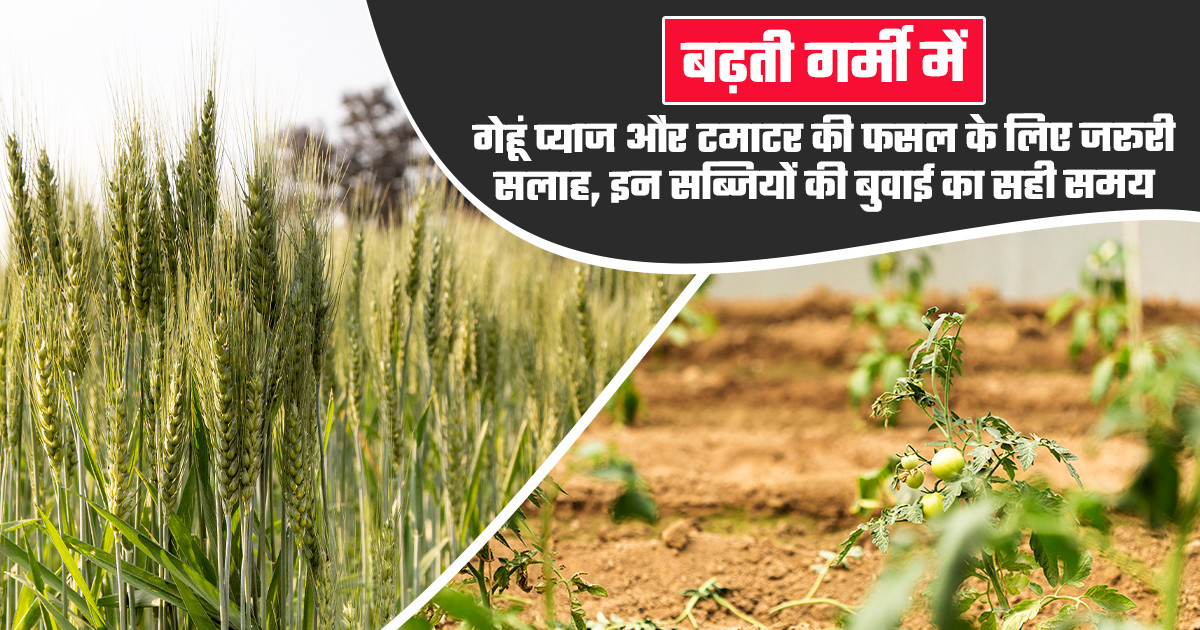
Temperatures have started rising rapidly in many parts of the country since the end of February. In view of the increasing heat, agricultural scientists have advised farmers to provide light irrigation to standing crops and vegetables according to their requirements. While irrigating, farmers should ensure that wind conditions are calm, as watering during strong winds may cause plants to bend or lodge. With the likelihood of further temperature increases in the coming days, experts have urged farmers to remain alert and adopt proper crop management practices.
The month of March is considered suitable for preparing the sowing of moong (green gram) and urad (black gram). Agricultural experts recommend that farmers obtain improved and certified seeds from reliable sources. For moong cultivation, varieties such as Pusa Vishal, Pusa Baisakhi, PDM-11 and SML-32 are considered suitable. For urad, Pant Urd-19, Pant Urd-30, Pant Urd-35 and PDU-1 varieties are recommended. Farmers are also advised to treat the seeds with crop-specific Rhizobium and phosphorus-solubilizing bacteria before sowing to enhance productivity.
For early sowing of okra, varieties such as A-4, Parbhani Kranti and Arka Anamika are considered suitable. Farmers should ensure adequate soil moisture before sowing and maintain a seed rate of about 10 to 15 kilograms per acre. The current temperature conditions are also favorable for the direct sowing of French beans and summer radish. In addition, seedlings of tomato, chilli and cucurbit vegetables can be transplanted during this period.
Agricultural scientists have also advised farmers to closely monitor aphid infestations in vegetable and mustard crops. For effective control, spraying Imidacloprid at a rate of 0.25 to 0.5 ml per litre of water after harvesting is recommended. Farmers should avoid harvesting for at least one week after spraying. In onion crops, if thrips infestation is observed, spraying Confidor at a rate of 0.5 ml mixed in 3 litres of water along with a suitable sticker is suggested.
To protect tomato crops from fruit borer pests, farmers are advised to install bird perches in the field and bury infected fruits in the soil to prevent further spread. The use of 4 to 5 pheromone traps per acre is also recommended for better pest monitoring and control.
Brinjal crops, farmers should remove and destroy infected shoots and fruits affected by shoot and fruit borer pests. In case of severe infestation, spraying Spinosad 48 EC at a rate of 1 ml per 4 litres of water is considered an effective control measure.
FAQs:
1. Why is light irrigation recommended during rising temperatures?
Light irrigation helps maintain soil moisture and prevents crop stress caused by high temperatures.
2. Which varieties are recommended for moong cultivation?
Pusa Vishal, Pusa Baisakhi, PDM-11, and SML-32 are recommended varieties for moong farming.
3. What is the ideal seed rate for okra cultivation?
Farmers should use around 10–15 kg of okra seeds per acre for proper crop growth.
4. How can aphid infestation be controlled in vegetable crops?
Spraying Imidacloprid at 0.25–0.5 ml per litre of water after harvesting helps control aphids.
5. What is an effective method to control fruit borer in tomato?
Installing bird perches, using pheromone traps, and removing infected fruits are effective methods to manage fruit borer pests.