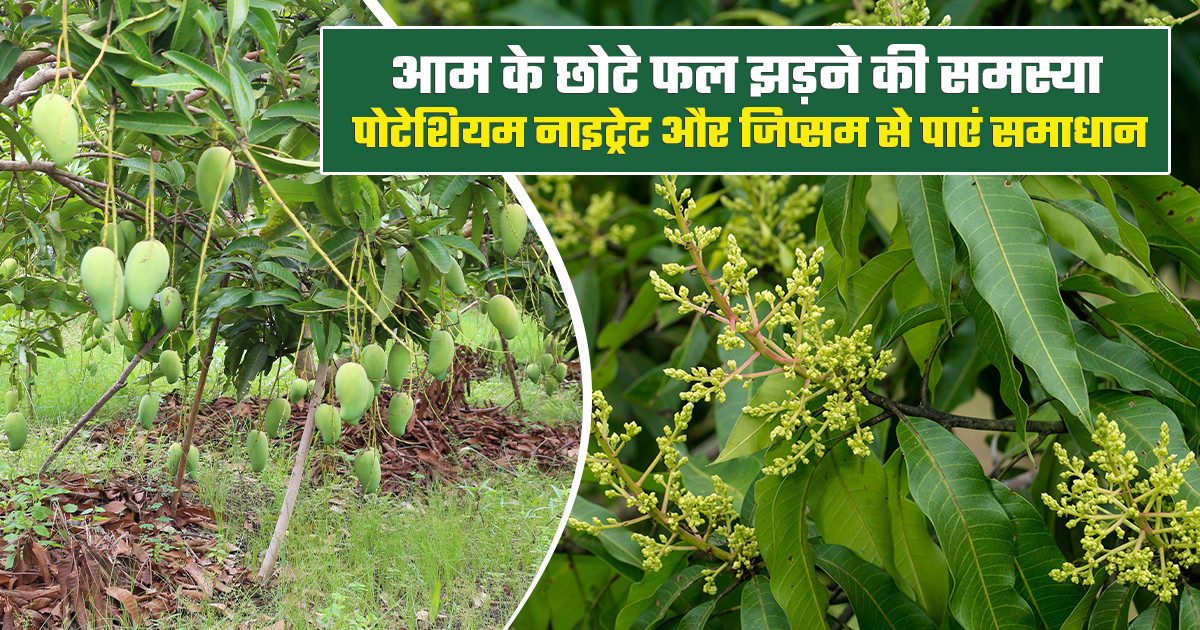
Mango cultivation is considered a profitable farming activity for many growers. However, after the flowering stage, the dropping of small fruits often becomes a major concern for orchard owners. If the trees do not receive proper nutrition and care during this critical period, a significant number of fruits may fall prematurely, reducing both production and farmers’ income. Experts suggest that the timely application of essential nutrients can help control this problem to a large extent. Nutrients such as potassium nitrate and gypsum are known to improve tree growth and reduce fruit drop in mango orchards.
Mango trees usually begin flowering in February and March. After the flowering stage, tiny fruits—often about the size of peas—start developing on the trees. At this stage, the crop becomes vulnerable to pest attacks, diseases, and nutrient deficiencies. If proper care is not taken in time, many of these small fruits fall off the tree, leaving fewer fruits to mature. This can significantly reduce overall yield and affect farmers’ returns.
Agriculture experts emphasize that providing balanced nutrition to mango trees during this stage is extremely important. Various fertilizers and micronutrients available in the market help strengthen plant growth and support healthy fruit development. Adequate nutrition not only reduces fruit drop but also improves the size and quality of mangoes. Timely nutrient management ultimately leads to better productivity.
Potassium nitrate is widely regarded as a beneficial nutrient for mango trees. It contains both nitrogen and potassium, which support plant growth and improve overall plant health. Spraying potassium nitrate when small fruits begin to form helps reduce fruit drop and encourages proper fruit development, resulting in healthier, larger mangoes.
Gypsum also plays an important role in maintaining the health of mango orchards. Its application improves soil structure and helps manage certain soil-related problems. It can also help control some plant diseases. By enhancing soil fertility, gypsum ensures that mango trees receive adequate nutrients, which supports better fruit development and stronger plants.
How Farmers Can Use It:
Farmers can prepare a simple potassium nitrate solution for spraying. Around 2 grams of potassium nitrate can be dissolved in one litre of water and sprayed on mango trees during the fruit-setting stage. This practice helps reduce fruit drop and improves both fruit size and quality.
With timely care and proper nutrient management after the flowering stage, farmers can significantly reduce fruit drop in mango orchards. This not only increases yield but also helps improve the overall profitability of mango cultivation.
FAQs:
1. Why do small mango fruits drop after flowering?
Small mango fruits drop mainly due to nutrient deficiency, pest attacks, diseases, and environmental stress during the early fruit-setting stage.
2. How can farmers control mango fruit drop?
Farmers can reduce mango fruit drop by providing balanced nutrition, maintaining proper irrigation, and spraying potassium nitrate during the fruit-setting stage.
3. What is the role of potassium nitrate in mango cultivation?
Potassium nitrate provides nitrogen and potassium, which strengthen plant growth and help reduce premature fruit drop in mango trees.
4. How does gypsum benefit mango orchards?
Gypsum improves soil structure and nutrient availability, helping mango trees grow stronger and support better fruit development.
5. What is the recommended dose of potassium nitrate spray?
Farmers can dissolve about 2 grams of potassium nitrate in one litre of water and spray it during the early fruit-setting stage to reduce fruit drop.