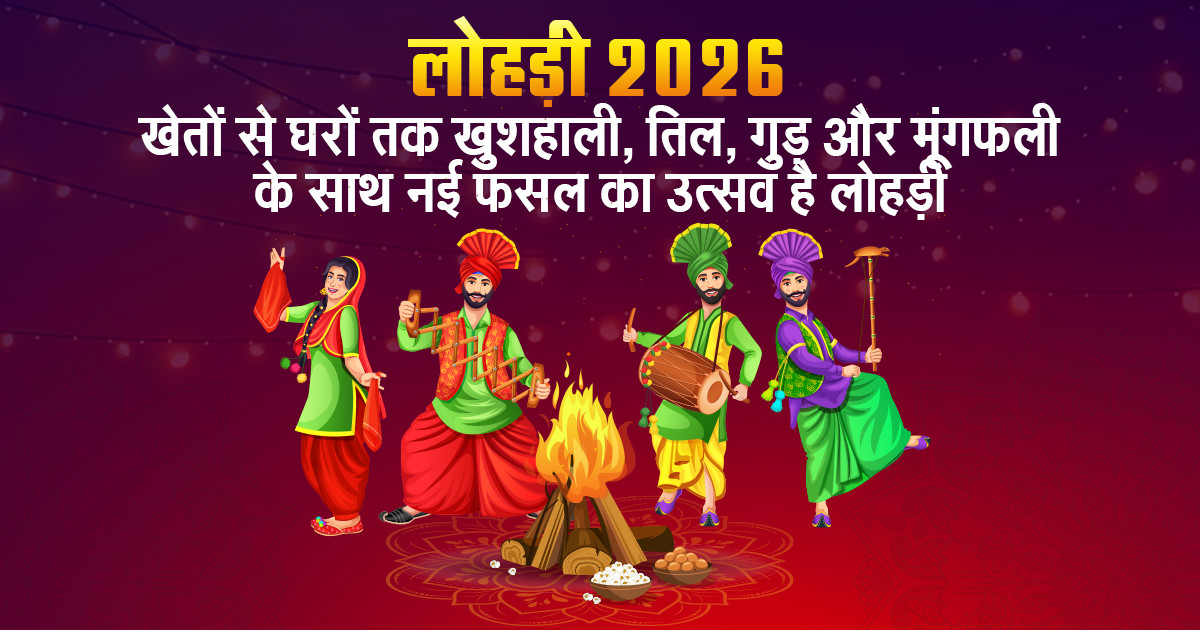
Lohri is not just a traditional festival; it is deeply rooted in agriculture and the lives of farmers. The festival offers an opportunity to express gratitude to nature for a good harvest and to pray for prosperity in the coming agricultural year. Lohri holds special significance in wheat-growing regions, as a good crop promises better income and stability for farmers. On cold January nights, families gather around the sacred bonfire and offer sesame seeds, peanuts, revdi and jaggery, which are considered symbols of prosperity, warmth and abundance.
Today, Lohri is being celebrated with great enthusiasm across several states of North India. The festival is more than a celebration—it represents the cultural soul of regions whose fields and farms nourish the entire country. In Punjab, in particular, every household is immersed in festive cheer. The arrival of a new bride or the birth of a new family member adds double joy to Lohri celebrations. From an agricultural perspective as well, the festival reflects hopes for a new crop cycle and the joy of spending cherished moments with family.
Celebrated every year on January 13, Lohri marks the end of the winter season and the onset of longer days. As people walk around the bonfire, they do more than perform rituals—they express their belief that the new year will bring fresh hopes and happiness into their lives. Exchanging Lohri greetings helps strengthen relationships and adds warmth to social bonds. In Punjab, Haryana, Delhi and other parts of North India, Lohri is seen as a special occasion of togetherness, joy and community bonding.
The significance of Lohri goes beyond customs and traditions. It is a festival dedicated to thanking nature for a successful harvest and praying for better production in the coming season. Closely linked to farming, Lohri especially highlights the importance of the wheat crop. On this occasion, elders in the family share stories related to weather patterns, agriculture and social unity, helping the younger generation understand the value of traditions and rural wisdom.
Traditional Lohri celebrations revolve around the bonfire, where people offer sesame seeds, peanuts and jaggery while singing folk songs. For children, this festival is a major source of excitement and joy. Dancing to the beats of the dhol, greeting neighbours and sharing sweets are essential parts of the celebration. Without these elements, Lohri is considered incomplete. In this way, Lohri fills every home with joy, carrying a message of unity, hope and prosperity.