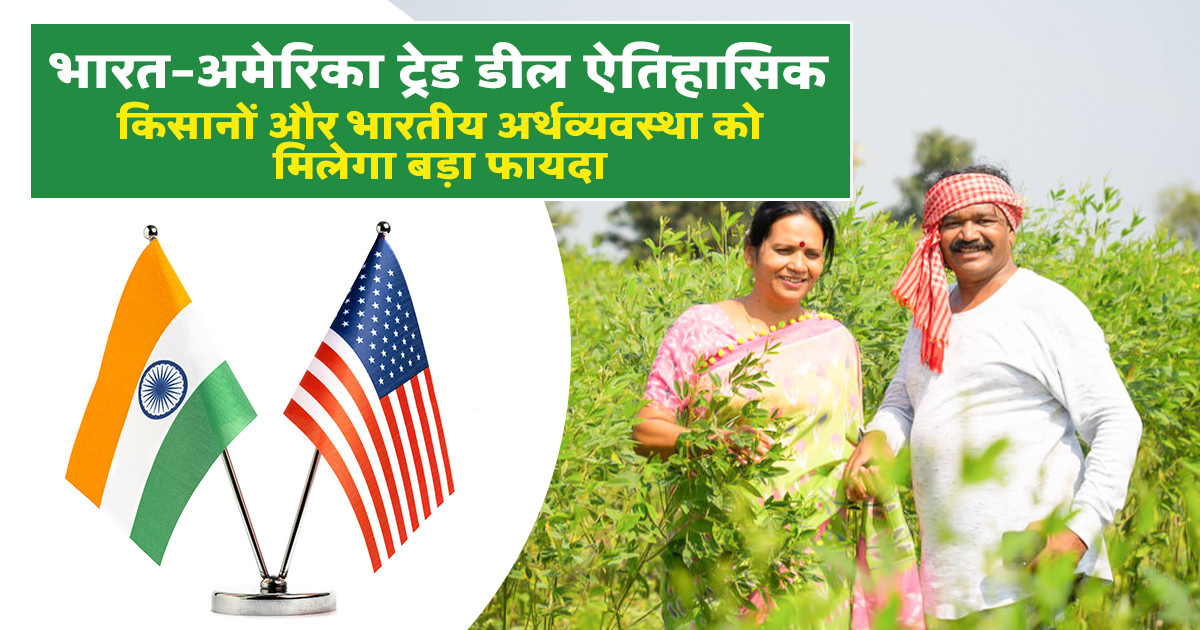
Union Minister for Agriculture and Farmers’ Welfare, Mr. Shivraj Singh Chouhan, has described the recent India–United States Trade Deal as historic and unprecedented, stating that it will give a new direction and momentum to the Indian economy. Addressing a press conference at his residence in Bhopal, he said the agreement is not merely a trade arrangement but a reflection of India’s growing global stature and self-confidence.
He emphasised that the deal sends a clear message to the world that India’s policy is based on commitment, not compromise. India takes confident decisions in the national interest and is moving forward on the global stage with a balanced, positive, and credible strategy. This approach, he said, is why India is emerging as a strong and reliable global partner.
Mr. Chouhan said the trade deal is a strong example of Diplomacy, Development and Dignity. Diplomacy reflects the principle of “Nation First,” with India’s national interests placed at the core of the agreement. From a development perspective, the deal strengthens the foundation for a developed India. Dignity, he noted, represents the respect and protection accorded to farmers, which has been fully ensured in this agreement.
He stated that all concerns related to Indian agriculture and farmers have been comprehensively addressed. The agreement not only safeguards farmers but also opens new global opportunities for them, contributing to higher incomes and long-term growth.
Agriculture Minister highlighted that several Indian agricultural products will receive zero-tariff access to the US market, while American agricultural products have not been granted similar concessions in India. This ensures full protection of India’s agriculture and dairy sectors.
He added that the United States has significantly reduced tariffs on many Indian agricultural products, bringing duties that earlier went up to 50 percent down to zero. These products include spices, tea, coffee, coconut, coconut oil, areca nut, cashew, vegetable waxes, avocado, banana, guava, mango, kiwi, papaya, pineapple, mushrooms, and select cereals.
Mr. Chouhan noted that India’s agricultural exports reached USD 4.45 billion in 2024–25, with spice exports recording an impressive 88 percent growth. Following this trade deal, Indian spices are expected to gain wider access to the US market. India already exports spices and spice products to nearly 200 destinations worldwide, and this agreement will further strengthen that position.
He clarified that there has been no compromise on the protection of the Indian market. Any foreign agricultural product entering India will continue to attract applicable tariffs. Indian farmers remain fully protected, which he described as the greatest strength of the trade deal.
Union Agriculture Minister made it clear that no agricultural or food product that could harm Indian farmers has been included in the India–US trade deal. All sensitive items have been kept outside the agreement.
He stated that no tariff concessions have been granted on products such as soybean, maize, rice, wheat, sugar, coarse grains, poultry, dairy products, banana, strawberry, cherry, citrus fruits, green peas, chickpeas, moong, oilseeds, ethanol, and tobacco. India’s key cereals, fruits, and dairy products remain fully protected, with no access granted to the US market.
Additionally, India will not import several agricultural and food items from the US, including de-hulled grains, flour, potatoes, onions, pulses, frozen vegetables, dairy products, spices, and spice powders. This clearly ensures the safety of Indian farmers and the domestic market.
Mr. Chouhan said the trade deal will create fresh opportunities for farmers, women, and especially the youth. In the textile sector, India’s tariff levels have dropped to around 18 percent, making exports more competitive and boosting textile trade. This will directly benefit cotton-growing farmers.
He also highlighted new opportunities across sectors such as gems and jewellery, auto components, engineering goods, and MSMEs. Women associated with self-help groups will also benefit, as their products will gain greater global recognition.
The Agriculture Minister added that under the leadership of Prime Minister Narendra Modi, India has signed nine Free Trade Agreements so far, including with the UAE, Oman, New Zealand, the UK, and several others, with negotiations ongoing with more countries. These agreements, he said, will benefit the Indian economy, farmers, workers, exporters, and entrepreneurs alike.
FAQs on India–US Trade Deal:
Q1. Why is the India–US Trade Deal important for farmers?
It provides zero-tariff access to Indian agricultural products while fully protecting domestic farmers.
Q2. Are US agricultural products allowed freely in India?
No, all US products entering India will continue to attract applicable tariffs.
Q3. Which Indian products benefit the most?
Spices, tea, coffee, fruits, coconut products, and select cereals.
Q4. Are dairy and cereals included in the deal?
No, dairy, rice, wheat, and other sensitive items are excluded.
Q5. How does this deal help the economy?
It boosts exports, strengthens global trade ties, and creates jobs across sectors—insights regularly analysed by Khetivyapar.