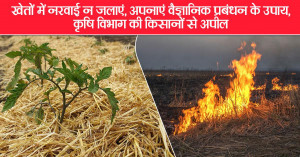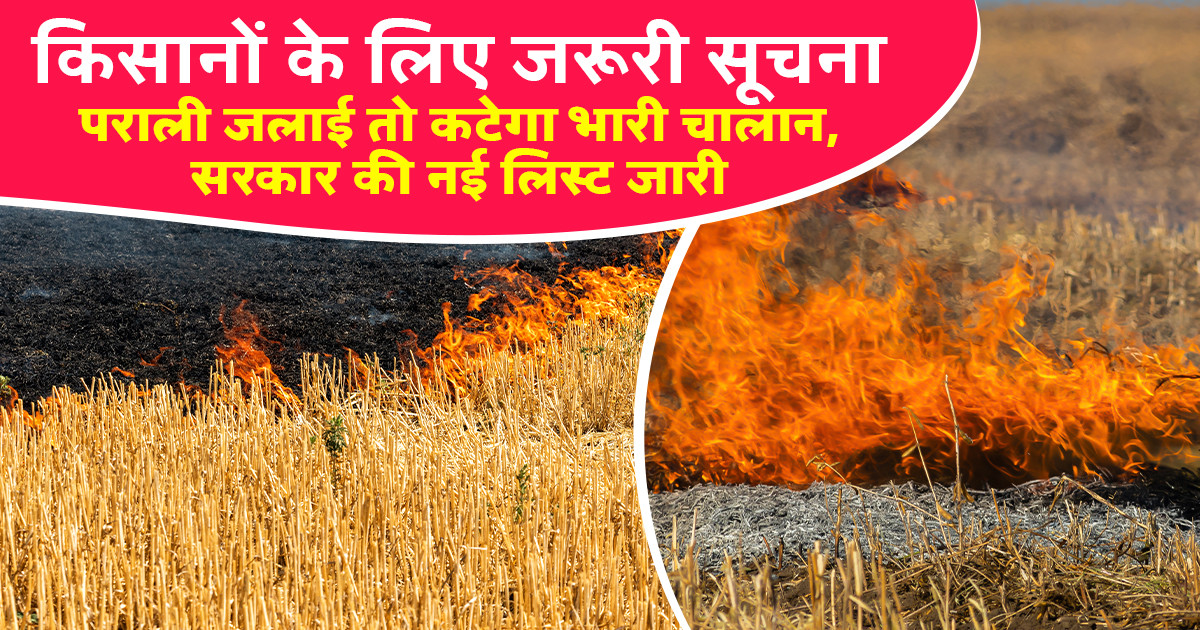
Strong push to curb air pollution caused by crop residue (stubble) burning, the government has implemented a multi-layered monitoring system across Punjab, Haryana, Uttar Pradesh, Rajasthan, and Delhi-NCR. Under this framework, stubble burning incidents following paddy harvesting are being closely tracked to ensure timely action and effective control.
Satellite technology is being extensively used to assess and monitor incidents of crop residue burning. The Indian Space Research Organisation (ISRO), in consultation with State Remote Sensing Centres and the Indian Agricultural Research Institute (IARI), developed a standard monitoring protocol, which was issued by the Commission for Air Quality Management (CAQM) in August 2021.
During satellite overpasses, active fire events are detected, and suitable satellite data is used to assess the extent of burnt areas. Throughout the paddy harvesting season, stubble burning incidents are reported by Remote Sensing Centres in line with this protocol. This enables district and regional authorities to receive real-time alerts and take swift enforcement action.
The protocol is being used regularly to monitor fire incidents related to crop residue burning. Through its CREAMS laboratory, IARI publishes daily fire event data for Haryana, Delhi, Punjab, Uttar Pradesh, Madhya Pradesh, and Rajasthan.
Satellite-based monitoring has proven effective at the regional level. Detection efficiency improves further with sub-daily satellite overpasses. In addition, evening patrols by enforcement agencies have been intensified to prevent stubble burning more effectively on the ground.
To strengthen monitoring and enforcement during the crop residue burning season from 1 October to 30 November 2025, the Central Pollution Control Board (CPCB), in coordination with CAQM, deployed 31 flying squads across 18 districts of Punjab and 13 districts of Haryana.
These teams shared daily updates, photographic evidence, and compliance reports. The flying squads worked closely with state governments, nodal officers, and district administrations, submitting daily reports to CAQM for coordinated action.
Punjab, 10,500 field personnel were deployed in 2025 to prevent and monitor stubble burning. Additionally, 1,700 personnel of the Paddi Protection Force (PPF) were stationed at the block level alongside nodal and cluster officers.
Regular reviews of stubble burning incidents were conducted at the Chief Secretary level, with monthly meetings involving District Collectors (DCs) and Senior Superintendents of Police (SSPs). Similarly, Haryana appointed 10,000 nodal officers to strengthen prevention and control measures.
High-Level Reviews and Inter-Ministerial Coordination:
Alongside these measures, the government continued regular monitoring and review efforts to address air pollution in Delhi-NCR and surrounding regions. Several high-level meetings were held on crop residue burning and pollution control.
On 7 October 2025, a ministerial-level inter-ministerial meeting was co-chaired by the Union Minister for Environment, Forest and Climate Change and the Union Minister for Agriculture and Farmers’ Welfare. Between 8 August 2025 and 20 January 2026, multiple review meetings were chaired by the Union Environment Minister to strengthen air quality management strategies, pollution mitigation measures, and enforcement mechanisms in Delhi-NCR.
Significant Reduction in Stubble Burning Incidents:
As a result of these coordinated efforts, stubble burning incidents in Punjab and Haryana during the 2025 paddy harvesting season declined by nearly 90 percent compared to the same period in 2022, marking a major achievement in the fight against air pollution.
FAQs on Stubble Burning Monitoring:
Q1. What is stubble burning and why is it harmful?
Stubble burning is the practice of burning crop residue after harvesting, which causes severe air pollution and health problems.
Q2. How does satellite monitoring help control stubble burning?
Satellite monitoring detects fire events in real time, allowing authorities to take immediate action.
Q3. Which body oversees stubble burning control in Delhi-NCR?
The Commission for Air Quality Management (CAQM) oversees monitoring and enforcement.
Q4. What role do states play in preventing crop residue burning?
States deploy field staff, flying squads, and nodal officers for ground-level enforcement.
Q5. How is Khetivyapar helping farmers?
Khetivyapar spreads awareness about eco-friendly farming practices and government schemes to reduce stubble burning.