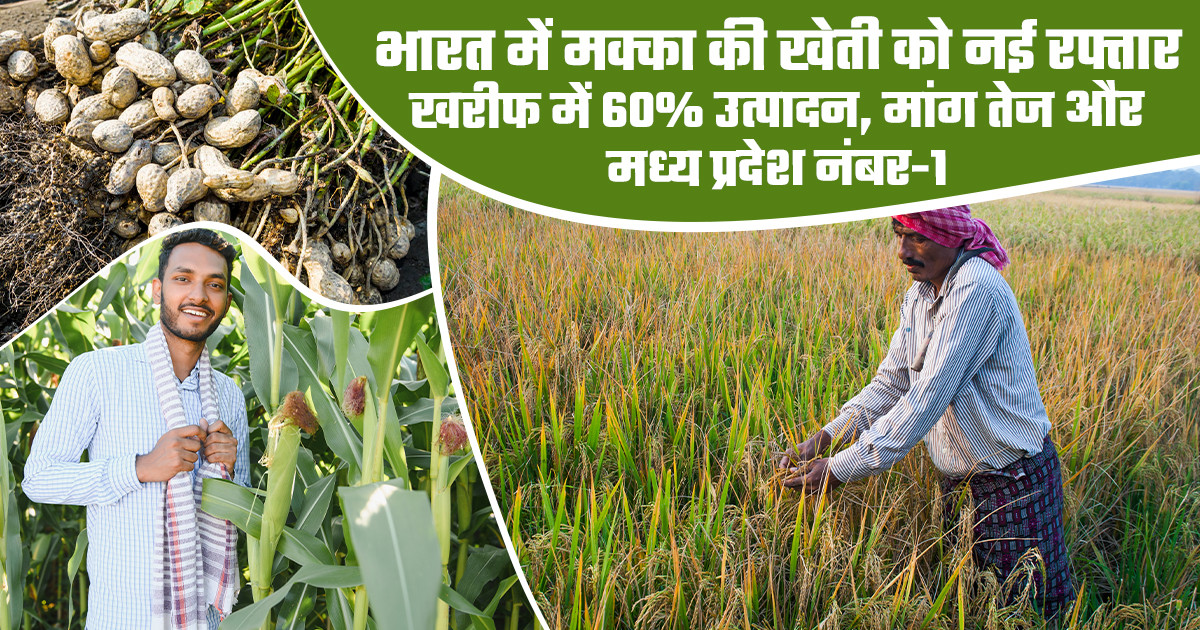
After rice and wheat, maize is considered India’s third most important cereal crop. It is cultivated across three distinct seasons—Kharif, Rabi, and Summer. The highest production comes during the Kharif season, which largely depends on the monsoon and contributes nearly 60% of the country’s total output. The Rabi season accounts for around 32%, supported by strong irrigation facilities in southern states. Meanwhile, summer maize contributes about 8%, mainly concentrated in Tamil Nadu and Bihar.
Maize production, Madhya Pradesh has emerged as the largest producing state, with extensive cultivation during the Kharif season. Karnataka and Telangana are major contributors to Rabi maize, while Bihar and Maharashtra maintain relatively balanced production across different seasons.
Although the overall cultivated area (acreage/hectares) has remained fairly stable, yields often fluctuate due to climate variability. Compared to many global producers, India largely grows non-GMO maize, which also shapes the country’s position and identity in international markets.
Maize demand in India is steadily increasing. Key drivers include poultry feed, the ethanol blending programme, and starch-based industries. Due to this expanding usage, maize is no longer just a food crop—it has now become a strategic industrial commodity as well.
Reliable maize production estimates are crucial as they help in better procurement and storage planning, strengthen food security, and improve export competitiveness. Notably, India’s maize harvest cycle often overlaps with the harvesting periods of major global producers like the United States and Brazil, which can influence international competition and market prices.
Conclusion: Overall, maize plays a vital role in India’s agricultural economy. It supports multiple sectors and offers strong opportunities for value-added products. The importance of maize lies not only in the volume produced, but also in its versatility and its growing contribution to both domestic requirements and global trade.
Madhya Pradesh Ranks No. 1 in Maize Production:
Madhya Pradesh has once again secured the top position in maize production in India. As per available data, the state contributes the highest share, followed by Karnataka and Maharashtra as other major producers.
Top 5 Maize-Producing States (in lakh tonnes):
Experts believe that strong acreage, adoption of improved seeds, better farming practices, and irrigation support have helped these states maintain steady growth in maize production. With demand rising due to poultry feed, starch industries, and ethanol blending initiatives, both production and trade are expected to gain further momentum in the coming years.
(FAQs):
1. Which season contributes the most to maize production in India?
The Kharif season contributes nearly 60% of India’s total maize production.
2. Which state is the largest producer of maize in India?
Madhya Pradesh is the leading maize-producing state in India.
3. Why is maize demand increasing in India?
Demand is rising due to its use in poultry feed, ethanol blending, and starch-based industries.
4. Does India mainly grow GMO or non-GMO maize?
India largely cultivates non-GMO maize varieties.
5. How does maize production affect India’s food security?
Accurate production estimates help in better procurement and storage, supporting food security.