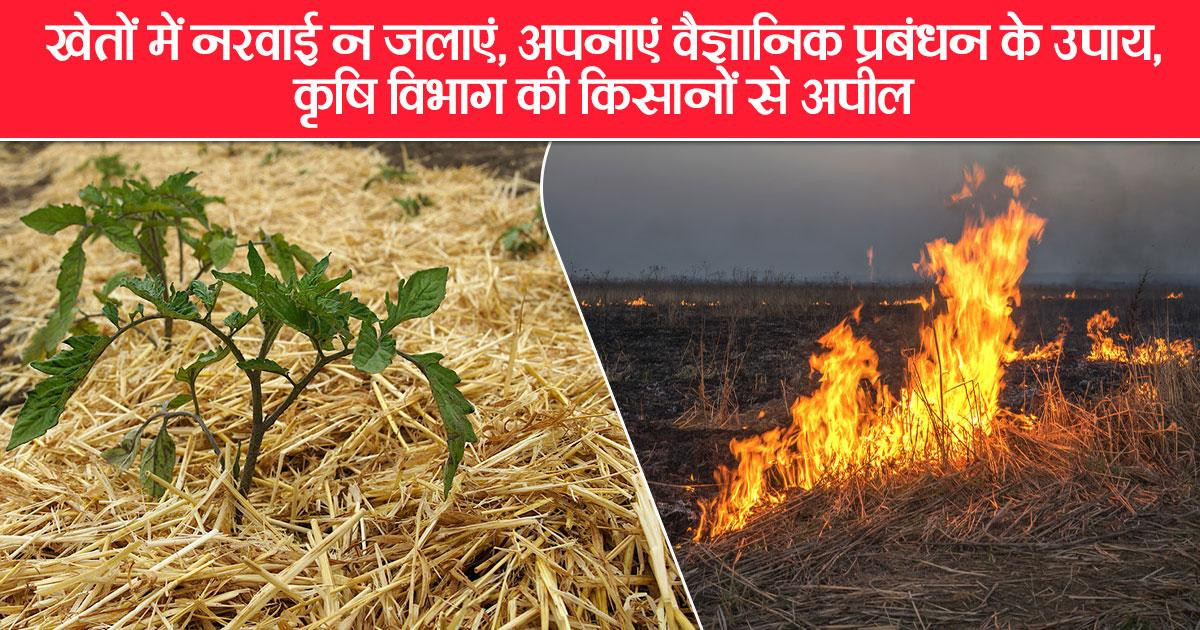
Farmers are being encouraged to manage crop residue scientifically rather than burn it in the fields, helping protect soil health, reduce air pollution, and make better use of agricultural resources. With this objective, the Farmer Welfare and Agriculture Development Department, Bhopal, organized an awareness workshop on crop-residue management at Adampur Chhawani. The workshop brought together agricultural scientists, department officials, agricultural engineering experts, the director of a Reliance Compressed Biogas (CBG) plant, and farmers from different areas. Participants discussed the harmful effects of stubble burning and explored practical alternatives, including incorporating crop residues into the soil and using them to produce organic matter and alternative energy.
The workshop was organized under the guidance of the Project Director of ATMA (Agricultural Technology Management Agency) and the Deputy Director of the Farmer Welfare and Agriculture Development Department, Bhopal. Its primary objective was to raise awareness among farmers about the appropriate management of crop residues left behind after harvesting. Experts highlighted the need to adopt scientific practices that reduce the dependence on stubble burning and encourage the productive use of agricultural waste.
During the workshop, experts explained that burning crop residues can adversely affect soil health and fertility. It also releases smoke and pollutants into the atmosphere, contributing to air pollution and environmental damage. Farmers were advised to consider suitable residue-management practices instead of burning stubble. Proper management can help preserve soil quality, support sustainable farming, and improve the utilization of resources available on farms.
Participants were informed about several ways to make productive use of crop residues. These include incorporating suitable residues into the soil, using them as a source of organic matter, and adopting other appropriate scientific techniques. Experts emphasized that crop-residue management is not limited to preventing pollution. It can also help farmers make better use of agricultural by-products and support more sustainable farming practices.
Crop Waste Offers Potential for Compressed Biogas Production:
The director of the Reliance CBG plant explained the potential for producing compressed biogas (CBG) from agricultural residues and discussed its possible uses. Converting suitable crop waste into biogas can create opportunities to turn agricultural by-products into a useful energy resource. Such alternatives can help expand the productive use of crop residues and contribute to improved residue management.
Agriculture Extension Officers Urged to Raise Awareness among Farmers:
During the workshop, agriculture extension officers were encouraged to spread information about scientific crop-residue management throughout their respective areas. The importance of conducting awareness activities to discourage stubble burning was also highlighted. The Deputy Director of the Agriculture Department appealed to farmers to choose environmentally friendly alternatives rather than burn crop residues. The department stressed that appropriate management can help protect soil health, reduce air pollution, and ensure more effective use of agricultural resources.
Why Scientific Crop-Residue Management Matters:
Managing crop residues responsibly after harvesting is an important step towards sustainable agriculture. Instead of burning these materials, farmers can explore suitable methods to recycle them, maintain organic matter in the soil, and identify productive uses for agricultural waste. Greater awareness, access to suitable technologies, and coordinated efforts by agriculture officials and farmers can help promote better residue-management practices and reduce the environmental impact of stubble burning.