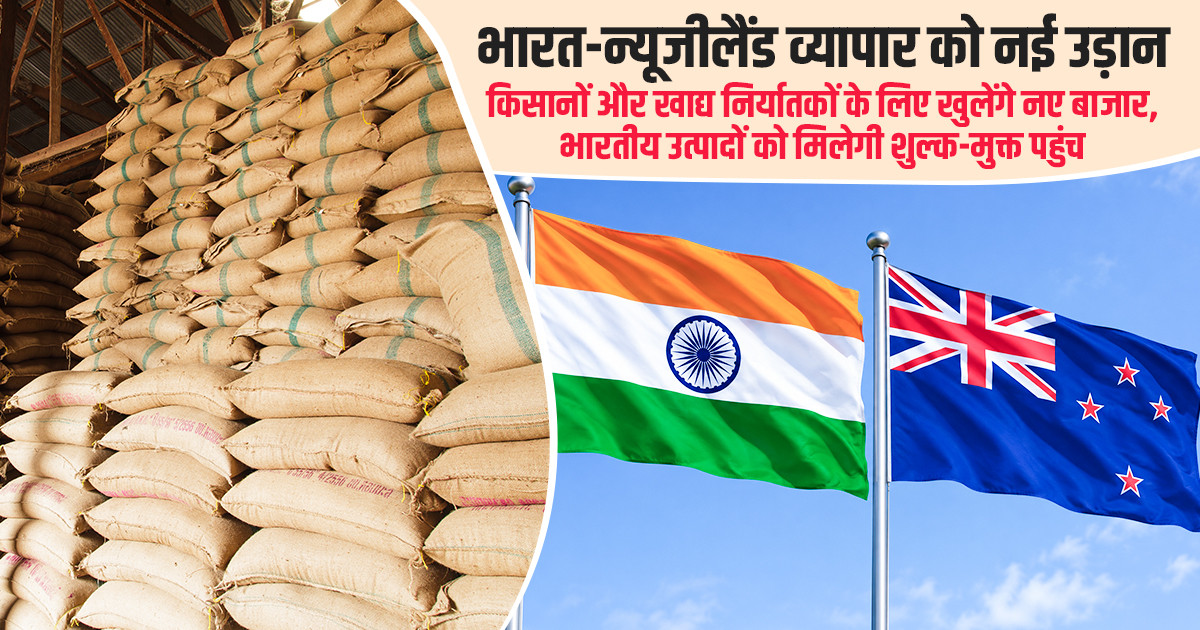
India’s Free Trade Agreement (FTA) with New Zealand, which came into effect on October 20, 2026, is expected to create new opportunities for Indian exporters across agriculture, food processing, manufacturing, and services. Under the agreement, New Zealand has agreed to provide duty-free market access across all tariff lines for Indian exports, potentially improving the price competitiveness of Indian products in the New Zealand market. Agricultural produce, fruits and vegetables, spices, tea, coffee and processed food products are among the sectors that could benefit, while safeguards have been retained for sensitive agricultural and dairy products to protect domestic interests.
According to the Ministry of Commerce and Industry, the agreement removes customs duties of up to 10% previously levied on Indian goods entering New Zealand. The removal of these duties could help Indian exporters compete more effectively and expand their presence in the market. Products such as fruits, vegetables, spices, tea, coffee and processed agricultural goods are expected to gain new export opportunities. Other sectors, including textiles, apparel, leather, footwear, gems and jewellery, engineering goods, automobile components, chemicals and pharmaceuticals, may also benefit from improved market access. The extent of these gains will depend on factors such as product quality, compliance with import regulations, logistics and the ability of Indian businesses to meet demand in New Zealand.
The agreement provides protection for several sensitive products to safeguard the interests of Indian farmers, dairy producers and rural communities. Dairy products, sugar, edible oils and other key agricultural commodities have been excluded from tariff concessions. India has offered tariff concessions to New Zealand across approximately 70% of its tariff lines, covering around 95% of the value of existing bilateral trade. The remaining 29.97% of tariff lines have been kept outside the scope of concessions. These exclusions are intended to balance expanded trade opportunities with the need to protect domestic agricultural and related industries from potential import pressures.
The agreement includes tariff-rate quotas and related conditions for selected New Zealand products, including apples, kiwifruit and mānuka honey. These arrangements are intended to regulate market access while taking domestic agricultural interests into account. The two countries have also linked cooperation in these product categories with plans to improve agricultural productivity and product quality. Areas of cooperation include establishing centres of excellence, transferring modern technologies, improving orchard management and reducing post-harvest losses. Such initiatives could help Indian growers strengthen production practices, improve quality and make better use of modern horticultural techniques.
India and New Zealand Target NZ$7 Billion in Bilateral Trade by 2030:
India and New Zealand have set a target of increasing bilateral trade in goods and services to approximately NZ$7 billion by 2030, equivalent to around ₹35,000 crore. The agreement is expected to support efforts to double trade between the two countries. To mark the agreement's implementation, Union Commerce and Industry Minister Piyush Goyal flagged off the first export of a JCB machine from India to New Zealand under the trade arrangement. The development highlighted opportunities for Indian exporters in engineering, agriculture-related equipment, leather, footwear and other sectors.
New Opportunities for Indian Service Providers and Professionals:
The FTA also expands opportunities for Indian service providers, with New Zealand agreeing to open approximately 118 service sectors and subsectors. These include information technology, professional services, telecommunications, construction, education and tourism. Special provisions also cover traditional health and wellness services associated with Ayurveda, yoga and other AYUSH systems. The agreement provides for an annual quota of 5,000 temporary employment entry visas and 1,000 working holiday visas for eligible Indian nationals, subject to the applicable conditions.
Indian graduates in science, technology, engineering and mathematics (STEM) may also have opportunities to work in New Zealand after completing their studies. Eligible bachelor's and master's graduates may be able to work for up to three years, while doctoral graduates may qualify for a period of up to four years, subject to the agreement's requirements and immigration rules. These provisions could expand mobility for skilled professionals and create additional pathways for eligible Indian students and workers.
New Zealand Commits to Facilitating US$20 Billion in Investment:
The agreement, New Zealand has committed to facilitating US$20 billion in investment into India over the next 15 years. The initiative is expected to support potential opportunities in agriculture, manufacturing, infrastructure, and startups. The commitment represents an investment facilitation objective rather than money already invested in India. Actual investment flows will depend on future projects, business decisions, and implementation.
FAQs:
1. When did the India-New Zealand FTA come into effect?
The agreement came into effect on October 20, 2026.
2. Which Indian agricultural products could benefit?
Fruits, vegetables, spices, tea, coffee and processed food products could gain export opportunities.
3. Does the agreement protect Indian dairy farmers?
Yes. Dairy products have been excluded from India's tariff concessions.
4. What is the bilateral trade target by 2030?
India and New Zealand aim to reach approximately NZ$7 billion in bilateral trade in goods and services.
5. How could the FTA help Indian farmers?
It could expand export opportunities and encourage cooperation in agricultural technology, product quality and post-harvest management.