Union Minister for Agriculture, Farmers’ Welfare and Rural Development Shivraj Singh Chouhan said in the Lok Sabha that India’s agriculture sector is progressing at a remarkable pace, with the government aiming to transform the country into the “Food Basket of the World.” He noted that under the leadership of Prime Minister Narendra Modi, agricultural production has consistently increased in recent years. This growth has strengthened India’s food security while also improving income opportunities for farmers across the country.
Union Minister also raised concerns regarding the implementation of central government schemes in West Bengal. According to him, several central government initiatives are not being effectively implemented in the state, resulting in many poor farmers missing out on their benefits. He added that such situations ultimately harm farmers and that the public will hold the state government accountable in the future.
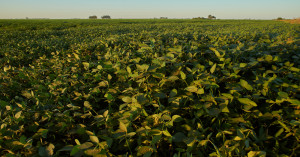
Highlighting India’s agricultural achievements, the minister said the country is witnessing record levels of foodgrain production, which has reached nearly 357 million tonnes. India has also emerged as the world’s largest rice producer, surpassing China in rice production by more than 150 million tonnes. In addition, crops such as wheat, mustard, soybean, and groundnut have also recorded impressive output levels. He pointed out that in the past, India had to rely on wheat imports under the PL‑480 Program. However, the situation has completely changed today, with warehouses across the country filled with wheat and rice. In fact, the government is now focusing on expanding storage capacity, while the global community is acknowledging India’s agricultural progress.
The government has also taken several initiatives to increase the production of pulses, fruits, and vegetables to improve both farmers’ incomes and nutritional security. Pulse production in India has risen significantly, increasing from about 19 million tonnes to nearly 25–26 million tonnes. At the same time, the country’s horticulture output has crossed 369 million tonnes, creating new income opportunities for farmers and ensuring better availability of nutritious food.
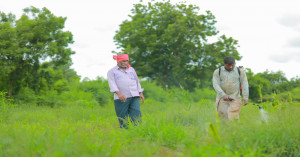
Shivraj Singh Chouhan said the government is actively promoting natural farming and organic agriculture under dedicated national missions. As part of this effort, chemical-free farming is being encouraged along river belts, especially along the banks of the Ganges River, within a stretch of about five kilometres on both sides.
More than 10 million farmers across the country have been trained and sensitized about natural farming practices. In addition, chemical-free farming clusters have been developed across large areas of agricultural land. According to the minister, when implemented correctly, natural farming does not necessarily reduce yields and in several cases has even resulted in higher productivity.
Farming Model Based on Local Resources:
The minister explained that farmers adopting natural farming are being provided financial assistance on a per-acre basis. The aim is to encourage them to reduce dependence on chemical fertilizers and expensive pesticides and instead adopt traditional farming practices based on locally available resources.
This model promotes the use of natural formulations prepared from indigenous cow dung and cow urine, such as Ghan Jeevamrit, Beejamrit, and Neem-based solutions. Intercropping is also encouraged to enable farmers to grow multiple crops in the same field, improving both productivity and farm income.
Agricultural Growth Faster Than the Green Revolution Era:
Union Minister further stated that India’s agricultural growth today is progressing even faster than during the early years of the Green Revolution. Compared to 2014–15, the country’s food grain production has increased by nearly 40–42 percent. He added that sectors such as pulses, oilseeds, horticulture, and dairy are also achieving new milestones, strengthening both farmers’ livelihoods and the country’s food security.
Vision to Make India the Global Food Basket:
Concluding his remarks, Shivraj Singh Chouhan said Prime Minister Narendra Modi envisions India not only meeting its own food requirements but also contributing to global food security in the spirit of “Vasudhaiva Kutumbakam” the world is one family. With record agricultural production, strong storage capacity, and expanding export opportunities, India is steadily emerging as a reliable global supplier of food, and this role is expected to grow even stronger in the coming years.
FAQs:
1. What is India’s current foodgrain production?
India’s foodgrain production has reached nearly 357 million tonnes.
2. How many farmers are practicing natural farming?
Over 10 million farmers have been trained and practicing natural farming.
3. What crops have seen major growth in India?
Rice, wheat, mustard, soybean, pulses, and horticulture crops.
4. What schemes support natural farming in India?
Government provides per-acre financial assistance and promotes organic inputs like Ghan Jeevamrit and Beejamrit.
5. How is India emerging as a global food supplier?
Through record production, strong storage, and increased exports, India is becoming the world’s reliable food supplier.