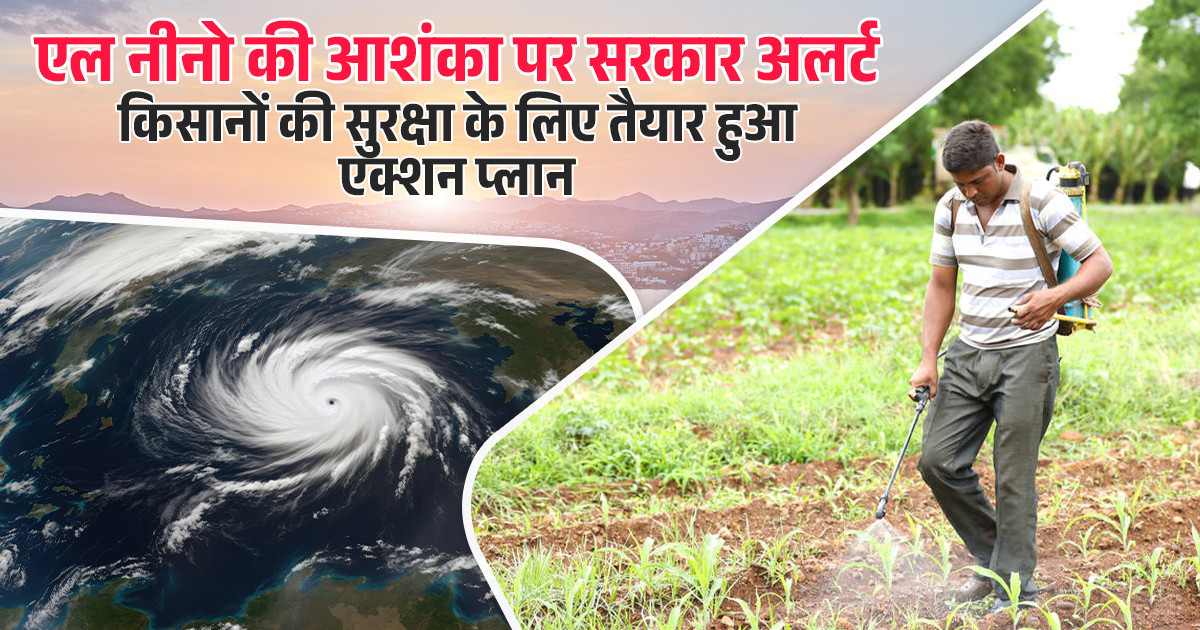
As concerns grow over the possible impact of El Niño and the performance of the Southwest Monsoon, the Central Government has intensified its preparations to protect farmers and minimize risks to agricultural production. Union Agriculture and Farmers’ Welfare and Rural Development Minister Shri Shivraj Singh Chouhan has assured farmers that there is no reason for concern, as both the Centre and state governments are working proactively to address any weather-related challenges.
According to the minister, the government’s priority is to ensure that farmers receive timely support, adequate resources and practical solutions so that agricultural activities continue smoothly even under adverse weather conditions.
The government has directed states and districts that may experience below-normal rainfall, prolonged dry spells or stronger El Niño effects to remain on high alert. Authorities have been instructed to activate contingency plans at the district level and ensure that these strategies are implemented effectively on the ground rather than remaining confined to paperwork. Officials have also been asked to develop region-specific plans based on local conditions, water availability, crop patterns, seed stocks and rainfall forecasts to help farmers respond quickly to changing weather situations.
Shri Chouhan emphasized that farmers should have access to timely advisories, quality seeds and essential agricultural inputs. The government is encouraging the promotion of alternative crops, delayed sowing strategies and drought-tolerant crop varieties wherever necessary. To improve communication, efforts are being made to strengthen digital platforms and advisory systems so that farmers can receive weather alerts, crop-related guidance and agricultural recommendations directly on their mobile phones.
One of the encouraging developments highlighted during the review is the healthy water storage position in the country’s reservoirs. Current assessments indicate that reservoir levels are significantly better than normal, standing at approximately 127 percent of the average level for this period. The minister noted that the improved storage situation will play a crucial role in meeting irrigation requirements during the Kharif season and reducing the risk of moisture stress in agricultural fields.
The government has confirmed that seed availability for both Kharif and Rabi seasons is more than sufficient to meet demand. In addition, a National Seed Reserve has been established to address any emergency requirements that may arise due to adverse weather conditions.
Shri Chouhan stressed that along with availability, seed quality must remain a top priority. States have been asked to ensure that only certified, high-quality seeds reach farmers. Preparations are also underway to provide short-duration and low-water-consuming crop varieties whenever required.
Strong Focus on Water Conservation and Moisture Management:
The minister underlined the importance of water conservation measures, including moisture retention practices, rainwater harvesting, farm pond construction and strengthening local water infrastructure. He stated that scientific water management and effective moisture conservation techniques can significantly reduce the impact of low rainfall and help protect crops even during challenging weather conditions.
Advance Preparedness for Pest and Disease Risks:
Recognizing that changing weather patterns can increase the risk of pest attacks and crop diseases, the government has directed departments to strengthen monitoring systems and prepare preventive measures in advance. States and farmers will be provided with timely advisories and treatment recommendations to help minimize crop losses and maintain productivity.
Integrated Approach across Departments:
Shri Chouhan emphasized that departments dealing with weather, water resources, irrigation, seeds, crop management and rural development must work together through a unified strategy. Better coordination, shared data and joint reviews will help ensure faster and more effective decision-making at both state and district levels. The government believes that a combination of improved water management, quality inputs, technological support and coordinated planning will help mitigate the impact of potential weather disruptions and safeguard farmers’ interests during the upcoming agricultural season.
FAQs:
1. What is El Niño and how does it affect agriculture?
El Niño is a climate phenomenon that can reduce rainfall in some regions, affecting crop growth, water availability and agricultural production.
2. Why has the government issued an alert regarding El Niño?
The government wants to ensure advance preparedness and protect farmers from any possible impact of low rainfall or weather disruptions.
3. What support will farmers receive during the monsoon season?
Farmers will receive weather advisories, quality seeds, agricultural inputs and guidance on alternative crops and sowing strategies.
4. Is there enough seed availability for Kharif crops?
Yes, the government has confirmed adequate seed availability and has also established a National Seed Reserve for emergency situations.
5. How will water conservation help farmers?
Water conservation measures such as rainwater harvesting, farm ponds and moisture management can help maintain crop health and reduce the impact of rainfall shortages.