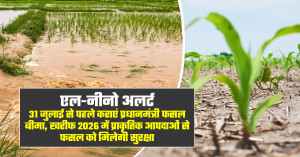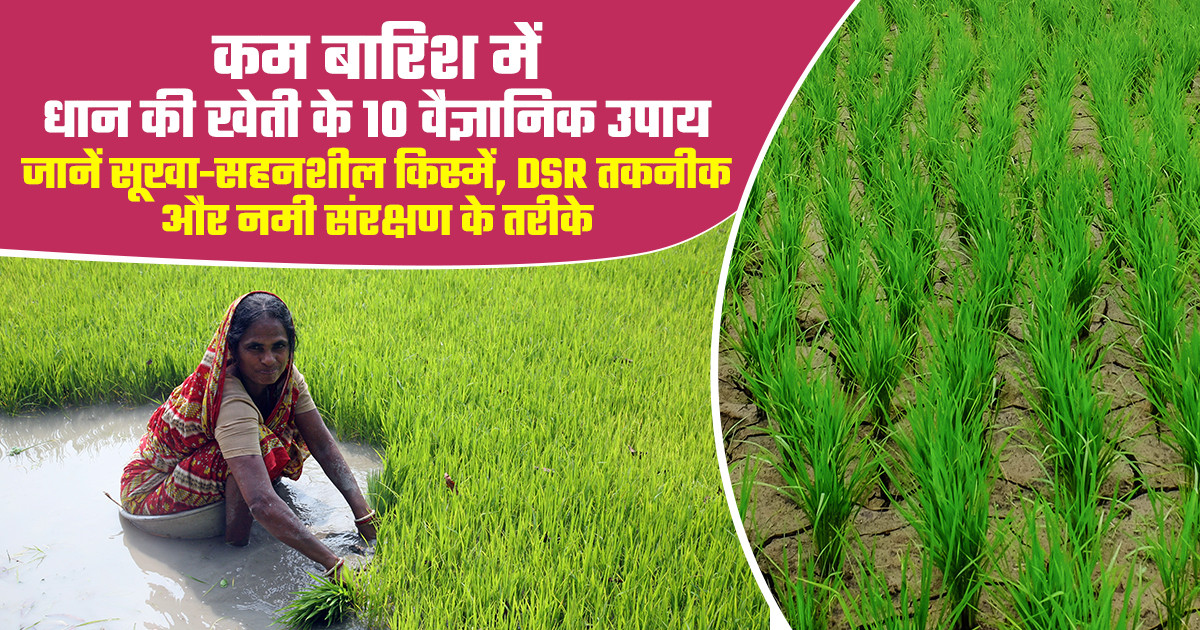
With the possibility of El Niño conditions during 2026, agricultural experts are warning of below-normal rainfall, prolonged dry spells, and higher-than-average temperatures across several parts of India. Rice, being one of the most water-intensive crops during its early growth stages, is expected to face the greatest challenge under such weather conditions. Insufficient soil moisture can lead to poor seed germination, weak crop establishment, and significant yield losses.
To help farmers minimize climate-related risks, agricultural experts recommend adopting drought-tolerant rice varieties, water-efficient cultivation techniques, proper soil moisture conservation, and weather-based crop management practices. These scientific interventions can help sustain productivity even under a weak monsoon.
Selecting the right rice variety is the first and most important step for successful cultivation under low rainfall conditions.
Agricultural experts recommend drought-tolerant and short-duration varieties such as Swarna Shreya, Sahbhagi Dhan, DRR Dhan-42, DRR Dhan-44, Naveen, Prabhat, Turanta, Rajendra Shweta, and Pusa drought-tolerant rice varieties. These cultivars perform better under moisture stress and help reduce production risks during weak monsoon years.
In regions with limited irrigation facilities or upland fields, relying solely on rice cultivation can increase production risk. Farmers are encouraged to diversify with drought-resilient crops such as pigeon pea (arhar), maize, and finger millet (ragi). Suitable pigeon pea varieties include Malviya-13, IPA-203, Pusa-992, UPAS-120, and Rajendra Arhar-1. Experts also recommend adopting the Ridge and Furrow planting system and using a slightly higher seed rate to improve soil moisture retention and enhance crop establishment.
Crop sowing should be based on actual soil moisture rather than calendar dates. Farmers should wait until sufficient rainfall has provided adequate moisture in the field. If the onset of the monsoon is delayed, medium- or short-duration rice varieties (100–120 days) are preferable to long-duration cultivars. Sowing seeds in dry soil can result in poor germination and uneven crop stand.
4. Adopt Direct Seeded Rice (DSR) Technology:
In areas with limited irrigation, Direct Seeded Rice (DSR) offers an efficient alternative to conventional transplanting. Key benefits of DSR include: Saves 20–30% irrigation water, Reduces labour requirements, Lowers cultivation costs, Enables earlier crop establishment, Improves overall resource-use efficiency.
5. Follow Water-Efficient Transplanting Practices:
6. Apply Balanced Nutrient Management:
Efficient nutrient management becomes even more critical under drought conditions. Agricultural experts recommend- Applying fertilizers based on soil test results. Splitting nitrogen application into 3–4 doses rather than applying it all at once. Correcting zinc and sulphur deficiencies wherever required. Increasing the use of biofertilizers to improve soil health and nutrient availability. Balanced fertilization enhances crop resilience and improves nutrient-use efficiency.
7. Protect the Crop during Extended Dry Spells:
If rainfall is absent for 10–15 consecutive days, farmers should take immediate drought mitigation measures.
8. Monitor Pest and Disease Incidence Regularly:
Hot and dry weather often favours the spread of several rice pests and diseases. Farmers should regularly monitor their fields for: Stem borer, Leaf folder, Brown Planthopper (BPH), Blast disease. Crop protection measures should be implemented only after pest populations exceed the Economic Threshold Level to ensure effective and economical pest management.
9. Make Use of Government Support Programmes:
Farmers are encouraged to take advantage of government initiatives designed to reduce climate-related risks.
10. Additional Expert Recommendations for Farmers:
FAQs:
1. How will El Niño 2026 affect rice cultivation?
El Niño 2026 may bring below-normal rainfall, higher temperatures, and long dry spells, reducing soil moisture and affecting rice germination, growth, and yield.
2. Which are the best drought-tolerant rice varieties for 2026?
Popular drought-tolerant rice varieties include Sahbhagi Dhan, Swarna Shreya, DRR Dhan-42, DRR Dhan-44, Naveen, Prabhat, Turanta, Rajendra Shweta, and Pusa drought-tolerant varieties.
3. What is Direct Seeded Rice (DSR)?
Direct Seeded Rice (DSR) is a cultivation method where seeds are sown directly in the field. It saves water, reduces labour, lowers production costs, and is suitable for weak monsoon conditions.
4. What should farmers do during prolonged dry spells?
Farmers should provide life-saving irrigation, remove weeds, delay nitrogen application until rainfall or irrigation, and prevent deep soil cracks to protect the crop.
5. Which government schemes help farmers during El Niño?
Farmers can benefit from Pradhan Mantri Fasal Bima Yojana (PMFBY), weather-based agro-advisory services, Krishi Vigyan Kendras (KVKs), and state drought management programmes for financial and technical assistance.