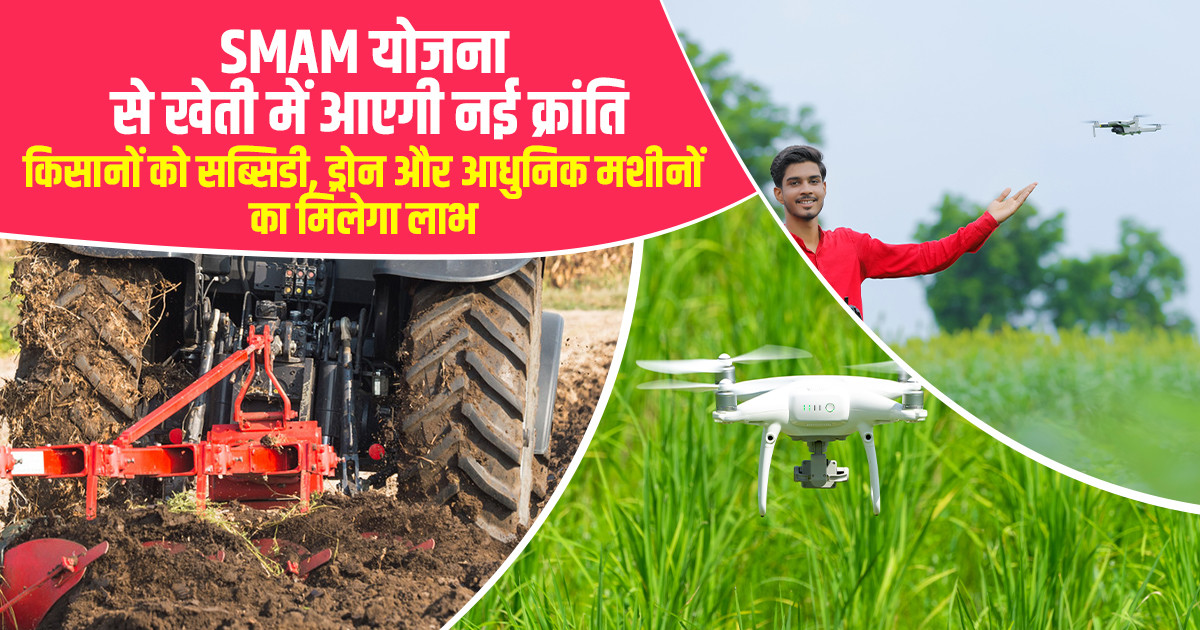
Government of India is accelerating agricultural mechanization through the Sub-Mission on Agricultural Mechanization (SMAM), a flagship initiative designed to make farming more efficient, cost-effective, and technology-driven. The scheme provides financial assistance for the purchase of farm machinery, promotes Custom Hiring Centres (CHCs), Farm Machinery Banks (FMBs), Hi-Tech Equipment Hubs, and supports the adoption of drone technology to improve productivity while reducing cultivation costs and labour dependency.
The initiative primarily targets small and marginal farmers, women farmers, Scheduled Castes (SC), Scheduled Tribes (ST), Farmer Producer Organizations (FPOs), Self-Help Groups (SHGs), and rural entrepreneurs, ensuring that modern agricultural technology reaches underserved farming communities across the country.
Launched in 2014-15 under the Rashtriya Krishi Vikas Yojana (RKVY), SMAM is a Centrally Sponsored Scheme aimed at expanding access to modern farm machinery and mechanized agricultural services. The mission seeks to improve farm productivity by enabling timely agricultural operations, reducing dependence on manual labour and animal power, lowering production costs, and enhancing overall farming efficiency.
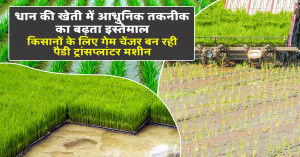
SMAM promotes mechanization throughout the agricultural production cycle, including: Land preparation, Sowing and transplanting, Irrigation, Crop protection, Harvesting, Post-harvest management, Crop residue management. The use of advanced machinery helps farmers complete operations faster, improve precision, and achieve higher productivity with lower input costs.
Five Key Pillars of the SMAM Scheme:
The scheme encourages widespread adoption of modern farm equipment through farmer training, field demonstrations, machinery testing, certification, and post-harvest mechanization. These initiatives help farmers understand and efficiently use advanced agricultural technologies.
SMAM provides financial assistance through the Direct Benefit Transfer (DBT) system for purchasing agricultural machinery.
Subsidy Benefits Include:
Small and marginal farmers can also receive ₹2,000 per hectare for mechanized services, including drone-based operations, through CHCs, SHGs, and FPOs.
3. Custom Hiring Centers and Farm Machinery Banks:
Recognizing that many farmers cannot afford expensive agricultural equipment, the government promotes the establishment of Custom Hiring Centres (CHCs) and Farm Machinery Banks (FMBs), allowing farmers to rent modern machinery at affordable rates. 40% subsidy for CHC projects up to ₹2.5 crore. 80% financial support for Farm Machinery Banks with projects up to ₹30 lakh. These facilities significantly improve access to mechanization, particularly for small landholders.
4. Hi-Tech Agricultural Equipment Hubs:
The scheme supports the development of specialized hubs equipped with high-capacity, crop-specific agricultural machinery. These centres provide farmers with access to advanced equipment that would otherwise be too costly to purchase individually, improving operational efficiency and promoting precision farming.
5. Special Support for North Eastern States:
To accelerate mechanization in geographically challenging regions, SMAM offers enhanced financial assistance in the North Eastern states, including: Up to 100% subsidy for selected small agricultural machinery. Up to 95% financial assistance for establishing Farm Machinery Banks. This region-specific approach aims to bridge mechanization gaps and improve agricultural productivity.
SMAM Has Delivered Significant Benefits Since Its Launch:
According to government data, between 2014-15 and 2025-26, the scheme has received ₹9,404.47 crore in central financial assistance.
During this period:
The number of beneficiaries has also increased steadily, with farmers receiving machinery assistance rising from 2.07 lakh in 2020-21 to 2.32 lakh in 2024-25, reflecting wider adoption of mechanized farming.
Drone Technology is Transforming Indian Agriculture:
Between 2023-24 and 2025-26:
Financial Support for Drone Procurement:
To encourage wider adoption of drone technology, SMAM offers substantial financial assistance. 100% financial support up to ₹10 lakh per drone for ICAR institutes, Krishi Vigyan Kendras (KVKs), and State Agricultural Universities. Up to 75% grant assistance for Farmer Producer Organizations (FPOs) purchasing agricultural drones. ₹6,000 per hectare operational support for agencies providing drone-based agricultural services. These incentives are expected to accelerate the use of drones for crop monitoring, nutrient application, and plant protection.
Special Focus on Women Farmers:
Women farmers are a major focus under SMAM. The scheme earmarks 30% of its total allocation for women beneficiaries, enabling greater access to agricultural machinery, reducing labour-intensive work, and encouraging increased participation in mechanized farming and agri-entrepreneurship.
FAQs:
1. What is the SMAM Scheme?
The SMAM Scheme is a Government of India initiative that promotes agricultural mechanization by providing subsidies on farm machinery, drones, and mechanized farming services.
2. How much subsidy is available under the SMAM Scheme?
General category farmers can receive up to 40% subsidy, while SC/ST and small & marginal farmers can get up to 50% subsidy on eligible agricultural machinery.
3. Who can apply for the SMAM Scheme?
Small and marginal farmers, women farmers, SC/ST farmers, FPOs, SHGs, rural entrepreneurs, and eligible farming institutions can apply under the scheme.
4. Does the SMAM Scheme support agricultural drones?
Yes. The scheme provides financial assistance for agricultural drones, drone demonstrations, and precision farming services through eligible organizations and FPOs.
5. What are Custom Hiring Centres (CHCs) under the SMAM Scheme?
Custom Hiring Centres allow farmers to rent modern agricultural machinery at affordable rates instead of purchasing expensive equipment, making mechanization accessible to small farmers.