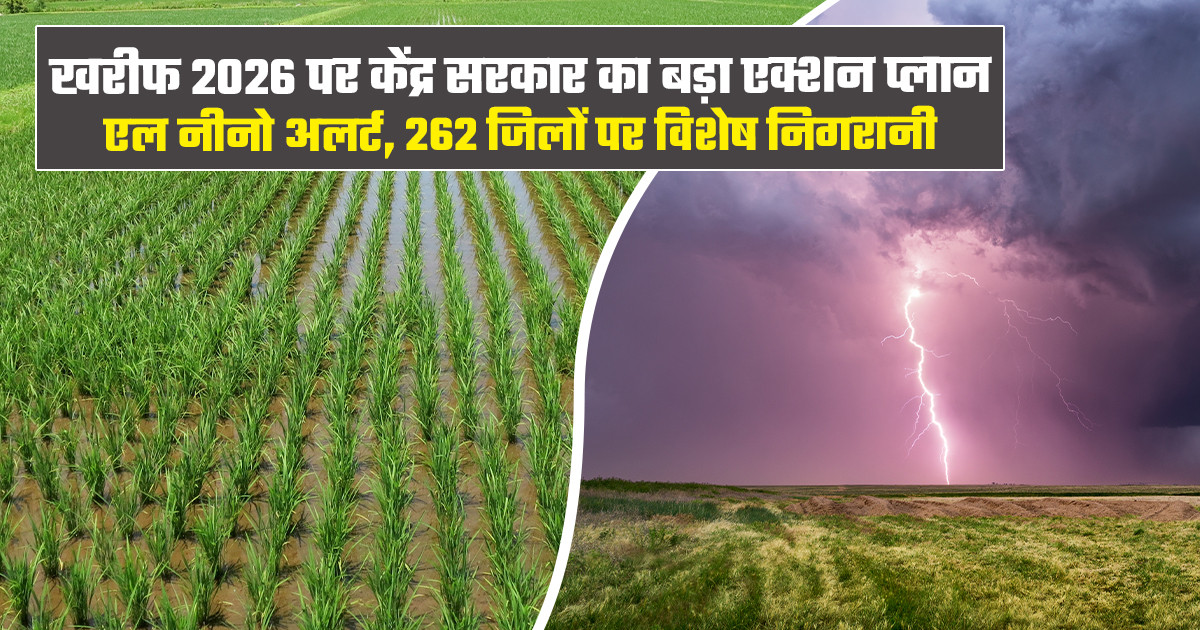
As concerns grow over a possible El Niño event and a weaker-than-normal monsoon, the Central Government has carried out a comprehensive review of preparedness for the Kharif 2026 cropping season. Union Minister for Agriculture & Farmers’ Welfare and Rural Development Shivraj Singh Chouhan chaired a high-level meeting at Krishi Bhawan, New Delhi, to assess Kharif sowing progress, monsoon conditions, rainfall trends, drought preparedness, fertiliser availability, foodgrain stocks, and crop protection measures.
The minister directed officials to maintain continuous monitoring of the potential impact of El Niño and ensure the effective implementation of district-level contingency plans across all states to minimise risks to agriculture and farmers.
During the review, officials informed that 262 districts across the country have been identified as vulnerable to rainfall deficiency. Of these, 52 districts have received rainfall in recent days, offering some relief, while 210 districts continue to experience below-normal rainfall. Among them, eight districts have recorded negligible or no rainfall so far. The Agriculture Minister instructed officials to closely monitor these districts and ensure timely implementation of relief measures and agricultural interventions wherever required.
According to the weather assessment presented during the meeting, a western disturbance is expected to become active from July 2, which could help the southwest monsoon advance over parts of MP, UP, Uttarakhand, Himachal Pradesh, Jammu & Kashmir, Ladakh, and southeastern Rajasthan over the next two to three days. However, current forecasts continue to indicate that overall seasonal rainfall may remain below normal, making preparedness a key priority.
The Union Minister emphasised that every district should effectively implement its pre-prepared contingency plan to reduce the impact of any prolonged dry spell or delayed rainfall. He also announced that meetings would be held with Chief Ministers of states facing significant rainfall deficits to review preparedness and the implementation of contingency measures. Special emphasis was placed on strengthening the implementation of the Pradhan Mantri Fasal Bima Yojana (PMFBY) and expanding the coverage of Kisan Credit Cards (KCC) to ensure timely financial support for farmers.
Officials reported that parts of North Gujarat are witnessing rainfall shortages, while reservoir water levels in Maharashtra continue to decline despite recent showers. The minister cautioned that a prolonged break in rainfall could adversely affect agricultural operations and asked states to remain prepared for any emerging challenges.
Reservoir Storage Lower Than Last Year; Groundwater Remains Stable:
The review revealed that water storage in the country's 166 major reservoirs is currently lower than the corresponding period last year. However, groundwater conditions remain largely stable across most regions. The Crop Weather Watch Group (CWWG) is conducting weekly reviews to monitor drought conditions and coordinate response measures. Additionally, 15 states have already appointed nodal officers to strengthen preparedness and improve coordination.
Adequate Availability of Seeds and Fertilisers:
A review of initiatives undertaken by the Indian Council of Agricultural Research (ICAR) and the Central Research Institute for Dryland Agriculture (CRIDA) confirmed that the National Seeds Corporation has sufficient stocks of quality seeds for the ongoing Kharif season.
Officials also reported that against the estimated requirement of 176.13 lakh metric tonnes of fertilisers during April–June 2026, a total availability of 286.37 lakh metric tonnes was ensured. The Agriculture Minister directed officials to guarantee uninterrupted fertiliser supplies, particularly in tribal and remote regions.
Focus on Pulses, Oilseeds, Cotton and Horticulture:
The meeting also reviewed the progress of the National Missions on Pulses, Oilseeds and Cotton, along with the sowing status of horticultural crops, weekly mandi prices, and buffer stocks of wheat, rice, pulses and oilseeds. Officials were instructed to accelerate efforts in these sectors to safeguard food security, improve farmers' incomes, and maintain stable supplies despite possible weather-related disruptions.
Farmer Welfare Remains the Government’s Priority:
The Union Agriculture Minister stated that 2025–26 had been a landmark year for Indian agriculture, but stressed that there should be no complacency in the face of potential climatic challenges. He directed officials to strengthen the implementation of contingency plans, expand crop insurance and agricultural credit coverage, ensure timely availability of seeds and fertilisers, and provide farmers with regular technical advisories.
FAQs:
1. What is El Niño 2026?
El Niño 2026 refers to the expected warming of Pacific Ocean waters that could weaken the Indian monsoon and affect agriculture.
2. How many districts are facing rainfall deficit?
The government has identified 210 districts that are currently experiencing below-normal rainfall.
3. What measures has the government announced?
The Centre is implementing district-level contingency plans, strengthening PMFBY, expanding KCC coverage and ensuring adequate seed and fertiliser supplies.
4. Is there enough fertiliser available for Kharif 2026?
Yes. Against the requirement of 176.13 lakh metric tonnes, the government has ensured 286.37 lakh metric tonnes of fertiliser availability.
5. How is KhetiVyapar helping farmers?
KhetiVyapar provides the latest agriculture news, weather updates, mandi prices, government schemes and expert farming guidance to help farmers make informed decisions.