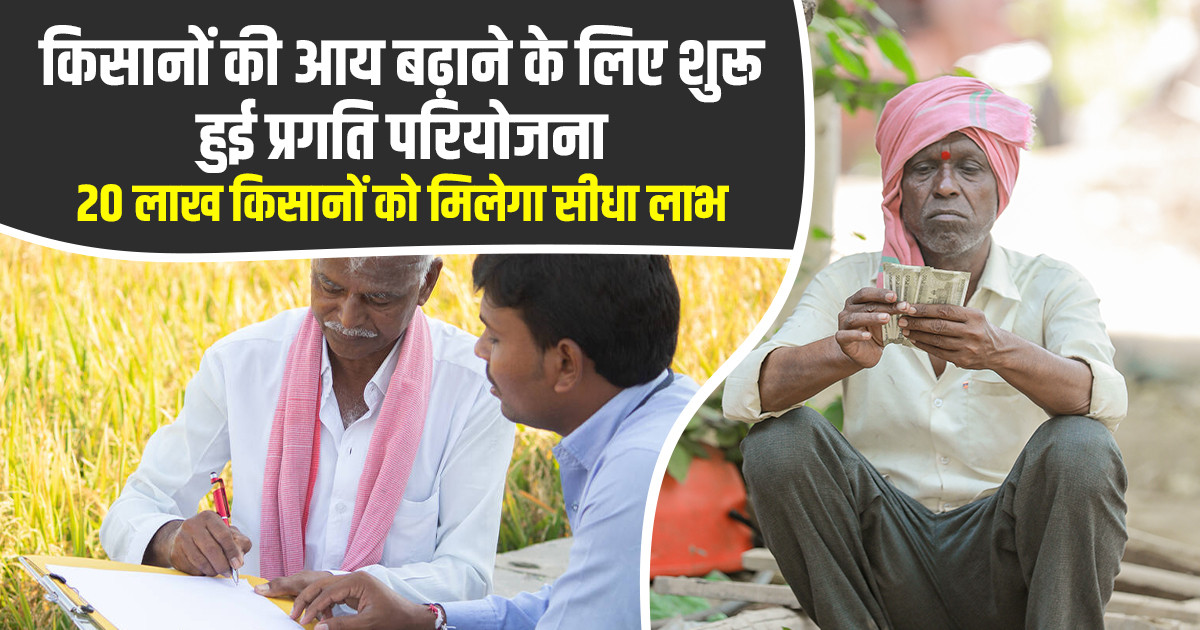
In a major step toward transforming Indian agriculture, the Government of India has launched PRAGATI (Promoting Regenerative Agriculture and Growth through Agri-Entrepreneurship Initiative), a nationwide programme designed to strengthen rural livelihoods through agri-entrepreneurship. Unveiling the initiative, Union Minister for Agriculture & Farmers' Welfare and Rural Development Shivraj Singh Chouhan said the project aims to develop 20,000 agri-entrepreneurs who will support more than 2 million small and marginal farmers by improving farm productivity, reducing cultivation costs, enhancing market access, and promoting climate-resilient farming practices. The initiative seeks to build a stronger rural economy by combining technology, innovation, and sustainable agriculture.
Addressing the launch event, the Union Minister emphasized that increasing crop production alone is no longer sufficient to improve farmers' livelihoods. He stressed the need to promote value addition, food processing, and agricultural entrepreneurship, particularly for small landholders.
The programme will encourage farmers to diversify into horticulture, livestock, fisheries, beekeeping, and other allied agricultural activities, creating multiple income streams. By integrating scientific farming practices, mechanization, soil health management, and better market linkages, PRAGATI aims to make agriculture more profitable and sustainable.
The initial phase of the PRAGATI project will be implemented across Madhya Pradesh, Uttar Pradesh, Bihar, Maharashtra, Rajasthan, West Bengal, Assam, and Jharkhand.
Under the programme, trained agri-entrepreneurs will provide a wide range of village-level services, including:
These services are expected to bridge the gap between research institutions and farmers while improving access to modern agricultural technologies.
Technology, Drones, and Mechanization to Drive Agricultural Transformation:
The government has identified digital technology as a key pillar of the PRAGATI initiative. Speaking at the launch, Shivraj Singh Chouhan said that the future of Indian agriculture lies in the adoption of drones, digital advisory platforms, precision farming, mechanization, and scientific crop management.
He highlighted that improving soil health, reducing production costs, and increasing productivity through technology would play a crucial role in enhancing farmers' incomes and ensuring long-term agricultural sustainability.
Women and Rural Youth to Lead Grassroots Agricultural Change:
The programme places special emphasis on the participation of women farmers and rural youth. A large network of Krishi Sakhis and women agri-entrepreneurs will be trained to deliver advisory and support services at the village level.
According to the Minister, a single well-trained agri-entrepreneur has the potential to transform the agricultural ecosystem of an entire village by introducing modern farming techniques, improving access to services, and creating local employment opportunities.
International and Private Institutions to Support the Initiative
The Pragati Mission, launched in India with the support of the private sector, is being positioned as one of the country's largest agri-entrepreneurship programmes. The initiative brings together leading national and international organisations, including the PepsiCo Foundation, State Bank of India Foundation (SBIF), Gates Foundation, IDH, Heifer International, Environmental Defense Fund (EDF), Global Agri Entrepreneurship Academy, SAFIA, Agri Entrepreneur Growth Foundation (AEGF), and Transform Rural India Foundation (TRIF). These partner organisations will provide support through capacity building, technical assistance, financial inclusion, digital services, and market linkages to strengthen the agri-entrepreneurship ecosystem across the country.
Building a Climate-Resilient and Sustainable Farming Ecosystem:
PRAGATI is designed to promote sustainable and regenerative agriculture alongside productivity enhancement. The initiative aims to encourage at least 20% of participating farmers to adopt regenerative agricultural practices that improve soil fertility, conserve natural resources, and strengthen resilience against climate change. The programme seeks to establish a long-term model of environmentally sustainable farming while maintaining higher productivity and profitability.
Ambitious Targets for Farmers' Income and Agricultural Productivity:
FAQs:
1. What is the PRAGATI initiative?
PRAGATI is a Government of India programme that promotes regenerative agriculture and agri-entrepreneurship to improve farmers' incomes and rural livelihoods.
2. How many farmers will benefit from the PRAGATI initiative?
The programme aims to support more than 2 million small and marginal farmers across India.
3. Which states are included in the first phase?
The first phase covers Madhya Pradesh, Uttar Pradesh, Bihar, Maharashtra, Rajasthan, West Bengal, Assam, and Jharkhand.
4. What services will agri-entrepreneurs provide?
They will offer crop advisory, soil testing, farm machinery services, financial guidance, market linkages, and climate-smart farming support.
5. What are the main objectives of the PRAGATI initiative?
Its key goals include creating 20,000 agri-entrepreneurs, increasing farmers' income by 30%, improving crop productivity, promoting regenerative agriculture, and expanding the use of modern farming technologies.