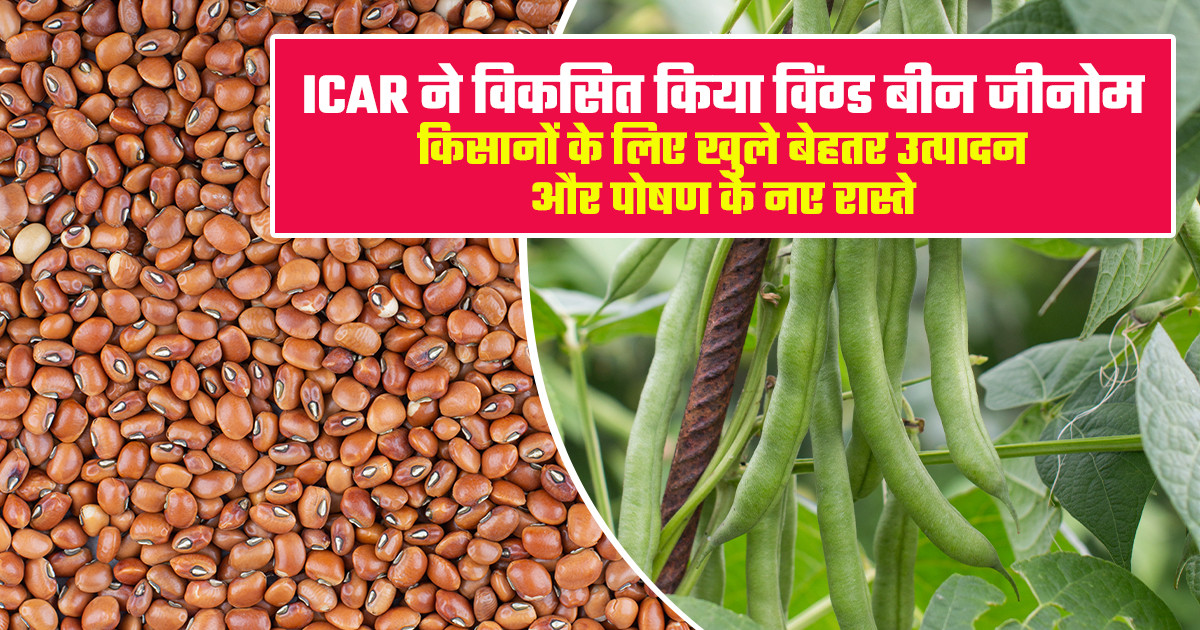
Landmark achievement for agricultural biotechnology, scientists at the Indian Council of Agricultural Research (ICAR) have successfully developed the world's first high-quality chromosome-scale reference genome of Winged Bean (Psophocarpus tetragonolobus). The breakthrough, accomplished by researchers at ICAR's institute in Ranchi, provides a strong scientific foundation for developing high-yielding, drought-tolerant, heat-resistant, disease-resistant, and nutrient-rich varieties of this promising legume crop. The discovery is expected to support sustainable agriculture, strengthen food and nutritional security, and improve farmers' incomes in the face of climate change.
Winged bean is a highly nutritious legume recognized as one of the most promising future superfood crops. Nearly every part of the plant including its pods, seeds, leaves, and tubers is edible and rich in protein, vitamins, minerals, and essential nutrients.
One of its greatest advantages is its remarkable adaptability to harsh climatic conditions. The crop performs well under limited water availability, high temperatures, and adverse weather, making it an ideal candidate for climate-resilient farming systems. Scientists believe winged bean could play a significant role in ensuring future food and nutritional security.
Using advanced genomic technologies, researchers successfully assembled and mapped approximately 98% of the winged bean's 698-megabase (MB) genome across nine chromosomes. This is the world's first chromosome-scale reference genome for winged bean, providing an invaluable resource for researchers worldwide. The genome sequence will enable scientists to better understand the crop's genetic architecture, productivity traits, nutritional characteristics, and resistance mechanisms, accelerating future breeding programmes.
The research team identified 53,745 genes within the winged bean genome. Notably, over 750 genes were found to be associated with lipid metabolism, which governs the synthesis and utilization of fats and oils. These findings open new opportunities for developing nutrient-enriched food products, plant-based protein sources, healthier edible oils, and value-added agricultural products. The research could also contribute to global efforts to combat malnutrition through the development of more nutritious crop varieties.
Scientists believe the newly developed genome sequence will significantly accelerate the breeding of improved winged bean varieties that can tolerate drought and heat stress more effectively. Resist major pests and diseases. Deliver higher yields with fewer production inputs, Offer enhanced nutritional quality. The achievement is expected to strengthen climate-smart and sustainable agriculture, helping farmers adapt to increasingly unpredictable weather conditions while maintaining productivity.
Boosting Farmers' Income and Advancing Agricultural Research:
Experts believe this scientific breakthrough extends far beyond laboratory research. The availability of a high-quality reference genome will enable breeders to develop superior winged bean varieties with greater productivity and resilience, offering farmers a profitable alternative crop with lower production risks.
The achievement also reinforces India's growing leadership in agricultural biotechnology, crop genomics, nutritional security, and climate-resilient crop improvement. As research progresses, winged bean has the potential to emerge as a high-value crop that supports sustainable farming, diversified agricultural systems, and increased farm incomes while contributing to global food security.
FAQs:
1. What is the Winged Bean Genome?
The Winged Bean Genome is the world's first chromosome-scale reference genome developed for winged bean by ICAR scientists, helping researchers improve crop breeding and productivity.
2. Why is winged bean considered a superfood?
Winged bean is rich in protein, vitamins, minerals, and essential nutrients. Nearly every part of the plant is edible, making it a highly nutritious crop.
3. How many genes were identified in the Winged Bean Genome?
Scientists identified 53,745 genes, including more than 750 genes related to lipid metabolism and nutritional improvement.
4. How will the Winged Bean Genome benefit farmers?
The genome will help develop higher-yielding, drought-tolerant, disease-resistant, and nutrient-rich varieties, improving productivity and farmers' incomes.
5. Why is this ICAR research important?
This achievement positions India as a leader in agricultural biotechnology and supports climate-resilient farming, sustainable agriculture, and future food security.