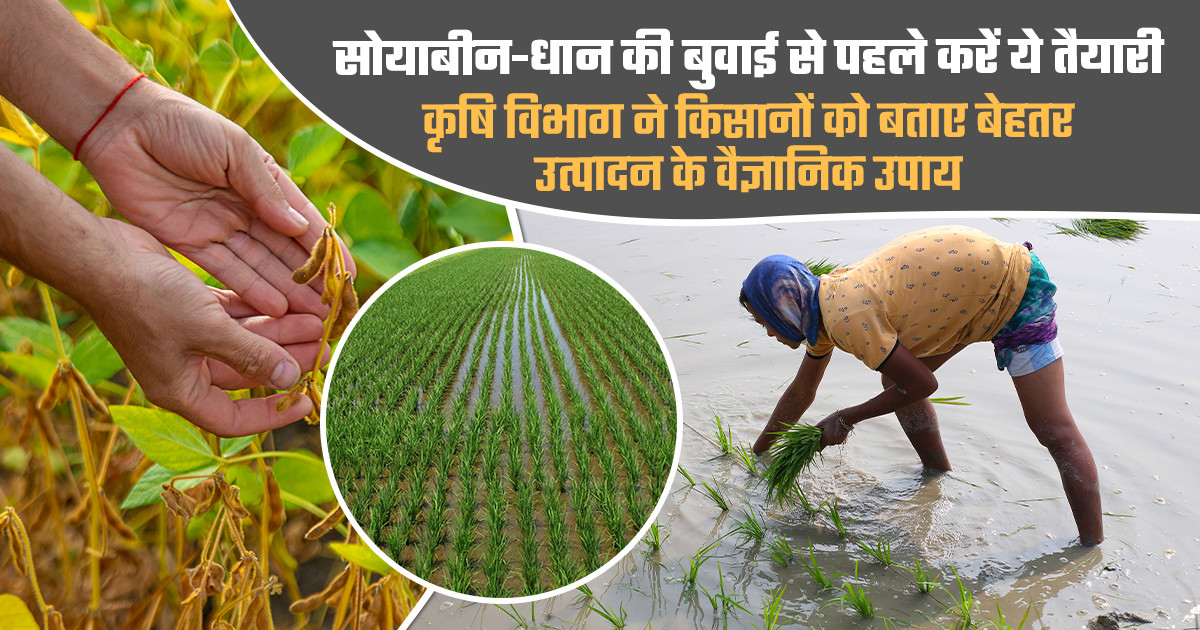
With the Kharif 2026 sowing season underway, the Madhya Pradesh Department of Farmer Welfare and Agriculture Development has issued an important advisory for farmers amid below-normal rainfall in several districts. The department has cautioned farmers against rushing to sow soybean and paddy before sufficient soil moisture is available, warning that premature sowing may result in poor germination, uneven crop establishment, and the need for costly re-sowing. Farmers have been advised to base sowing decisions on actual field conditions rather than the calendar to ensure better crop performance.
Agricultural experts emphasize that soil moisture is the most critical factor for successful Kharif sowing. Farmers should begin sowing only when moisture has penetrated to a depth of approximately four inches (about one handspan) and the field reaches the ideal moisture condition required for seed germination. Sowing seeds in dry or inadequately moist soil can significantly reduce germination rates, leading to poor plant population and, in many cases, forcing farmers to undertake re-sowing, thereby increasing cultivation costs and reducing productivity.
Agriculture Department Director Umashankar Bhargava has instructed field-level officials to remain in close contact with farmers and provide timely guidance based on local weather conditions. Farmers in districts that have received below-normal rainfall have been specifically advised to postpone sowing until adequate rainfall ensures sufficient soil moisture.
Farmers who have access to irrigation are encouraged to utilize this period to improve soil fertility before sowing. The department recommends cultivating green manure crops such as dhaincha and sunhemp, which help increase organic matter and improve soil health. Farmers are also advised to prepare their fields by applying balanced nutrients based on soil test recommendations, including Well-decomposed farmyard manure (FYM), Vermicompost, Single Super Phosphate (SSP), Muriate of Potash (MOP), Zinc Sulphate, Gypsum Balanced nutrient application helps create favourable conditions for healthy crop growth and improved yields.
The Agriculture Department has advised soybean growers to conduct a seed germination test before planting. Only seed lots with a minimum germination rate of 70% should be used. Farmers are also encouraged to select drought-tolerant and disease-resistant varieties suitable for local conditions. Treating seeds with recommended fungicides and biofertilizers before sowing can protect young seedlings from early-stage diseases and promote vigorous crop establishment.
Use Modern Farm Machinery for Better Crop Performance:
The department has recommended the use of modern agricultural implements to improve sowing efficiency and reduce weather-related risks. Farmers are encouraged to use: Ridge and Furrow Seed Drill, Broad Bed and Furrow (BBF) Seed Drill, Hand-operated Seed Dibbler. These implements improve drainage, reduce the risk of waterlogging, and help crops withstand both excess rainfall and moisture stress, leading to healthier crop growth and higher productivity.
Prioritize Rainwater Harvesting:
The advisory also highlights the importance of rainwater conservation for sustainable farming. Farmers are encouraged to harvest rainwater through farm ponds, village ponds, recharge pits, and wells for future irrigation needs. Recharging wells and tube wells in waterlogged areas can also help improve groundwater levels and strengthen long-term water security.
Follow Scientific Advice for Better Kharif Production:
The Agriculture Department has urged farmers to closely monitor weather forecasts and remain in regular contact with local agricultural officers before making sowing decisions. Following scientific recommendations and waiting for favourable soil moisture conditions can help ensure better germination, healthy crop establishment, improved productivity, and reduced financial risk during the Kharif season.
FAQs:
1. Why is the Agriculture Department delaying Kharif 2026 sowing?
Because several districts have received below-normal rainfall, farmers are advised to wait until adequate soil moisture is available for better germination.
2. How much soil moisture is needed before soybean sowing?
Farmers should begin soybean sowing only after moisture reaches around four inches deep in the soil.
3. What is the minimum germination percentage for soybean seeds?
The department recommends using soybean seeds with a minimum germination rate of 70%.
4. Which farm implements are recommended for Kharif sowing?
Ridge and Furrow Seed Drill, Broad Bed and Furrow (BBF) Seed Drill, and Hand-operated Seed Dibbler are recommended.
5. How can farmers conserve water during the Kharif season?
Farmers should adopt rainwater harvesting through farm ponds, recharge pits, village ponds, and wells to improve future irrigation and groundwater availability.