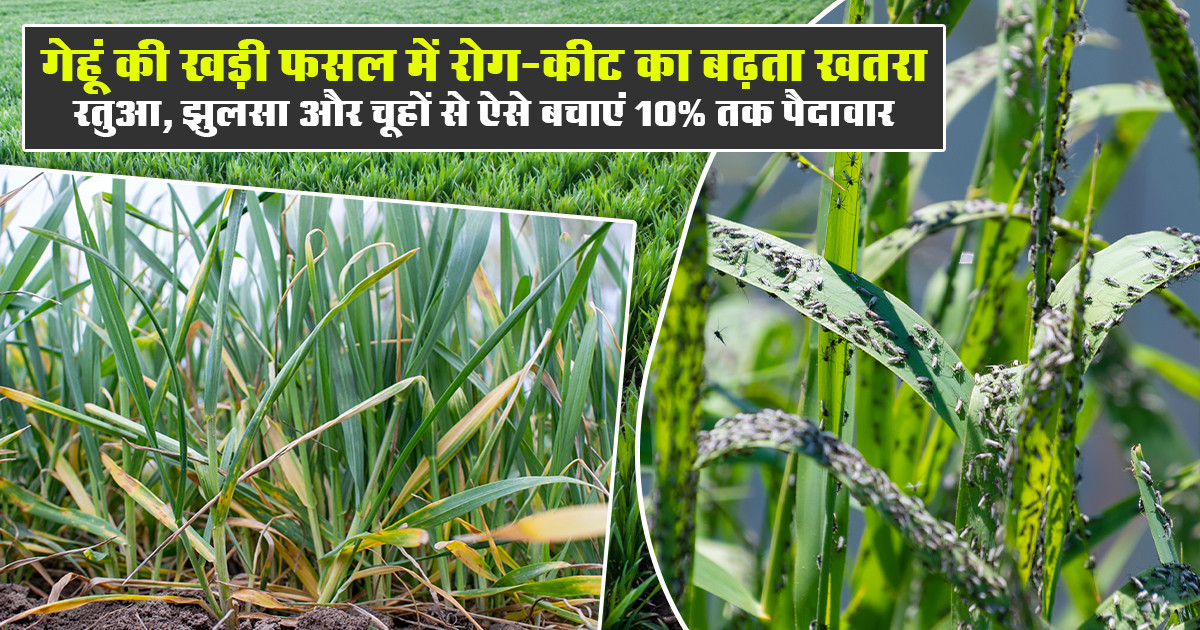
At this stage, standing wheat crops face a rapidly increasing risk of diseases and pests, which can reduce yields by 5–10 percent if not managed in time. Diseases such as rust, blight and Karnal bunt, along with pests like termites, aphids and rodents, pose serious challenges for farmers. However, timely selection of resistant varieties, proper chemical sprays and effective crop management can significantly minimize losses and help safeguard production.
Rust is the most common and damaging disease in wheat and occurs in three forms yellow, brown and black rust. Blight disease causes yellow-brown spots on leaves that later turn dark brown, restricting plant growth. Karnal bunt and smut diseases turn grains in the ear heads into a black powder, adversely affecting both yield and grain quality. The most effective preventive measures include choosing disease-resistant varieties and ensuring proper seed treatment before sowing.
If symptoms of rust or blight appear in a standing crop, immediate action is essential. Spraying Mancozeb at 2 kg per hectare or Propiconazole at 500 ml per 1,000 litres of water is considered highly effective. When the risk of blight, rust and Karnal bunt exists simultaneously, the use of Propiconazole becomes crucial. Timely spraying not only improves grain quality but also helps secure overall production.
Along with diseases, insect pests can cause significant damage to wheat. Termites weaken plants by attacking roots, while the Gujia weevil cuts young plants from below the soil surface. Aphids suck sap from leaves and ear heads, slowing plant growth and reducing productivity. To control these pests, seed treatment with Chlorpyrifos at the time of sowing is recommended. Suitable insecticides can also be applied with irrigation water in standing crops.
Combining chemical control with biological methods yields better and safer results. Biological pesticides such as Beauveria bassiana, when mixed with farmyard manure and applied to the field, effectively control termites and other soil-borne pests. For aphids, spraying neem oil (Azadirachtin) is a safe and cost-effective option. In cases of severe infestation, Dimethoate or Thiamethoxam can be sprayed by dissolving them in 750–1,000 litres of water.
Six-Day Rodent Control Programme: Rodents are among the biggest threats to wheat crops, but systematic control can effectively reduce their population. On the first day, identify and close active burrows. On the second and third days, place non-poisoned bait to build rodent confidence. On the fourth day, apply poisoned bait mixed with zinc phosphide. On the fifth and sixth days, bury dead rodents and seal remaining burrows. Placing Bromadiolone pellets in burrows is also an effective method for long-term rodent control.
FAQs
1. How can I identify rust disease in wheat?
Rust appears as yellow, brown, or black pustules on wheat leaves and stems.
2. What is the best time to spray fungicides for wheat diseases?
Spray fungicides as soon as symptoms like rust or blight are noticed for effective control.
3. Which insecticide is recommended for seed treatment in wheat?
Chlorpyrifos is widely recommended for seed treatment to protect against pests.
4. Can neem oil control aphids in wheat?
Yes, neem oil (Azadirachtin) is a safe and cost-effective option for aphid control.
5. How to effectively control rodents in wheat fields?
Follow a six-day rodent control program involving baiting, burrow sealing, and use of Bromadiolone pellets.