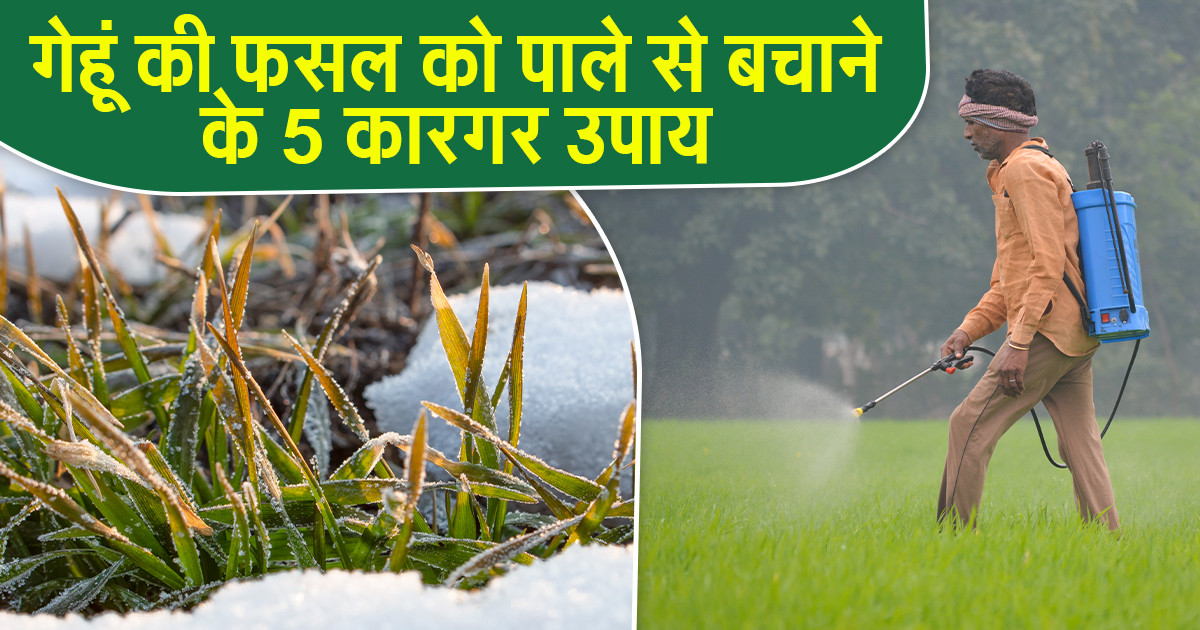
During the winter season, frost damage to wheat crops becomes a major concern for farmers. A sudden drop in temperature can slow down plant growth and directly impact crop yield. However, by adopting the right agricultural practices at the right time, the adverse effects of frost can be significantly reduced, ensuring healthy growth and better production.
The first and most important step to protect wheat from frost is to closely monitor weather forecasts. By tracking the expected dates of frost occurrence, farmers can plan irrigation, fertilizer management, and other preventive measures in advance. If required, crops can also be covered or protected using suitable techniques to minimize frost damage.
Light irrigation before the onset of frost is highly beneficial. Moist soil retains more heat compared to dry soil, which helps protect crops from extreme cold. This practice is particularly effective in regions where nighttime temperatures drop close to freezing point.
Selecting frost-tolerant wheat varieties is a smart strategy to reduce frost-related risks. In fields where insufficient fertilizer was applied before sowing, providing essential nutrients before peak winter helps improve crop resilience.
According to agricultural experts, a balanced application of nitrogen, phosphorus, and potash is essential to protect wheat crops from frost. Phosphorus, in particular, plays a key role in root development, nutrient absorption, and improving cold tolerance. However, excessive use of nitrogen can make plants weak and overly tall, increasing their vulnerability to frost damage.
Mulching is another effective method to safeguard wheat crops from frost. Spreading straw or well-decomposed organic matter over the field helps maintain stable soil temperature and shields plants from severe cold. A mulch layer of about 3 centimeters is considered ideal. Mulching is most beneficial when crop growth slows down during winter, and the layer should be removed before growth resumes in spring.
In addition to frost protection, mulching also acts as a natural source of nitrogen. Generally, 500 to 800 kilograms of straw or organic material per acre is recommended. However, this method should be avoided in alkaline or highly saline soils.
Avoid Urea Application During Frost:
Urea should not be applied when frost or ice is present in the field. Doing so can further lower the temperature around plants and cause additional damage, especially to young seedlings.
Right Techniques Lead to Better Productivity: By following these practices, farmers can significantly reduce frost-related losses in wheat crops during winter. Timely irrigation, balanced nutrition, selection of frost-resistant varieties, and mulching not only protect the crop but also ensure healthier growth and improved yields in the upcoming season.
Q1: When is the best time to irrigate wheat for frost protection?
A1: Light irrigation just before the onset of frost, usually in the evening, helps retain soil heat overnight.
Q2: Can all wheat varieties tolerate frost?
A2: No, farmers should select frost-tolerant wheat varieties recommended by agricultural experts or Khetivyapar.
Q3: How does mulching help in frost protection?
A3: Mulching maintains stable soil temperature and protects roots from freezing cold.
Q4: Why should urea be avoided during frost?
A4: Urea application during frost can reduce temperature around plants, causing additional damage.
Q5: How to monitor frost forecasts effectively?
A5: Use reliable weather apps or Khetivyapar advisory services to get timely frost alerts.