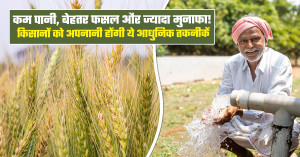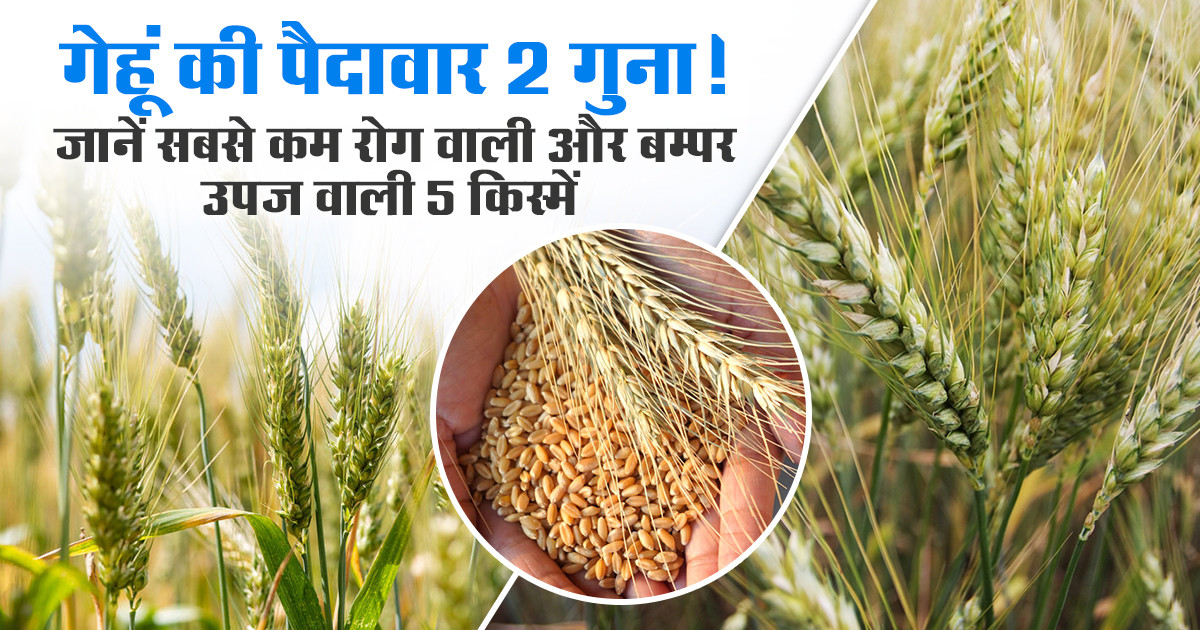
As the Rabi season begins, farmers across the country have started preparing for wheat sowing. Every year, growers face the crucial question of which wheat variety will offer higher yield, better grain quality, and lower disease incidence. Experts emphasize that the success of the crop largely depends on choosing the right variety, as both climate and soil significantly influence wheat growth and productivity.
Keeping this in mind, agricultural scientists have shortlisted five high-yielding and disease-resistant wheat varieties for this season. Under suitable field conditions, these varieties can deliver average yields of 45–50 quintals per hectare and may even reach 60–70 quintals per hectare.
Apart from higher productivity, these varieties are known for superior grain quality, making them suitable for chapati and commercial processing. Here is a detailed look at the five recommended varieties:
Muktinath 3170 is a hard-grain variety considered excellent for milling and processing.
Key Features:
Popular in the warm regions of Gujarat, GW 451 is a preferred choice for flour and semolina industries.
Key Features:
Known for its high protein content and excellent chapati quality, HI 1633 remains a top choice for farmers.
Key Features:
This variety performs exceptionally well in humid and moisture-rich regions of eastern India.
Key Features:
5. PBW 826 — The Top High-Yielding Variety:
PBW 826 has gained major traction this year due to its exceptionally high yield potential.
Key Features:
How Should Farmers Select the Right Wheat Variety?
Agriculture experts advise farmers to consider the following points before finalizing a variety:
For well-irrigated regions: HI 1633
For low-water areas: Muktinath 3170
Read More- Good News for Paddy Sellers — Payments Faster Than Last Year