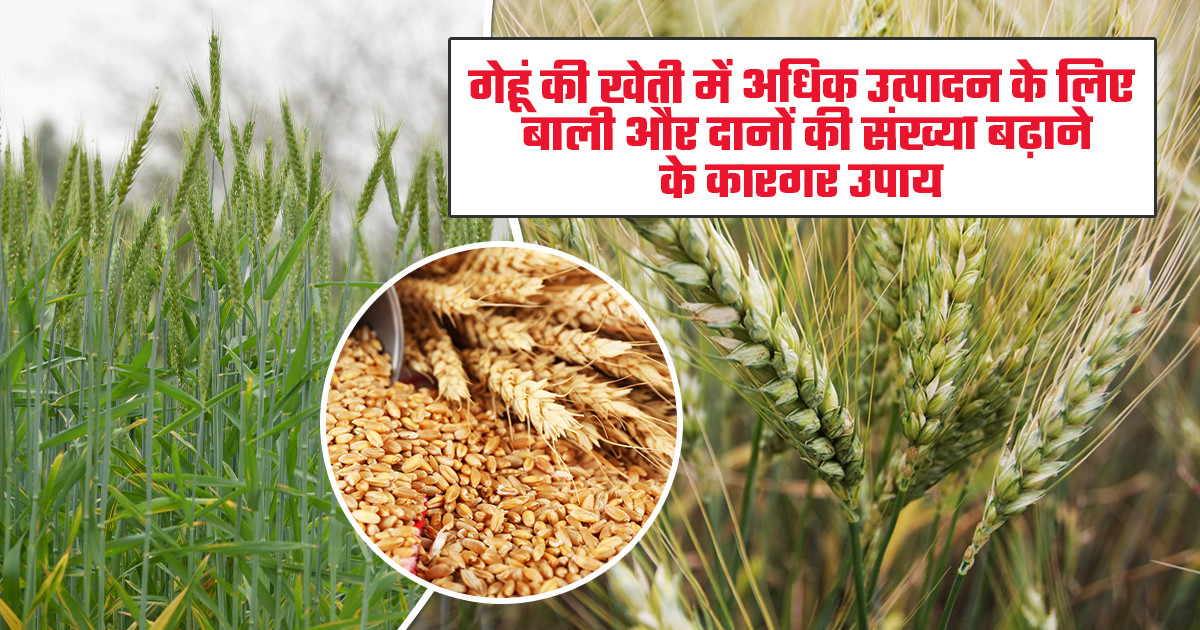
To achieve higher wheat production, farmers need to focus not only on vegetative growth but also on increasing spike length and the number of grains per spike. According to agricultural experts, this can be achieved through the balanced and timely application of NPK, phosphorus, potash, and boron. Supplying the right nutrients at the right stage helps develop stronger spikes and improves grain filling.
Agricultural scientists emphasize that phosphorus and potash play a crucial role in the grain formation process of wheat. Adequate availability of these nutrients leads to longer spikes and a higher number of grains per spike. While potash strengthens the plant and improves stress tolerance, phosphorus supports root development and efficient grain filling.
Farmers can meet the crop’s phosphorus and potash requirements through NPK fertilizer, which is widely available and cost-effective. In addition, the application of boron is considered highly beneficial. Boron improves the pollination process, increasing the chances of better grain setting and ensuring nutrient-rich, well-developed spikes.
For higher wheat yields, providing these nutrients through foliar spraying is more effective. Agricultural experts suggest that timely spraying of lihosin, tebuconazole, NPK, and boron can significantly enhance crop productivity when applied at the recommended growth stage.
Farmers may apply these nutrients either together or separately. Generally, spraying NPK and boron together is recommended. However, special care must be taken while preparing the spray solution, as mixing certain chemicals can sometimes cause the solution to split or its temperature to change abnormally (becoming too hot or too cold). Such changes can reduce effectiveness and may harm the crop.
Key Precautions During Spraying: Boron should not be applied in excessive amounts, as even small quantities are highly effective. Before any combined spray, farmers should always check the compatibility of chemicals to ensure there is no loss in quality. If the solution splits or shows unusual temperature changes, spraying should be done with caution to avoid potential crop damage.
FAQs:
Q1. Which nutrients are most important for increasing grains per spike in wheat?
Phosphorus, potash, NPK fertilizer, and boron are most important for increasing grains per spike.
Q2. Is boron necessary for wheat crops?
Yes, boron improves pollination and grain setting, resulting in better spike development.
Q3. When should foliar spray be applied in wheat?
Foliar spray should be applied at the recommended growth stage, especially before and during spike formation.
Q4. Can NPK and boron be sprayed together?
Yes, but farmers must check chemical compatibility before mixing.
Q5. What happens if boron is used in excess?
Excess boron can damage the crop, so it should always be used in limited and recommended quantities.