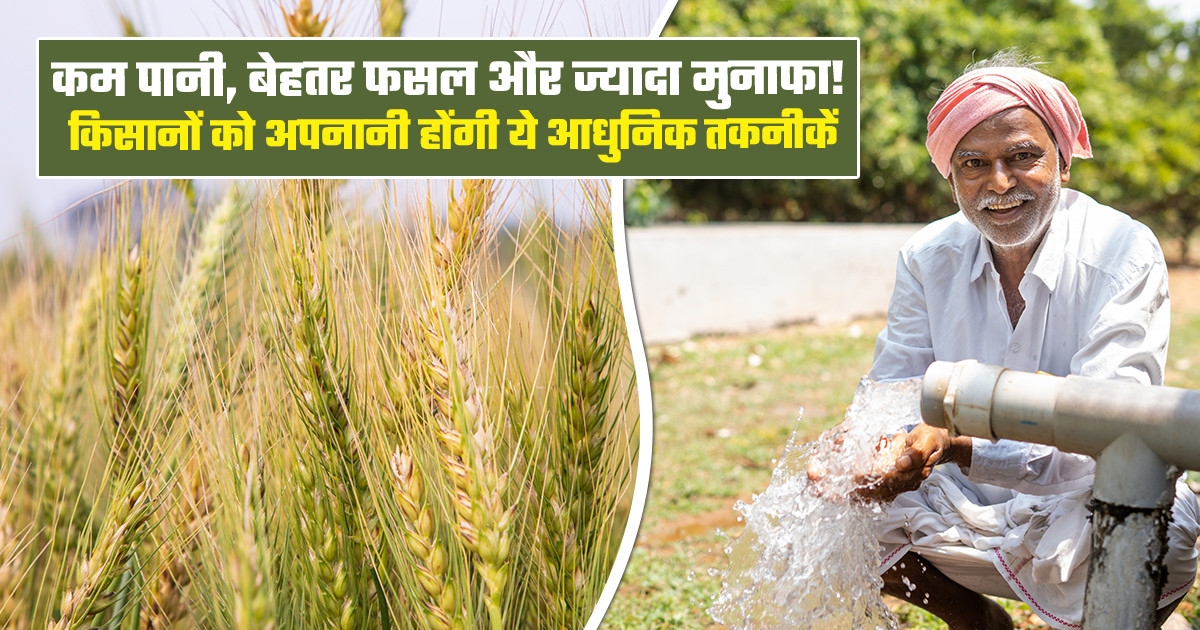
From improved crop varieties and efficient irrigation to soil testing, residue management and digital marketplaces, farmers are being encouraged to adopt modern technologies that can improve productivity while reducing input-related challenges. Special emphasis is being placed on biofortified wheat varieties such as HI 1650, HI 1636, HI 1633 and HI 1655, along with the high-yielding Pusa Arhar 16 variety. At the same time, soybean growers have been advised to remain alert to diseases including pod blight, collar rot, charcoal rot and Rhizoctonia aerial blight, particularly during the crop's fruiting and pod formation stage.
Farmers are being encouraged to adopt improved wheat varieties that offer better nutritional value along with crop productivity. Biofortified wheat varieties contain important micronutrients such as iron and zinc, making them an important option for promoting nutrition-oriented agriculture. The recommended wheat varieties include HI 1650, HI 1636, HI 1633 and HI 1655. Alongside wheat, farmers are also being encouraged to cultivate Pusa Arhar 16, an improved pigeon pea variety with higher production potential.
Efficient water management is another key area being emphasized. Farmers are being encouraged to adopt pressurized pipe irrigation systems, which can improve the efficiency of irrigation and help conserve water.Government support in the form of subsidies is also available for laying pipelines for agricultural irrigation. Farmers have been advised to make use of these facilities wherever applicable. At the same time, greater use of soil testing laboratories operating across districts has been recommended. Regular soil testing can help farmers understand the nutrient status of their fields and make more informed decisions regarding fertilizer application.
Farmers are also being advised not to rely exclusively on DAP and to consider the appropriate use of NPK fertilizers for balanced crop nutrition. NPK supplies the major nutrients required by crops, and its application based on crop and soil requirements can support better nutrient management. Alongside fertilizer availability, improvements are also being proposed in the distribution system. Double-lock fertilizer centres are being modernized with an emphasis on reducing waiting time for farmers. Arrangements such as adequate seating are also being encouraged to make fertilizer distribution more convenient.
Avoid Burning Crop Residue; Use Happy Seeder and Super Seeder:
Farmers are being urged to avoid burning crop residue, commonly known as narwai, because residue burning can adversely affect soil health. Instead, machines such as the Happy Seeder and Super Seeder can be used for sowing while managing crop residues in the field. Keeping the residue in the field can help retain nutrients and contribute to better soil management. Farmers who have already adopted Happy Seeder-based sowing have reportedly observed encouraging results, highlighting the potential of residue-management technologies in field conditions.
e-Mandi and Farm Gate App to Make Crop Selling More Convenient:
Digital platforms are also being promoted to make agricultural marketing more efficient. Efforts are underway to strengthen the e-Mandi system and make agricultural markets more technology-driven, with the objective of reducing the time farmers spend at mandis while selling their produce. The Farm Gate app provides another option for registered farmers to sell their agricultural produce from home. Such digital initiatives can reduce the need for repeated visits to physical markets and make the selling process more convenient for farmers.
Soybean Farmers Advised to Watch for Major Diseases:
Soybean crops are currently at the fruiting and pod formation stage, making regular crop monitoring particularly important. Farmers have been advised to inspect their fields regularly for symptoms of major fungal diseases, including pod blight, collar rot, charcoal rot and Rhizoctonia aerial blight. Timely identification of symptoms and the use of recommended fungicides have been advised for managing disease outbreaks.
Charcoal Rot: Watch for Yellowing and Browning of Leaves:
plants affected by charcoal rot, leaves may become smaller and turn yellow before eventually developing a brown appearance. For management, spraying Pyroclostrobin 333 g/L SC at 300 grams per hectare has been recommended.
Collar Rot: Warm and Humid Conditions Can Increase Risk:
Collar rot can spread under warm and humid conditions. Infected plants may develop small, round, reddish-brown sclerotia on the stem. As the infection becomes severe, plants may wilt and eventually collapse. For control, farmers have been advised to use either Pyroclostrobin 163 g/L + Epoxiconazole 50 g/L SE at 750 ml per hectare, or Carbendazim 12% + Mancozeb 63% at 1.25 kg per hectare, as recommended.
Pod Blight: Monitor Crops during High Moisture Conditions:
Pod blight can be associated with fungal, seed-borne and soil-borne infection, with prolonged rainfall and excessive moisture potentially increasing the risk. For disease management, the recommended options include Tebuconazole 25.9% EC at 625 ml per hectare or Tebuconazole 10% + Sulphur 65% at 1.25 kg per hectare.
Read More.. Check the latest crop prices before you sell your produce. KhetiVyapar brings you updated market prices today from major agricultural markets, helping farmers track the latest rates of wheat, rice, soybean, onion, garlic, tomato and other crops. Visit the Mandi Bhav Today page for the latest market rates.
Rhizoctonia Aerial Blight: Look for Brown-Red Oval Spots:
Rhizoctonia aerial blight is associated with soil- and seed-borne fungal infection and can become more prevalent under warm and humid conditions. One of the key symptoms is the appearance of small to large brownish-red oval lesions on the lower surface of leaves. For management, farmers have been advised to use either Tebuconazole 10% + Sulphur 65% at 1.25 kg per hectare or Pyroclostrobin 20% WG at 500 grams per hectare.
FAQs:
1. Which biofortified wheat varieties are being promoted?
HI 1650, HI 1636, HI 1633 and HI 1655 are among the biofortified wheat varieties being promoted for improved nutrition and productivity.
2. What is Pusa Arhar 16?
Pusa Arhar 16 is an improved pigeon pea variety known for its higher production potential.
3. Why is soil testing important for farmers?
Soil testing helps farmers understand the nutrient status of their fields and make better decisions about fertilizer application.
4. Which major diseases should soybean farmers monitor?
Soybean farmers should regularly monitor crops for pod blight, collar rot, charcoal rot and Rhizoctonia aerial blight.
5. How can Happy Seeder and Super Seeder help farmers?
These machines help farmers manage crop residue while sowing, reducing the need to burn residue and supporting better soil management.