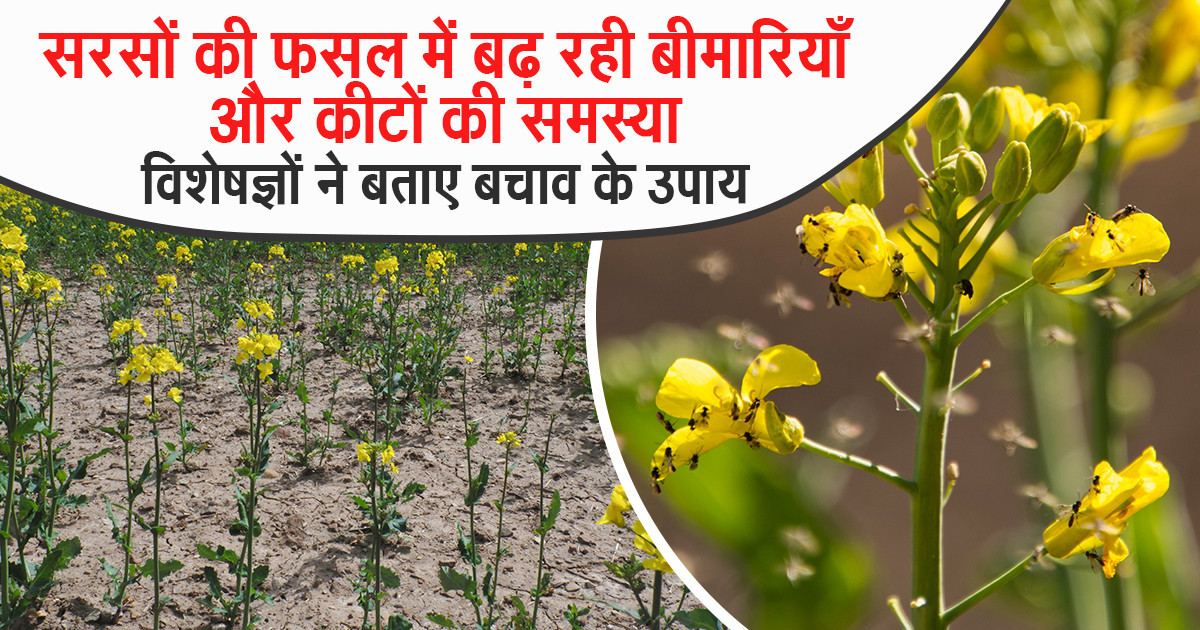
Mustard, one of the most important oilseed crops of the Rabi season, is currently facing attacks from multiple pests. Without timely precautions, farmers may suffer significant yield losses. The continuous drop in temperatures during December and the presence of morning and evening dew create ideal conditions for rapid pest infestation. The impact of the cold wave is becoming visibly evident in fields, particularly affecting mustard, potatoes, and other Rabi crops making increased vigilance essential for farmers.
According to agricultural experts, aphids are considered the most harmful pest affecting mustard crops. These tiny brown or black insects suck the sap from plant tissues, causing:
Control Measure:
To protect the crop from aphid attacks, mix 200 ml of Chlorpyrifos 20% EC in 200 liters of water and spray it per acre. Timely spraying is crucial to prevent severe damage.
Mustard crops are more vulnerable during winter due to extreme cold, frost, and dense fog. In some areas, the use of saline water or soils with high salt content further increases disease risks. This makes early identification and prompt treatment absolutely essential.
Shiv Shankar Verma, In-charge Officer at the Government Agriculture Center, Shivgarh (Rae Bareli), explains that:
can be extremely harmful for mustard crops. These conditions slow plant growth, damage leaves, and create a favorable environment for disease development. If not addressed in time, farmers may experience a substantial drop in production.
What Should Farmers Do? – Prevention Is the Most Effective Strategy:
Experts recommend the following preventive measures:
Read More- How to do Mustard cultivation and disease and management