The progress of kharif sowing in India has shown a mixed trend this season. As of August 7, 2026, farmers had covered around 967.92 lakh hectares under major kharif crops, which is 17.96 lakh hectares lower than the 985.89 lakh hectares recorded during the corresponding period last year.
While the overall acreage remains below last year's level, oilseeds have emerged as a bright spot, with their area increasing by 5.19 lakh hectares. Groundnut and sesame recorded notable gains. On the other hand, rice, pulses, coarse cereals and cotton witnessed a decline in acreage compared with the previous year.
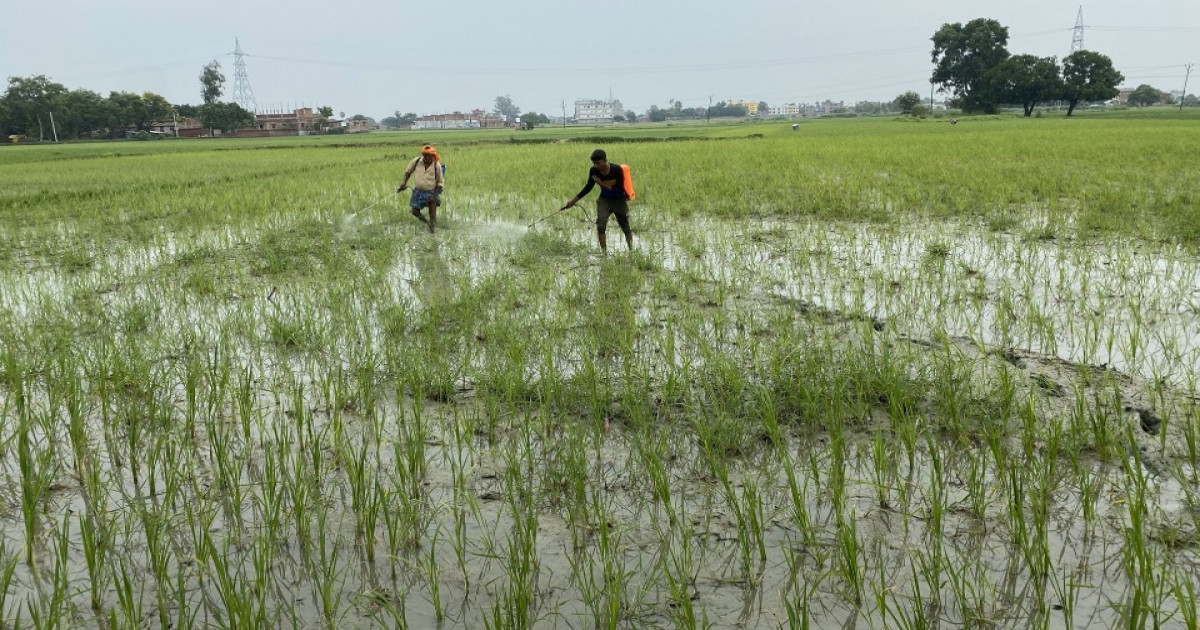
Rice remained one of the major crops showing a decline in planted area. By August 7, rice had been sown across 344.78 lakh hectares, compared with 360.67 lakh hectares during the same period last year. This represents a decline of 15.90 lakh hectares year-on-year. The normal rice area, based on the average from 2020-21 to 2024-25, stands at around 412 lakh hectares, while the final area recorded in 2025 was 446.70 lakh hectares.
The total area under pulses stood at 103.78 lakh hectares as of August 7, compared with 105.73 lakh hectares during the corresponding period last year. This marks a decline of 1.95 lakh hectares. Among major pulses, tur/arhar covered 37.53 lakh hectares, down from 40.14 lakh hectares last year. In contrast, urad acreage increased to 22.86 lakh hectares from 20.29 lakh hectares. The area under moong stood at 31.37 lakh hectares, compared with 33.21 lakh hectares a year earlier. The figures indicate a mixed trend within the pulses segment, with some crops gaining acreage while others declined.
The area under Shri Anna and other coarse cereals stood at 168.50 lakh hectares, against 173.21 lakh hectares last year. The category therefore recorded a decline of 4.71 lakh hectares. Maize acreage stood at 87.15 lakh hectares, compared with 90.63 lakh hectares during the same period last year. Jowar, however, recorded a marginal increase, reaching 12.82 lakh hectares from 12.61 lakh hectares. Bajra, ragi and small millets registered lower acreage compared with the previous year.
Oilseeds have shown the strongest growth among the major kharif crop groups. Their total acreage reached 180.20 lakh hectares by August 7, compared with 175.01 lakh hectares last year. This represents an increase of 5.19 lakh hectares. Groundnut accounted for a significant part of this increase. Its acreage rose to 46.82 lakh hectares, compared with 43.11 lakh hectares last year, marking a gain of 3.71 lakh hectares. Soybean acreage remained broadly stable at 119.92 lakh hectares, marginally higher than the 119.66 lakh hectares recorded last year. The area under sesame also increased to 9.96 lakh hectares, compared with 8.52 lakh hectares during the corresponding period last year.
Sunflower and Other Oilseeds Show Mixed Trends:
Sunflower acreage increased to 1.01 lakh hectares, up from 0.59 lakh hectares last year. However, castor acreage declined to 2.27 lakh hectares from 2.95 lakh hectares. Niger seed also recorded a marginal decline, with its acreage standing at 0.12 lakh hectares. Overall, the expansion in oilseed acreage remains an encouraging development for the agricultural sector, particularly amid the country's efforts to strengthen domestic oilseed production.
Sugarcane Acreage Remains Almost Stable:
Sugarcane sowing stood at 58.31 lakh hectares as of August 7, compared with 58.62 lakh hectares during the same period last year. The decline was marginal at just 0.31 lakh hectares. Moreover, the current acreage remains above the normal area of 54.20 lakh hectares.
Cotton Area Marginally Lower:
Cotton acreage was recorded at 106.01 lakh hectares, compared with 106.42 lakh hectares last year. This represents a modest decline of 0.41 lakh hectares. However, the current cotton acreage remains substantially below the normal area of 125.51 lakh hectares, indicating that planting remains behind the long-term average.
Jute and Mesta Acreage Shows Slight Improvement:
Jute and mesta were planted across 6.34 lakh hectares, up from 6.22 lakh hectares during the corresponding period last year. The category recorded a modest increase of 0.12 lakh hectares.
Overall Kharif Acreage Remains below Last Year:
The cumulative acreage under major kharif crops stood at 967.92 lakh hectares as of August 7, 2026, compared with 985.89 lakh hectares during the corresponding period in 2025. This translates into an overall decline of 17.96 lakh hectares. The crop-wise pattern suggests that farmers' planting choices are shifting across different crop categories. The expansion in oilseeds, particularly groundnut and sesame, is a positive development, while the lower acreage under rice, pulses, coarse cereals and cotton will remain important to monitor as the kharif season progresses.
Weather conditions, soil moisture, irrigation availability and the remaining sowing window are likely to play a crucial role in determining the final kharif acreage and production outlook.
|
Crop |
2025 Area (lakh ha) |
2026 Area (lakh ha) |
Change |
|
Rice |
360.67 |
344.78 |
-15.90 |
|
Pulses |
105.73 |
103.78 |
-1.95 |
|
Coarse Cereals |
173.21 |
168.50 |
-4.71 |
|
Oilseeds |
175.01 |
180.20 |
+5.19 |
|
Sugarcane |
58.62 |
58.31 |
-0.31 |
|
Jute & Mesta |
6.22 |
6.34 |
+0.12 |
|
Cotton |
106.42 |
106.01 |
-0.41 |
|
Total |
985.89 |
967.92 |
-17.96 |
Note: Figures are based on the kharif sowing position available as of August 7, 2026, with area measured in lakh hectares.
FAQs:
1. What is the total kharif sowing area in 2026?
As of August 7, 2026, major kharif crops covered 967.92 lakh hectares.
2. Which kharif crop recorded the biggest increase?
Oilseeds recorded the biggest increase, rising by 5.19 lakh hectares.
3. How much did rice acreage decline?
Rice acreage declined by 15.90 lakh hectares compared with the same period last year.
4. What happened to groundnut sowing?
Groundnut acreage increased from 43.11 lakh hectares to 46.82 lakh hectares.
5. Why is kharif sowing important?
Kharif sowing determines the production outlook for major crops and is influenced by rainfall, soil moisture, irrigation and weather conditions.