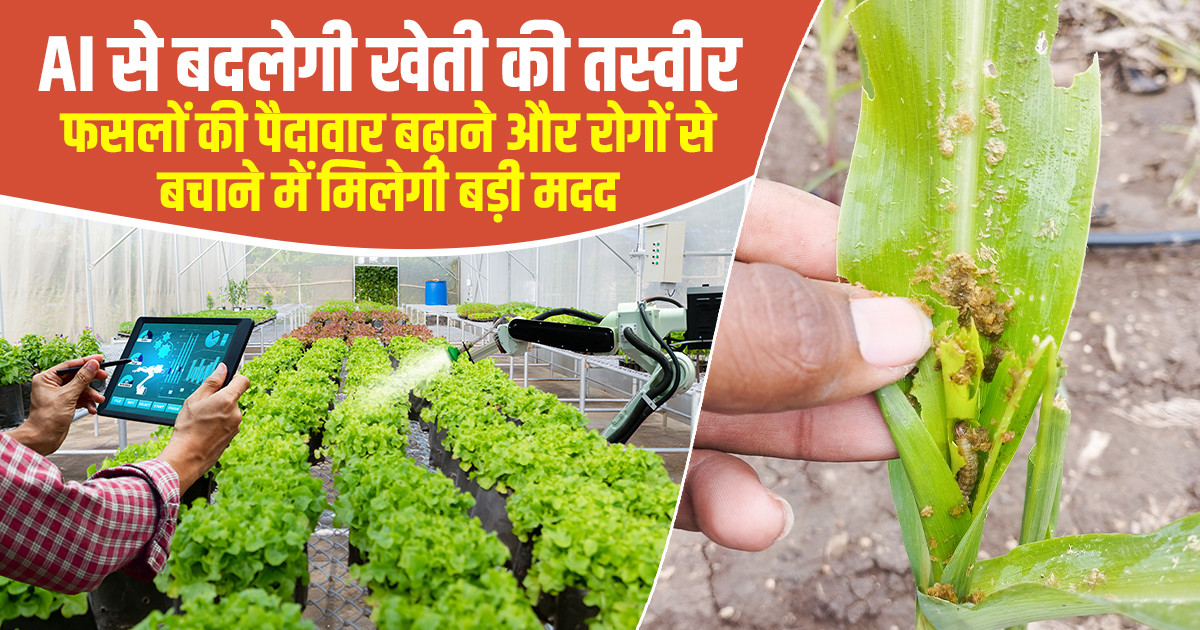
India has achieved a major breakthrough in agricultural science and biotechnology with the development of the world’s first Artificial Intelligence (AI)-powered genome editing tool designed specifically for crops. Scientists at the Central Rice Research Institute (CRRI), working under the Indian Council of Agricultural Research, have created this advanced technology, which is being seen as a significant step toward the future of smart farming.
Researchers believe the innovation could help improve crop productivity, strengthen resistance against diseases and pests, and support the development of climate-resilient crops. The technology is expected to play an important role in tackling future food security challenges while helping farmers achieve better yields at lower costs.
Genome editing is a modern scientific technique that allows precise modifications in a plant’s DNA. Unlike traditional genetic modification methods, this process does not insert foreign genes into the plant. Instead, it improves or modifies the plant’s existing genetic structure.
Scientists compare the process to a highly precise surgical correction, where weak or unwanted genetic traits can be altered to create healthier, stronger, and more productive crops. This technology has the potential to transform crop breeding and agricultural research worldwide.
The new tool was developed under the leadership of scientist Qutbuddin Ali Molla. Researchers used AI technology to design specialized enzymes capable of editing plant DNA with exceptional precision.
According to experts, the system can perform advanced tasks such as gene knockout, base editing, and prime editing more efficiently and at a lower cost than existing technologies. This could significantly reduce the time required to develop improved crop varieties and accelerate agricultural innovation.
Until now, CRISPR technology has been widely used around the world for genome editing. However, conventional CRISPR-based systems are often expensive and time-consuming.
Scientists say the new AI-powered tool offers faster results, greater accuracy, and lower operational costs. Because of these advantages, researchers believe it could become a next-generation alternative to traditional genome editing platforms and open new possibilities in crop science.
While AI-based genome editing systems for human cells have previously been explored abroad, this is the first successful AI-driven genome editing platform developed specifically for plants in India.
The achievement highlights India’s growing strength in agricultural biotechnology and advanced scientific research. Experts believe the innovation could place the country among the leading nations in next-generation agricultural technology.
Agricultural experts say the biggest beneficiaries of this technology will be farmers. The new system could help develop crop varieties that deliver higher production with lower input costs. It may also improve resistance against diseases, pests, drought, and unpredictable weather conditions caused by climate change.
As climate-related agricultural challenges continue to increase globally, technologies like AI-powered genome editing could help farmers maintain stable production and improve farm income. Stronger and more resilient crops may also contribute to improving long-term food security.
A New Era for Modern Agriculture: Scientists believe this AI-driven genome editing tool could reshape the future of farming in the coming years. By combining biotechnology with artificial intelligence, agriculture may become more sustainable, efficient, and profitable.
FAQs:
1. What is AI-powered genome editing?
AI-powered genome editing is a technology that uses artificial intelligence to make precise changes in crop DNA for better productivity and disease resistance.
2. Who developed India’s AI-powered genome editing tool?
Scientists at the Central Rice Research Institute under the Indian Council of Agricultural Research developed the tool.
3. How is AI-powered genome editing different from CRISPR?
AI-powered genome editing is believed to be faster, more accurate, and less expensive compared to traditional CRISPR technology.
4. How can farmers benefit from AI-powered genome editing?
Farmers may get higher-yield crops with better resistance against pests, diseases, drought, and climate change.
5. Why is this breakthrough important for India?
The innovation strengthens India’s position in agricultural biotechnology and could help improve future food security and smart farming technologies.