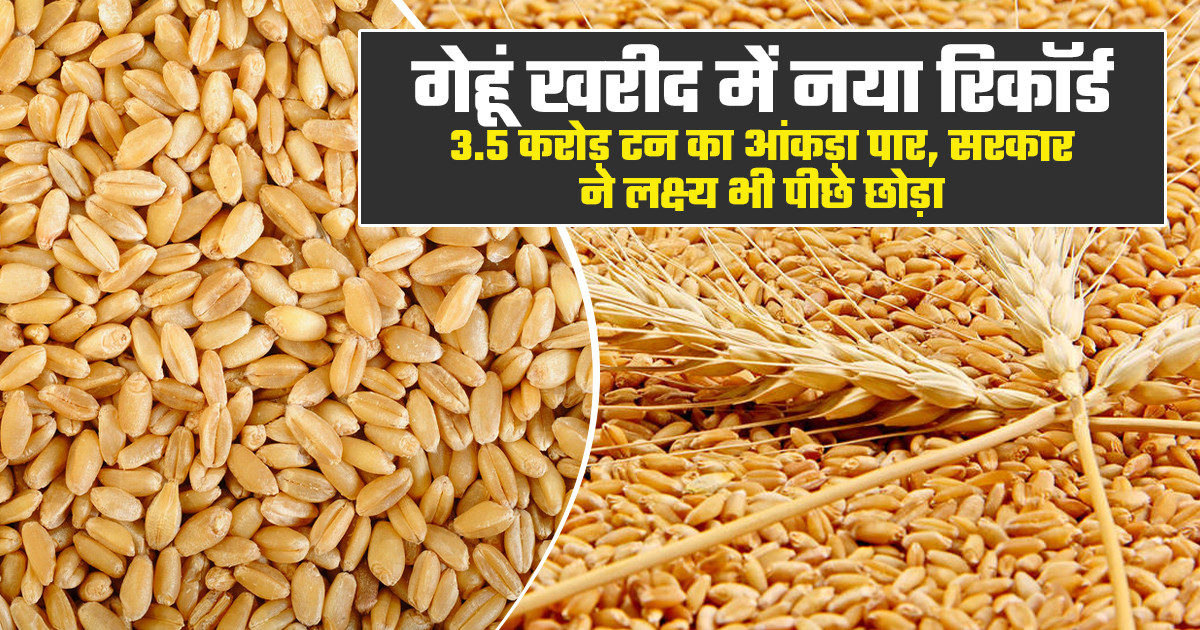
India has achieved a new milestone in wheat procurement during the Rabi Marketing Season (RMS) 2026-27, with government purchases crossing 35 million tonnes. According to the Ministry of Food, procurement has exceeded the official target of 34.5 million tonnes, marking a significant achievement for both farmers and the country's food security system.
The latest figures show that wheat procurement has increased by nearly 17 per cent compared to the previous season, reflecting strong farmer participation and an effective procurement mechanism across major wheat-producing states.
Officials indicated that procurement operations in key wheat-growing regions are nearing completion and have already surpassed the government's original target. The higher procurement volume is expected to strengthen public food grain stocks while ensuring better returns for farmers through Minimum Support Price (MSP) purchases.
The government procures wheat from farmers at the Minimum Support Price (MSP) primarily through the Food Corporation of India (FCI) and various state agencies.
The procured grain is used to meet requirements under the National Food Security Act (NFSA) and other welfare programmes, ensuring food availability for millions of beneficiaries across the country. This system also helps farmers receive a guaranteed price for their produce and protects them from market fluctuations.
Key Factors behind the Surge in Procurement:
States Leading Wheat Procurement: Punjab continued to be the largest contributor to government wheat procurement, while Madhya Pradesh recorded the most significant increase.
|
State |
Procurement in 2026-27 |
Previous Year |
|
Punjab |
12.1 million tonnes |
11.9 million tonnes |
|
Madhya Pradesh |
10.4 million tonnes |
7.8 million tonnes |
|
Haryana |
8.1 million tonnes |
7.0 million tonnes |
|
Uttar Pradesh |
1.7 million tonnes |
1.0 million tonnes |
|
Rajasthan |
2.4 million tonnes |
1.9 million tonnes |
Madhya Pradesh emerged as the standout performer, with procurement rising sharply from 7.8 million tonnes to 10.4 million tonnes. Uttar Pradesh also recorded impressive growth, with procurement nearly doubling compared to last year.
What Does This Mean for Farmers and the Country?
A Major Achievement for the Agricultural Sector:
Crossing the 35-million-tonne mark in wheat procurement represents a significant achievement for India's agricultural and food security framework. Strong production, effective procurement operations and increased farmer participation have collectively contributed to this success. The record purchase not only benefits millions of farmers but also enhances the country's ability to maintain stable food supplies for the future.
FAQs:
1. What is the total wheat procurement in RMS 2026-27?
Government wheat procurement has crossed 35 million tonnes, exceeding the target of 34.5 million tonnes.
2. Why is wheat procured by the government?
Wheat is procured to maintain food stocks and support welfare programmes under NFSA.
3. Which state contributed the most to wheat procurement?
Punjab remained the largest contributor to wheat procurement.
4. Why did farmers sell more wheat to government centres?
Many farmers received better prices through MSP procurement compared to open market rates.
5. How does wheat procurement benefit farmers?
It provides assured prices through MSP and reduces the risk of market price fluctuations.