Union Health Ministry has approved a set of comprehensive regulatory and procedural reforms aimed at strengthening food safety standards while promoting ease of doing business in the country. These reforms were finalized after extensive consultations with States, Union Territories, and key stakeholders, and align with the recommendations of the High-Level Committee on Non-Financial Regulatory Reforms set up by NITI Aayog.
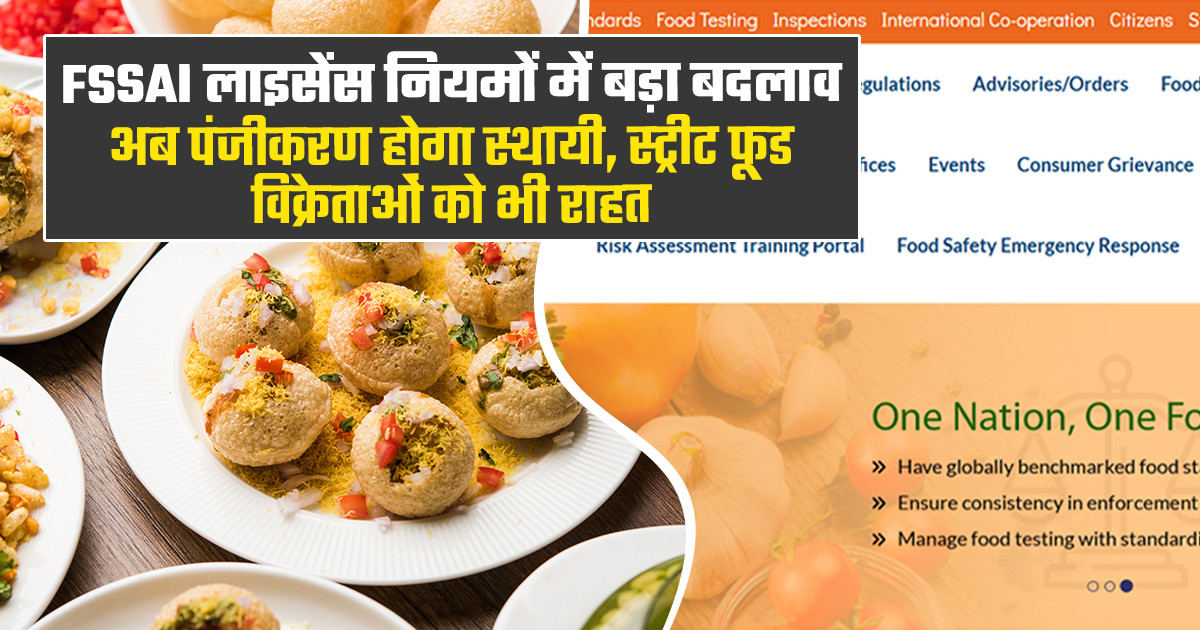
To reduce the regulatory burden on food businesses, FSSAI registrations and licenses will now have perpetual validity. Previously, these required periodic renewal. The new framework eliminates the need for repeated renewals, reducing compliance costs, paperwork, and repeated interactions with licensing authorities. It also ensures smoother continuity of operations for food business operators.
Effective 1 April 2026, the turnover threshold for FSSAI registration has been raised from ₹12 lakh to ₹1.5 crore, while State licensing will now apply up to ₹50 crore, with Central licensing applicable beyond this limit. This rationalization strengthens the role of State authorities, enabling them to focus more effectively on oversight, facilitation, and enforcement of food safety regulations. Micro and small enterprises will benefit from simplified compliance, lower fees, elimination of pre-inspections, and instant registration, ensuring faster and smoother business operations.
Street food vendors registered with Municipal Corporations or Town Vending Committees under the Street Vendors (Protection of Livelihood and Regulation of Street Vending) Act, 2014, will now be deemed automatically registered under FSSAI. This reform benefits over 1 million street food vendors by removing the need for multiple registrations across departments, allowing them to focus on hygiene, business operations, and livelihood security.
Technology-Enabled, Risk-Based Inspections:
A dynamic, technology-enabled, risk-based inspection framework has been introduced. Inspections will now be carried out based on factors such as the nature of the food product, the business operator’s compliance history, third-party audit results, and enforcement inputs. This targeted approach reduces unnecessary inspections for compliant businesses while ensuring focused, transparent, and effective regulatory oversight.
Impact and Significance:
These reforms reflect the government’s commitment to ensuring safe food for citizens while creating a transparent, efficient, and business-friendly regulatory environment for the food industry. By simplifying compliance and leveraging technology, the initiative aims to foster growth, ease operational challenges, and strengthen overall food safety standards across the country.
FAQs
1. What is the new rule for FSSAI registration validity?
FSSAI registrations and licenses will now have perpetual validity, eliminating the need for periodic renewals.
2. What is the new turnover limit for FSSAI registration?
From April 1, 2026, businesses with turnover up to ₹1.5 crore can apply for basic FSSAI registration.
3. Who will need State and Central FSSAI licenses?
Businesses up to ₹50 crore turnover will require State licensing, while those above this limit will need Central licensing.
4. Do street food vendors need separate FSSAI registration now?
No. Vendors registered with municipal authorities under the Street Vendors Act will be automatically recognized by FSSAI.
5. What is the new inspection system for food businesses?
A technology-enabled risk-based inspection framework will ensure that inspections are targeted and transparent.