Uttar Pradesh grows wheat on a large scale during the Rabi season, and rising incidences of diseases and weed infestation pose a significant threat to farmers’ yields. In this context, the UP Agriculture Department has released a detailed advisory on wheat crop protection. The department has also uploaded all recommended treatment and management guidelines on its official website.
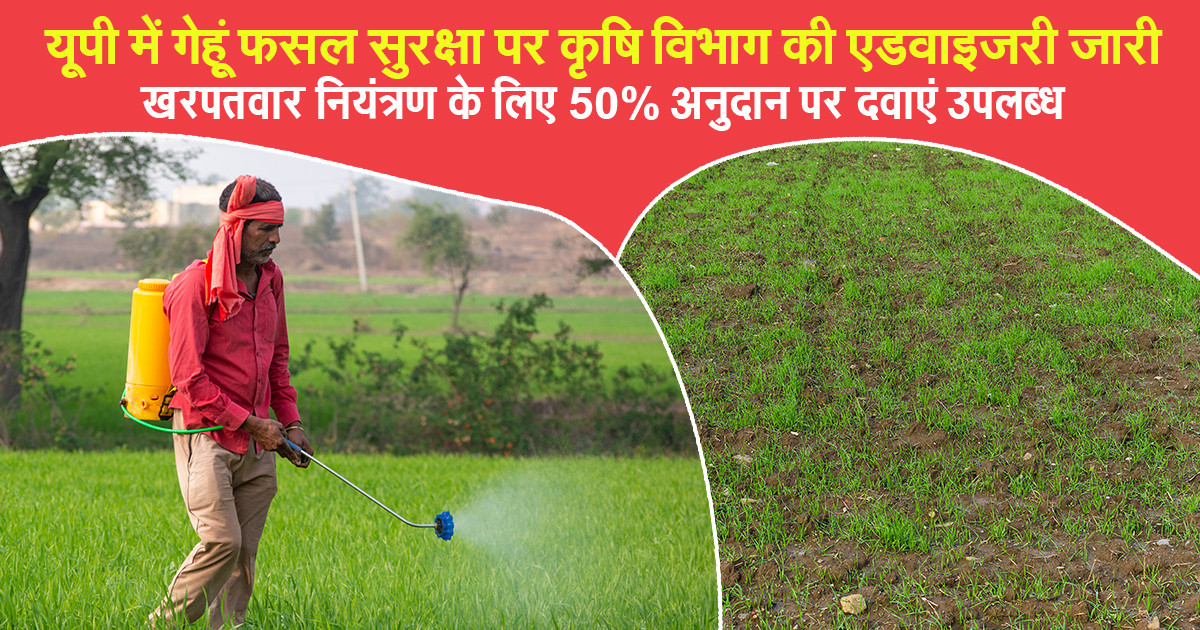
According to Dr. Pankaj Kumar Tripathi, Director of Agriculture, excessive weed growth in wheat fields can reduce productivity by 20–25%. Timely management can significantly minimize such losses. To support farmers, the state government has made essential herbicides available at all government seed centres with a 50% subsidy.
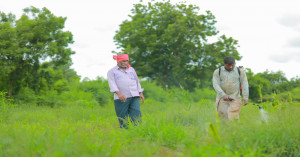
Experts advise that pre-emergence control should be carried out by spraying 3.3 litres per hectare of Pendimethalin 30% EC within three days of sowing. The spray should be applied using a flat nozzle and in a forward direction to ensure the herbicide layer remains intact.
For effective control of both narrow-leaf and broad-leaf weeds 20–25 days after germination, farmers can apply a combination of Sulfosulfuron 75% WP (33 grams) and Metsulfuron-ethyl (20 grams) per hectare.
Additionally, applying 250 grams per hectare of Metribuzin 70% WP after 20–25 days of sowing helps eliminate tough weeds such as Congress grass, nutgrass, and Bermuda grass.
Dr. Tripathi added that the increasing cold in December is highly favourable for early-stage wheat growth. Considering early sowing, current weather conditions, and government support, the department expects wheat production this year to surpass last year’s record.
Read More- Irrigation and Fertilizer Importance in Wheat Cultivation