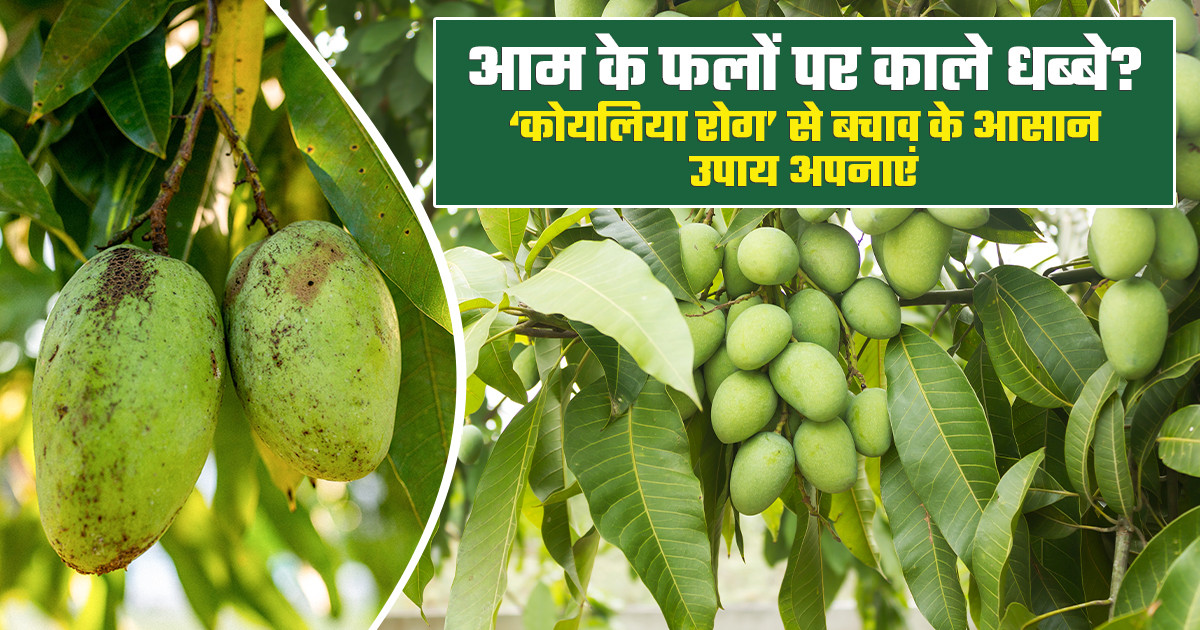
Mango growers are increasingly facing the issue of black spots appearing on fruits, a problem that can seriously affect both yield and quality if ignored. Commonly known as ‘Black Tip’ or Koyaliya Rog, this condition is largely linked to environmental pollution and nutrient imbalance. At this crucial stage, regular monitoring and proper orchard management have become essential to prevent losses.
According to agricultural experts, the primary cause of this disease is harmful gases released from nearby brick kilns. Sulphur dioxide, in particular, reacts with mango blossoms and young fruits, leading to blackening at the tip of the fruit. Additionally, boron deficiency in the soil further aggravates the condition, reducing overall fruit quality and appeal.
Timely spraying with the right solution is key to managing this disease: Mix 6 grams of boron in 1 litre of water, Add 6 grams of washing soda, Stir well and spray evenly on the trees. This solution helps protect fruits from black spotting and supports better development.
Impact of Negligence: Ignoring early signs can lead to fruits turning black and hard, ultimately lowering their market value. In severe cases, fruits may drop prematurely, resulting in significant financial loss for farmers.
Expert Advice for Growers: Experts recommend preventive action rather than waiting for visible symptoms. Orchards located near brick kilns require extra vigilance and timely spraying. With proper care and management, farmers can protect their crops, maintain quality, and secure better returns in the market.
FAQs:
Q1. What is mango black tip disease?
It is a disorder causing blackening at the tip of mango fruits due to pollution and nutrient deficiency.
Q2. What causes black tip in mango?
Main causes include sulphur dioxide from brick kilns and boron deficiency in soil.
Q3. How to control mango black tip disease?
Spray a solution of boron and washing soda mixed in water at proper intervals.
Q4. When should farmers spray for black tip control?
First spray at fruit-setting stage and repeat after 15 days.
Q5. Can black tip disease reduce mango yield?
Yes, it can cause fruit damage and premature drop, leading to significant losses.