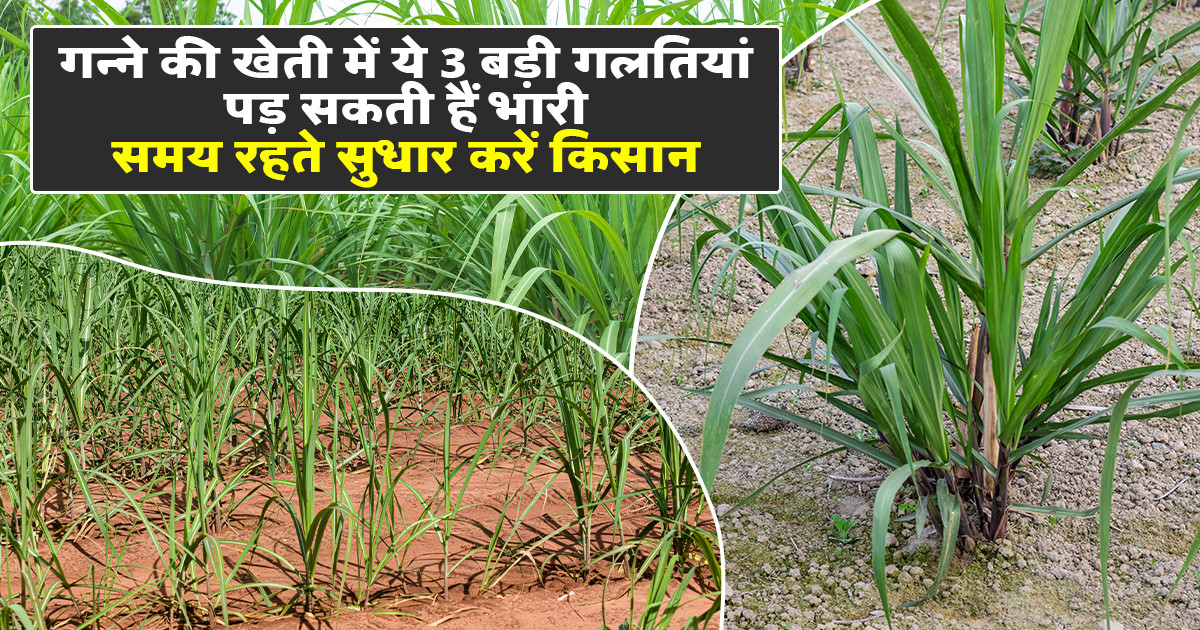
Achieving a high yield in sugarcane cultivation requires more than just hard work it demands timely decisions and proper crop management. Often, small mistakes go unnoticed and gradually damage the crop. By the time farmers recognize the issue, it may already be too late. Early-stage negligence, in particular, can significantly reduce overall productivity.
According to agricultural experts, early identification of pests and crop issues can help farmers manage problems effectively without relying on expensive chemicals. Simple biological and traditional practices can often control damage if applied at the right time. Here are three common mistakes in sugarcane farming and how to avoid them:
Shoot borer is a highly destructive pest in sugarcane that damages the plant from within and can eventually ruin the entire crop if left unchecked.
Key symptoms:
What farmers should do?
Many farmers overlook weak or underdeveloped plants during the early stages, which later leads to reduced yield.
What farmers should do?
3. Excessive Use of Urea:
Attempt to achieve lush green growth, farmers often overuse urea, which can harm both the crop and soil health.
What farmers should do?
FAQs:
Q1. What is the biggest mistake in sugarcane cultivation?
Ignoring early pest attacks like shoot borer is one of the biggest mistakes.
Q2. How can farmers improve sugarcane yield?
Proper nutrient management, pest control, and early monitoring are essential.
Q3. Is urea harmful in sugarcane cultivation?
Excessive use of urea can damage plant strength and soil health.
Q4. How to identify weak sugarcane plants?
Weak plants appear thin, pale, and show slow growth with poor roots.
Q5. Why is early-stage care important in sugarcane cultivation?
Early care helps prevent major crop damage and ensures better productivity.