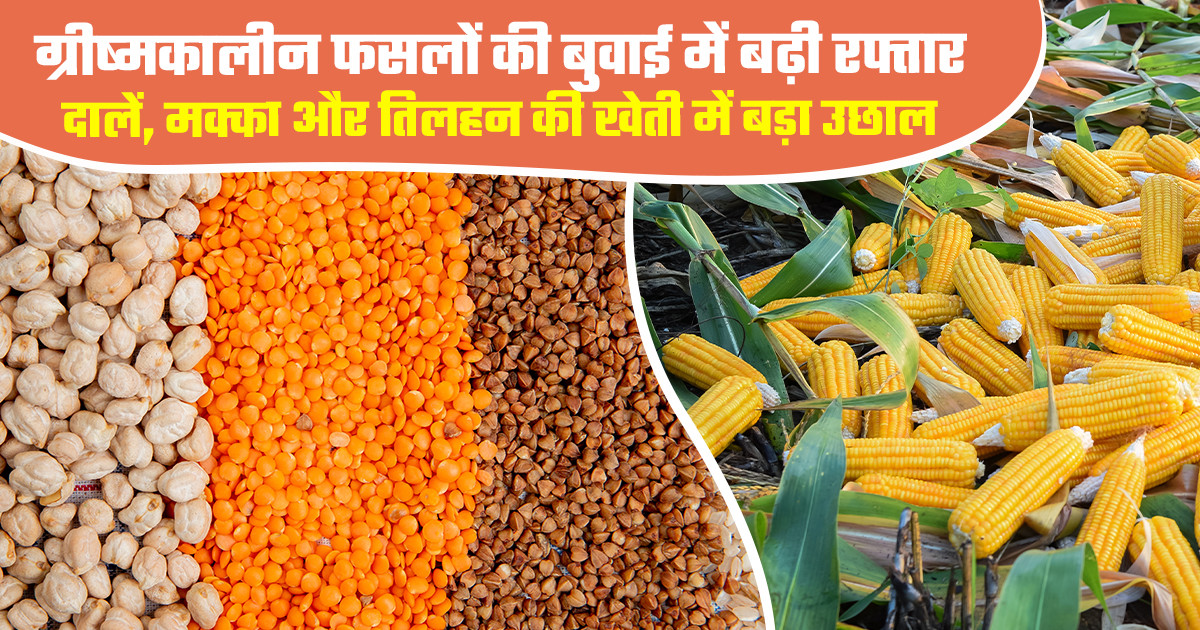
The pace of summer crop sowing has picked up significantly across India this season, with farmers expanding cultivation of pulses, coarse cereals and oilseed crops. According to the latest agricultural data released up to May 15, 2026, summer crops have been sown over 83.08 lakh hectares, which is 3.07 lakh hectares higher than the corresponding period last year. The increase in acreage reflects improving irrigation support, favourable weather conditions and growing farmer interest in diversified and high-value crops.
Agriculture experts believe that the rising focus on nutrition-rich crops, along with better market opportunities and government support, is encouraging farmers to shift towards pulses, oilseeds and millets.
Among all crop categories, pulses recorded a notable increase this season. Pulses have been cultivated over 24.97 lakh hectares, up by 1.21 lakh hectares compared to the same period last year. Urad witnessed the sharpest rise in acreage, while moong cultivation also increased marginally.
The area under millets and coarse cereals also expanded strongly to 16.01 lakh hectares. Maize emerged as one of the biggest gainers, with sowing rising to 10 lakh hectares from 8.50 lakh hectares last year. Bajra and ragi cultivation also reported positive growth.
Experts say the growing demand for nutritious grains, increasing awareness about climate-resilient farming and continued policy support for “Shree Anna” crops are influencing farmers’ cropping decisions across several states.
Oilseed crops also registered strong growth this season. Total oilseed sowing reached 11.04 lakh hectares, an increase of 1.47 lakh hectares over last year.
Groundnut cultivation saw the biggest jump, followed by moderate growth in sesame and sunflower acreage. Agriculture analysts believe that rising edible oil demand and better price realization are encouraging farmers to allocate more land to oilseed crops.
In contrast, paddy acreage witnessed a marginal decline this year. Paddy sowing stood at 31.05 lakh hectares as of May 15, 2026, compared to 32.42 lakh hectares during the same period last year, reflecting a decline of 1.36 lakh hectares.
Experts suggest that many farmers are gradually shifting towards crops that require less water and offer comparatively better profitability, especially in regions facing irrigation challenges and changing climate conditions.
|
Crop |
2026 Area (Lakh Hectare) |
2025 Same Period |
Increase/Decrease |
|
Paddy |
31.05 |
32.42 |
-1.36 |
|
Pulses |
24.97 |
23.76 |
+1.21 |
|
Moong |
20.07 |
20.00 |
+0.07 |
|
Urad |
4.60 |
3.58 |
+1.02 |
|
Millets/Coarse Cereals |
16.01 |
14.25 |
+1.77 |
|
Jowar |
0.37 |
0.36 |
+0.01 |
|
Bajra |
5.40 |
5.20 |
+0.20 |
|
Ragi |
0.22 |
0.16 |
+0.06 |
|
Maize |
10.00 |
8.50 |
+1.50 |
|
Oilseeds |
11.04 |
9.58 |
+1.47 |
|
Groundnut |
5.51 |
4.20 |
+1.31 |
|
Sunflower |
0.39 |
0.35 |
+0.04 |
|
Sesame |
5.07 |
4.96 |
+0.11 |
|
Total |
83.08 |
80.01 |
+3.07 |
Better Production Outlook for the Season: Agriculture experts remain optimistic about the upcoming harvest season. They believe that if weather conditions remain favourable and farmers continue receiving timely irrigation, seeds and fertilizers, summer crop production could improve considerably this year.
FAQs:
1. What is the total summer crop sowing area in India till May 15, 2026?
The total summer crop sowing area reached 83.08 lakh hectares till May 15, 2026.
2. Which crop recorded the highest increase in acreage?
Maize and groundnut recorded major increases, while urad also showed strong growth.
3. Why are farmers shifting toward pulses and millets?
Farmers are focusing on pulses and millets because of better profits, government support and rising demand for nutritious crops.
4. Did paddy sowing increase this year?
No, paddy sowing declined slightly by 1.36 lakh hectares compared to last year.
5. What factors supported higher summer crop sowing in 2026?
Better irrigation, favourable weather conditions, improved market prices and government support helped increase summer crop sowing this year.