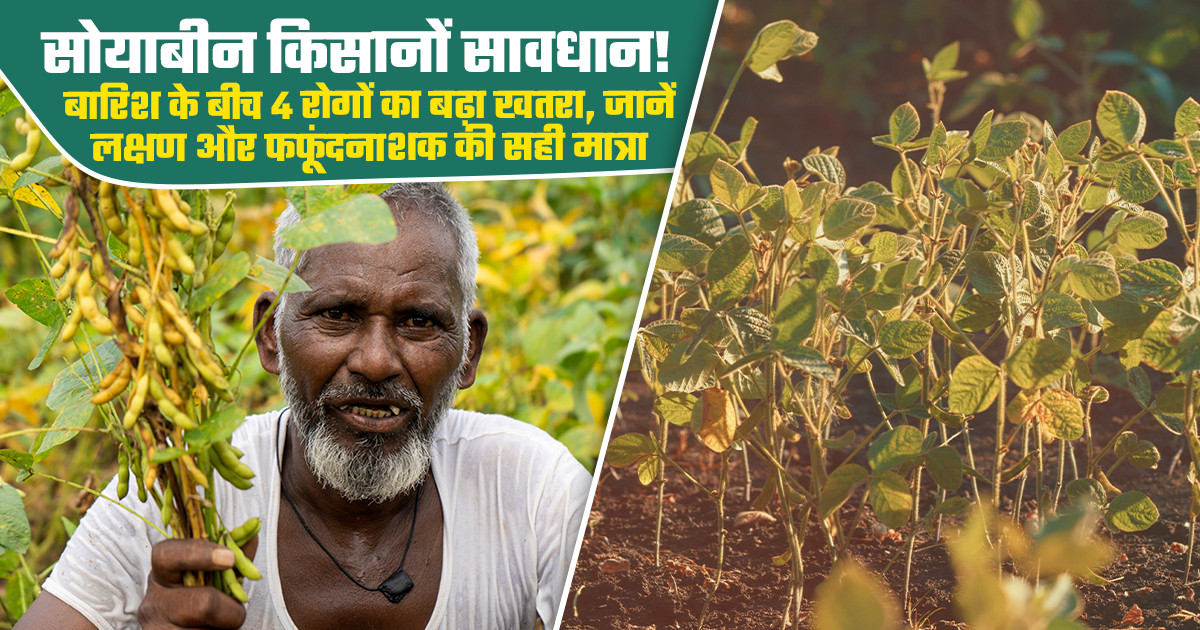
Soybean crops in Madhya Pradesh have entered the flowering and pod formation stage, a critical period when prolonged rainfall and excess moisture can increase the risk of fungal diseases. Agricultural experts have advised farmers to regularly inspect their fields and take appropriate control measures as soon as disease symptoms appear.
Farmers have been specifically advised to watch for charcoal rot, collar rot, pod blight and Rhizoctonia aerial blight. Early identification and timely management can help reduce potential crop losses.
What Should Soybean Farmers Do?
At the flowering and pod formation stage, farmers should inspect their soybean fields regularly and carefully monitor leaves, stems and pods for unusual symptoms. If disease symptoms are detected, farmers should first ensure correct disease identification before selecting and applying a fungicide. Unnecessary or incorrect spraying should be avoided.
Farmers should also prevent prolonged waterlogging and excessive moisture in the field wherever possible. For crop-specific recommendations, they should consult the local agriculture department or agricultural experts.
Important Note: The fungicides and dosages mentioned above are based on the recommendations provided in the source information. Before application, farmers should verify the latest local agricultural advisory and the product label for crop registration, target disease, dosage, application method and other regulatory requirements.
FAQs:
1. Which soybean diseases are currently a concern in Madhya Pradesh?
Charcoal rot, collar rot, pod blight and Rhizoctonia aerial blight are important diseases to monitor.
2. When does the risk of soybean diseases increase?
Continuous rainfall, excess moisture, warm temperatures and high humidity can increase disease risk.
3. What are the symptoms of Rhizoctonia aerial blight?
Brownish-red oval spots, particularly on the lower surface of leaves, can be a noticeable symptom.
4. Can farmers spray fungicides without identifying the disease?
No. Farmers should first identify the disease correctly and follow the latest local agricultural advisory and product label.
5. What should farmers do after continuous rainfall?
Regularly inspect the crop, avoid prolonged waterlogging where possible and seek advice from local agricultural experts if symptoms appear.