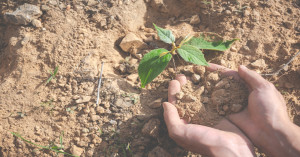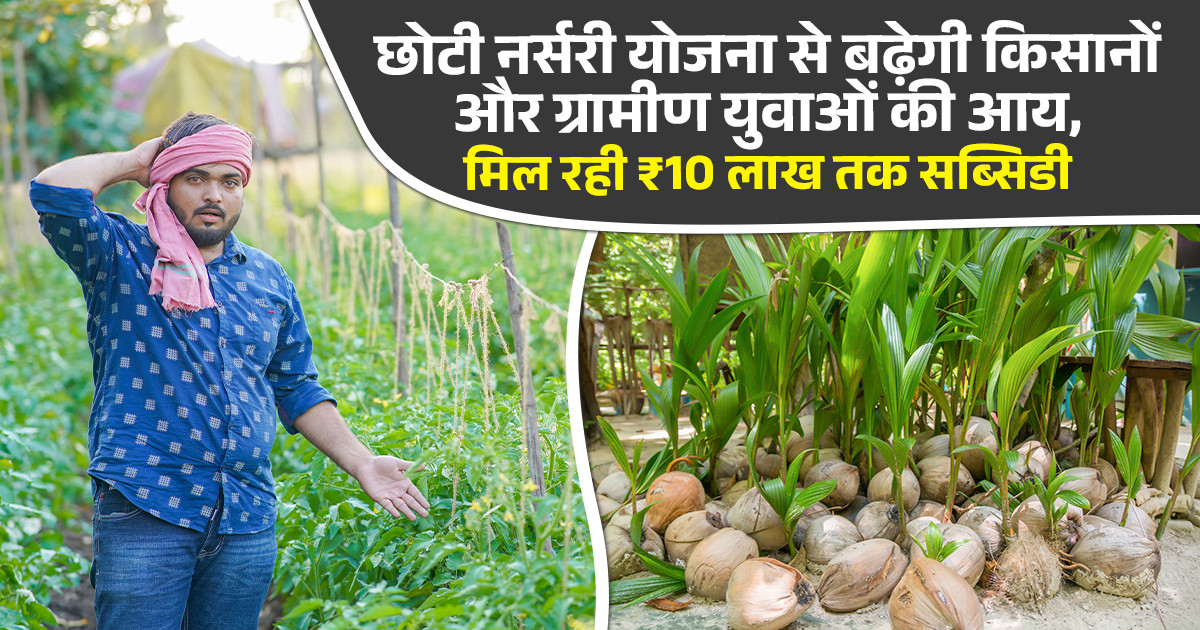
To increase the income of farmers and rural youth, the state government has launched an important initiative under the Mission for Integrated Development of Horticulture (MIDH). Through the Small Nursery Scheme, farmers and rural residents can now set up plant nurseries on limited land and earn a steady income. The scheme offers a government subsidy of up to ₹10 lakh for establishing nurseries.
The Bihar government has made it clear that this scheme is not limited to farmers alone. Women, rural youth, self-help groups, and general citizens are also eligible to avail its benefits. The initiative is expected to promote self-employment in rural areas while encouraging green and sustainable development.
Under this scheme, financial assistance is provided for setting up nurseries of fruit plants, flowering plants, shade trees, and medicinal plants. Due to its low investment requirement, simple process, and strong government support, the scheme is gaining rapid popularity among rural entrepreneurs.
Traditional farming often provides limited income. To address this, the government aims to encourage farmers to move beyond rice and wheat cultivation and adopt horticulture and plant production as alternative income sources. This approach not only increases earnings but also reduces farming risks.
The government has fixed the project cost at ₹20 lakh per hectare, out of which:
Where to Purchase Plants:
How to Start a Small Nursery:
Easy Online Application Process:
(FAQs):
Q1. Who can apply for the Small Nursery Scheme?
Farmers, women, rural youth, SHGs, and general citizens of Bihar are eligible.
Q2. What is the maximum subsidy amount?
Up to ₹10 lakh under the MIDH scheme.
Q3. What types of plants are allowed?
Fruit, flower, medicinal, and shade plants like mango, guava, rose, tulsi, etc.
Q4. How is the subsidy paid?
Through Direct Benefit Transfer (DBT) in two installments.
Q5. Where can I get quality planting material?
From government nurseries, KVKs, and authorized supply centers.