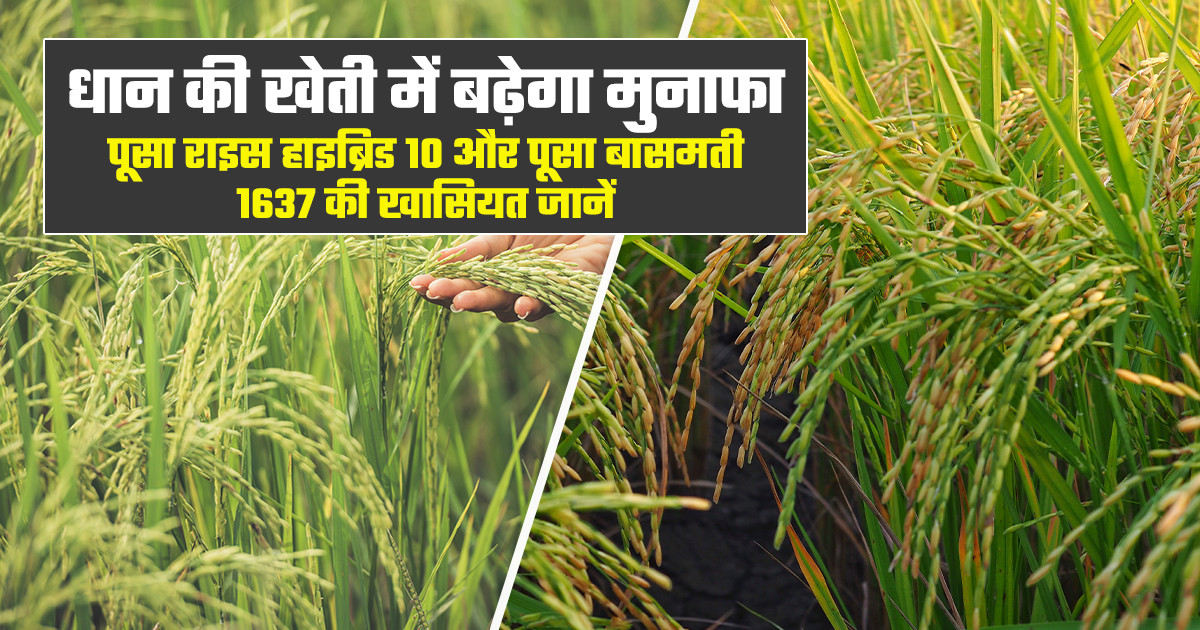
Paddy farmers are increasingly looking for varieties that can deliver better productivity, superior grain quality and improved protection against major diseases. Keeping these requirements in mind, the Indian Agricultural Research Institute (ICAR-IARI) has developed advanced rice varieties such as Pusa Rice Hybrid 10 and Pusa Basmati 1637.
While Pusa Rice Hybrid 10 is known for its fine-grained and aromatic rice with high yield potential, Pusa Basmati 1637 has been developed with improved resistance to blast disease, along with the characteristic quality of Basmati rice. Both varieties offer different advantages and can be considered according to local growing conditions and market requirements.
Pusa Rice Hybrid 10 is regarded as an important development in India's rice breeding programme. In 2001, the Central Variety Release Committee (CVRC) approved the variety for commercial cultivation in irrigated areas of Haryana, Delhi and Uttarakhand. One of its major distinguishing features is its fine and aromatic grain. The variety was developed by combining the yield potential of hybrid rice with desirable grain characteristics such as fineness and fragrance. This combination makes it particularly relevant for farmers looking for a variety that can offer both higher productivity and quality-oriented market opportunities.
Pusa Rice Hybrid 10 has a crop duration of approximately 110-115 days and is reported to have a yield potential of around 7 tonnes per hectare under favourable conditions.
Its relatively shorter duration can help farmers harvest the crop earlier and potentially provide additional time for land preparation for the succeeding crop. However, actual yields can vary depending on soil conditions, weather, irrigation, nutrient management and cultivation practices. The fine and aromatic grain characteristics may also make the variety suitable for markets where consumers prefer quality rice.
Pusa Basmati 1637 is an improved Basmati rice variety developed with a focus on enhancing resistance to blast disease, one of the major diseases affecting rice crops. It was developed as an improved version of Pusa Basmati 1 using marker-assisted selection (MAS). The variety incorporates the Pi9 gene, which plays an important role in providing resistance against rice blast. This characteristic can be particularly valuable in areas where blast disease is a recurring problem. However, farmers should not rely solely on varietal resistance and should continue regular crop monitoring and follow locally recommended disease-management practices.
Pusa Basmati 1637 has an average yield of approximately 4.2 tonnes per hectare and takes around 130 days to mature. The variety produces long and slender grains, which are important characteristics of premium Basmati rice. According to the available varietal information, the raw grain is around 7.3 mm long, while the cooked grain can reach approximately 13.8 mm. Its characteristic Basmati aroma and grain quality make it suitable for premium domestic markets and quality-oriented Basmati value chains.
What Makes These Two Rice Varieties Different?
Farmers Should Choose Rice Varieties According to Local Conditions:
Selecting a rice variety solely on the basis of its maximum yield potential may not always be the best approach. Farmers should consider several factors, including local climate, soil type, irrigation availability, crop duration, prevalent pest and disease problems and market demand. The use of certified seed should also be combined with balanced nutrient management, appropriate irrigation, timely weed control and integrated pest and disease management.
FAQs:
1. What is the yield of Pusa Rice Hybrid 10?
Pusa Rice Hybrid 10 has a yield potential of around 7 tonnes per hectare under favourable growing conditions.
2. How long does Pusa Rice Hybrid 10 take to mature?
It generally takes around 110-115 days to mature.
3. What is special about Pusa Basmati 1637?
Pusa Basmati 1637 offers premium Basmati grain quality along with improved resistance to rice blast disease.
4. What is the yield of Pusa Basmati 1637?
Its average yield is approximately 4.2 tonnes per hectare.
5. Which rice variety should farmers choose?
Farmers should choose according to local soil, climate, irrigation, disease pressure, crop duration and market demand, rather than relying only on yield potential.