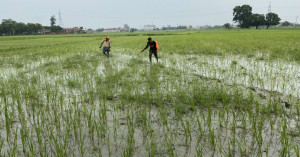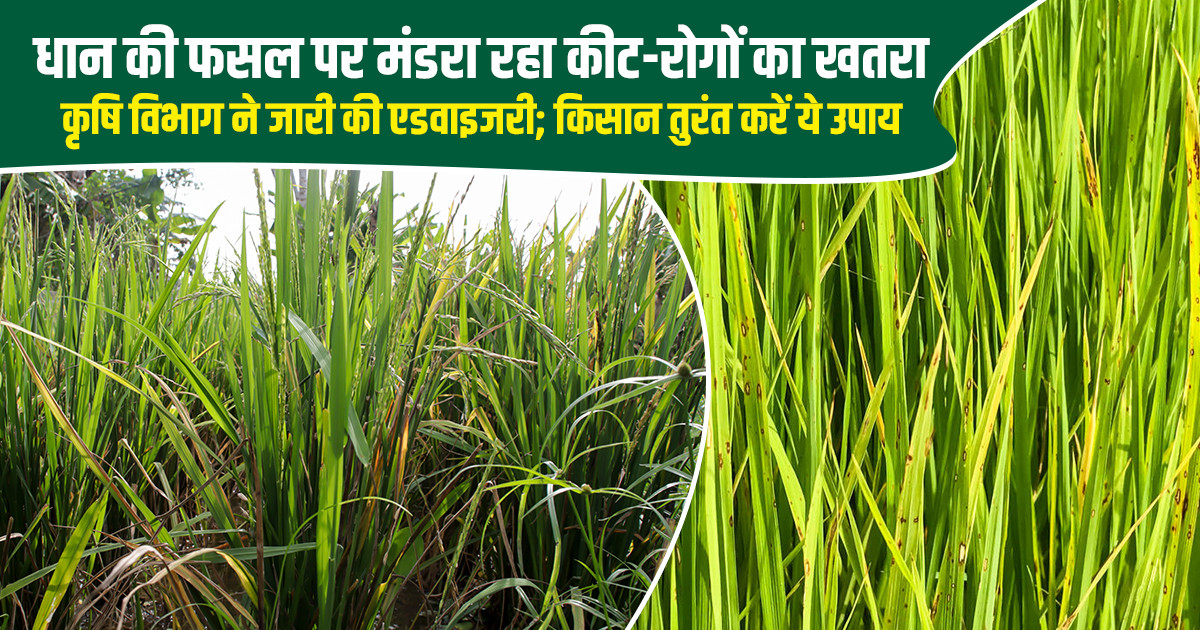
The paddy crop is currently in an active growth stage, making regular field monitoring essential for protecting yield potential. At this stage, pests and diseases such as stem borer, rice hispa and bacterial leaf blight can cause significant damage if they are not identified and managed in time.
To help farmers protect their crop, the Bihar Agriculture Department has issued an advisory outlining preventive measures, recommended treatments and proper nutrient management practices. Farmers have been advised to regularly inspect their fields and take timely action whenever early symptoms of pest or disease infestation appear.
Stem borer is one of the major insect pests affecting paddy. The larvae enter the plant stem and feed internally, weakening the plant. Severe infestation can result in “dead heart” during the vegetative stage and “white ear” at the reproductive stage, ultimately reducing grain formation and yield. According to the agriculture advisory, farmers can use Ferterra (chlorantraniliprole) at 8–10 granules per litre of water for stem borer management. The treatment should be used according to the crop stage and local agricultural recommendations.
Rice hispa is another pest that damages paddy leaves. Infested leaves may develop scraped or whitish streak-like symptoms, reducing the leaf's ability to carry out photosynthesis and affecting overall plant growth. For management, the advisory recommends spraying emamectin benzoate 10 SG at 0.3 gram per litre of water or chlorantraniliprole 20 SC at 0.4 ml per litre of water.
Paddy fields may also face diseases such as bacterial leaf blight and bacterial leaf streak, which can cause yellowing and drying of leaves and adversely affect crop performance. Farmers have been advised to avoid excessive application of nitrogen fertilisers. Fertilisers should be applied in balanced quantities based on crop requirements and recommended nutrient management practices. Excessive nitrogen application can encourage lush, soft plant growth and may increase the risk of certain disease problems.
Chemical treatment alone is not enough to protect the paddy crop. Regular field surveillance is an important part of integrated pest and disease management. Farmers should inspect their fields at least once or
twice a week and look for early warning signs such as:
Early identification allows farmers to take corrective measures before the infestation spreads across the field.
Timely Management Can Protect Yield:
Once pests or diseases become widespread, controlling them can become more difficult and costly. Farmers should therefore focus on regular crop monitoring, balanced fertiliser application, proper water management and timely use of recommended plant-protection measures. Farmers should use only approved agricultural products and follow the recommended dosage, crop-stage requirements and safety instructions on the product label. Where symptoms are unclear, seeking advice from the local agriculture department or agricultural expert can help avoid unnecessary pesticide application.
FAQs:
1. What are the major pests affecting paddy?
Major pests include stem borer and rice hispa, which can damage stems and leaves.
2. What symptoms does stem borer cause in paddy?
Stem borer can cause dead heart during the vegetative stage and white ear during the reproductive stage.
3. How can farmers manage rice hispa?
The advisory recommends emamectin benzoate 10 SG or chlorantraniliprole 20 SC at the specified dosage.
4. Why should excessive nitrogen fertiliser be avoided?
Excessive nitrogen can promote soft plant growth and may increase the risk of certain paddy diseases.
5. How often should farmers inspect paddy fields?
Farmers should inspect their paddy crop at least once or twice a week to identify pests and diseases at an early stage.