Moth bean farmers in western Rajasthan face a difficult growing environment marked by low, erratic rainfall and prolonged dry spells. Against this backdrop, four varieties developed by the ICAR–Central Arid Zone Research Institute (CAZRI), Jodhpur have shown promising field-level resilience during Kharif 2026. CAZRI Moth-4, Moth-5, Moth-6 and Moth-7 maintained good vegetative growth and pod development despite a dry spell of around 35 days. The performance highlights the potential of moisture-stress-tolerant varieties, particularly when combined with timely sowing and appropriate moisture-conservation practices.
Moth bean is one of the key pulse crops grown across the hot and arid regions of western Rajasthan. The crop covers nearly 10 lakh hectares, but average productivity remains around 350 kg per hectare. The region typically receives only 150–250 mm of annual rainfall, which is often irregular and unpredictable. Dry periods lasting 20–30 days are also common, while limited soil moisture further increases crop stress.
CAZRI has been undertaking moth bean breeding and genetic improvement programmes to develop varieties suited to the harsh conditions of arid Rajasthan. The focus has been on moisture-stress resilience, developmental flexibility and yield potential. Over the past three years, four varieties—CAZRI Moth-4, CAZRI Moth-5, CAZRI Moth-6 and CAZRI Moth-7—have been released. Their performance during Kharif 2026 has been particularly significant because the crop experienced an extended period with little meaningful rainfall, lasting approximately 35 days.
Between 10 July and 2 September 2026, cumulative pan evaporation was around 317 mm. Following the rainfall received on 3 August, substantial rainfall stopped, resulting in a prolonged dry period during the crop’s growth and reproductive stages. From 3 August to 7 September, the crop experienced a dry spell of approximately 35 days, while cumulative pan evaporation during this period was around 180 mm.
Rainfall during the early crop stages helped establish the plants and supported initial growth. Early canopy development, soil binding and moisture retention around the root zone also helped the crop cope with the prolonged lack of rainfall. Surface soil moisture at 0–10 cm depth was around 15–16% until 2 August, when the area received 86 mm of significant rainfall. It subsequently declined to around 5–6% after more than a month of dry conditions, despite three to four scattered rainfall events of less than 2.5 mm each. At the 10–40 cm soil layer, moisture declined from around 23% to 16%, with the remaining moisture continuing to contribute to the crop’s water requirement.
Varieties Maintained Growth during Flowering and Pod Formation:
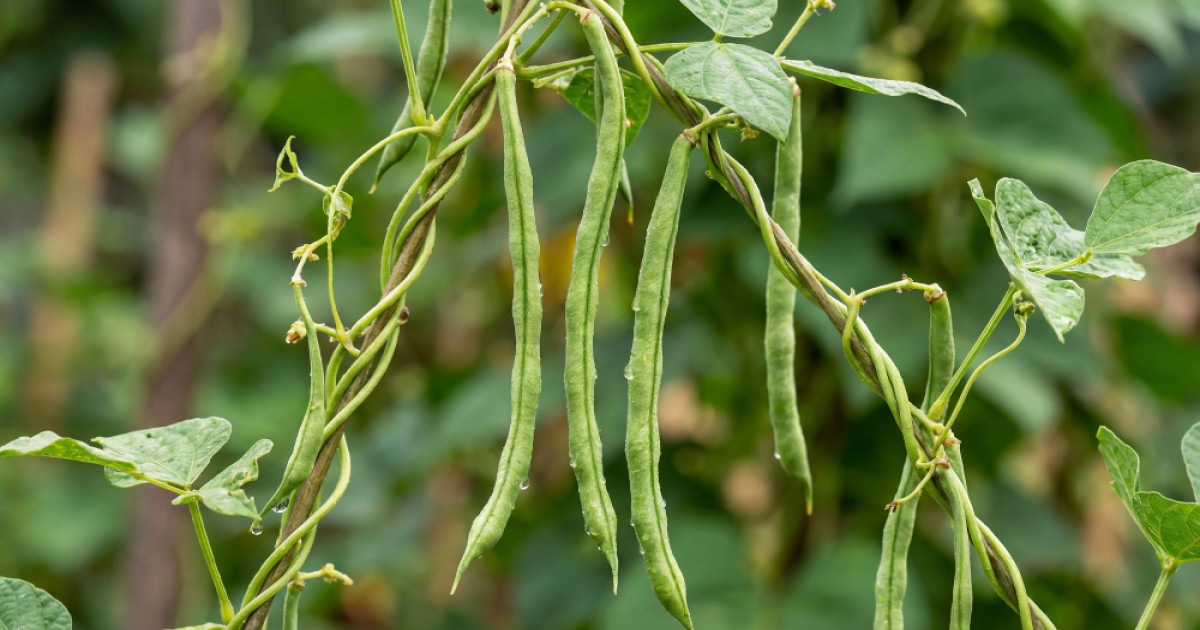
The field performance becomes particularly noteworthy because the prolonged moisture stress coincided with critical stages of flowering, pod formation and reproductive development. Despite the extended period without substantial rainfall, the approximately 55-day-old crop remained green, showed good growth and developed a substantial number of pods. According to the field observations, this response provides an important indication of the varieties’ adaptability to the difficult and unpredictable moisture conditions of western Rajasthan.
These varieties are the outcome of more than a decade of systematic breeding and genetic improvement work at CAZRI, with selection focused on adaptation to the region’s harsh arid environment.
Developmental Flexibility Gives the Varieties an Advantage:
One of the key characteristics of these varieties is developmental plasticity their ability to adjust growth and maturity according to the moisture available in the soil. The varieties begin flowering at approximately 30 days after sowing and can adjust their development according to prevailing moisture conditions. This characteristic is particularly valuable in western Rajasthan, where rainfall can vary considerably in terms of quantity, timing and distribution. Rapid progression towards reproductive development, combined with efficient utilization of available soil moisture and appropriate crop management, can provide an important adaptation advantage under rainfed conditions.
Read More. Check the latest crop prices before you sell your produce. KhetiVyapar brings you updated market prices today from major agricultural markets, helping farmers track the latest rates of wheat, rice, soybean, onion, garlic, tomato and other crops. Visit the Mandi Price Today page for the latest market rates.
Seed Multiplication Underway to Expand Availability:
CAZRI is also working to multiply seed of all four recently released varieties. At the CAZRI Research Farm, seed production is currently being undertaken across 7 hectares to meet the 23.32-quintal requirement indented through the Saathi Portal for 2026. In 2025, the combined seed requirement for these four varieties through the Saathi Portal stood at 63.2 quintals.
One quintal of breeder seed can potentially produce around 1,000–1,400 quintals of certified seed. With proper multiplication and marketing as certified seed, this quantity could support cultivation across approximately 10,000 hectares. Even if only 50% of this potential is achieved, wider adoption of the varieties could eventually cover around 25% of Rajasthan’s total moth bean area.
FAQs:
1. Which CAZRI Moth varieties performed well during the dry spell?
CAZRI Moth-4, CAZRI Moth-5, CAZRI Moth-6 and CAZRI Moth-7 showed promising performance during Kharif 2026.
2. How long was the dry spell faced by the moth crop?
The crop experienced an approximately 35-day dry spell after August 3, 2026.
3. Why is moth bean farming important in western Rajasthan?
Moth bean is well suited to hot and arid conditions and is cultivated across a large area of western Rajasthan.
4. What is special about CAZRI Moth varieties?
These varieties have shown the ability to maintain growth and pod development under moisture-stress conditions. Their developmental plasticity also helps them adjust growth according to available soil moisture.
5. Is seed multiplication of these CAZRI Moth varieties underway?
Yes. CAZRI is undertaking seed production and multiplication of CAZRI Moth-4, Moth-5, Moth-6 and Moth-7 to expand their availability.