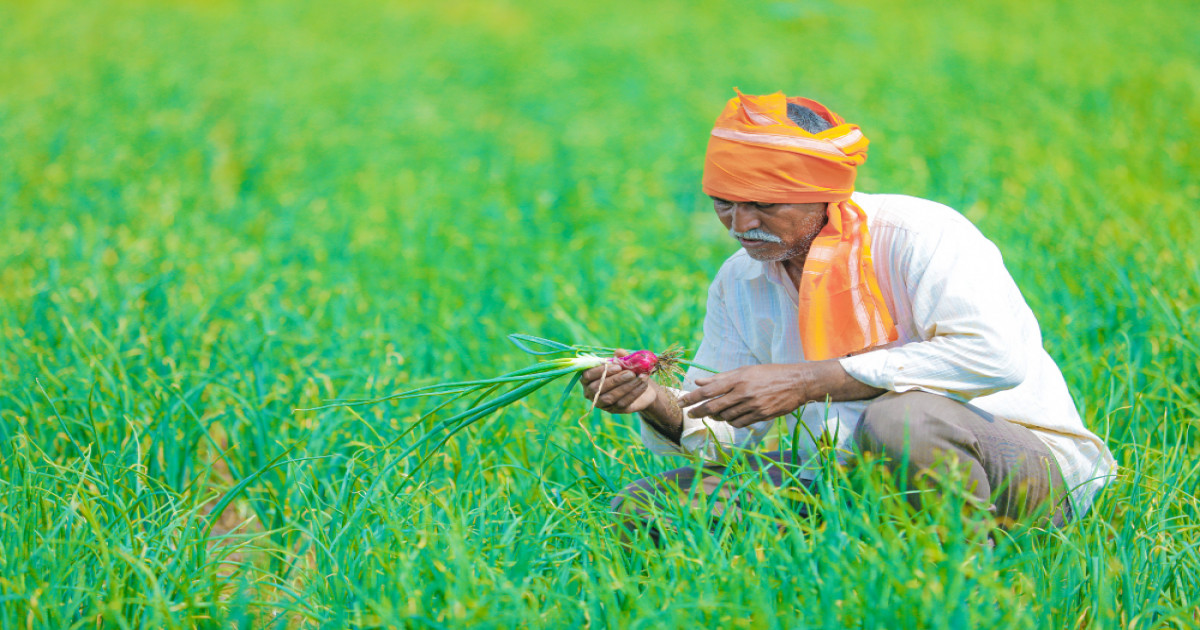
Natural farming is emerging as an important part of India’s strategy to promote low-cost, sustainable and market-oriented agriculture. More than 2.4 million farmers are already associated with natural farming across the country, while the government has set an ambitious target of bringing 8.5 million farmers under the National Mission on Natural Farming (NMNF) by 2030.
The focus is now shifting beyond simply expanding farmer participation. Greater emphasis is being placed on scientific assessment, soil health, certification, farmer-producer organizations (FPOs), model farms and market linkages so that farmers can gain greater economic value from natural farming.
According to the latest review, over 24 lakh farmers have been brought into the natural farming ecosystem across India. Under the NMNF, the target is to connect 85 lakh farmers by 2030. The government aims to make natural farming economically viable by improving access to knowledge, certification, organised markets and value chains. The objective is not merely to increase the number of farmers adopting the practice, but to create a system that can potentially help farmers reduce input costs while improving the value of their produce.
Growing international demand for naturally produced and low-chemical agricultural products could create new opportunities for Indian farmers. The government is focusing on strengthening the complete value chain from branding and certification to processing, marketing and exports. Better market integration could help natural farming products reach premium domestic and international markets and potentially improve returns for producers.
Developing successful marketing models and connecting farmers with organised buyers will therefore be critical to making natural farming commercially sustainable.
Soil health is being given greater importance in assessing the long-term impact of natural farming. The government reviewed progress under the Soil Health Card programme, including soil sample collection, testing and generation of soil health information. Regular assessment of fields under natural farming can help build a stronger evidence base on changes in soil conditions. Such data could also support future agricultural planning and help farmers receive more appropriate guidance on nutrient and soil management.
Over 80,000 Farmers Registered for Natural Farming Certification:
Certification is another key component of the natural farming ecosystem. Under the PGS-India Natural Certification System, 80,034 farmers have been registered so far. The certification network also includes: 100 natural farming-based FPOs, 162 organic farming-based FPOs, 262 FPOs in total. Strengthening certification and FPO-led marketing can help improve traceability, market access and consumer confidence while creating better opportunities for farmers to sell certified produce.
97,000+ Farmers Covered in the Namami Gange Region:
Natural farming is also being promoted under the Namami Gange programme. Across 45 districts in Bihar, Jharkhand, Uttar Pradesh and Uttarakhand, the initiative has brought 97,125 farmers into natural farming through 777 clusters. Around 38,850 hectares have been brought under the programme. Farmer training and the replication of successful field models are also being encouraged to expand the reach of natural farming in the region.
Model Farms and Field Visits to Give Farmers Practical Exposure:
The government is placing greater emphasis on model farms and field visits to demonstrate how natural farming works in real agricultural conditions. Farmers will be encouraged to visit successful demonstration farms, observe farming practices directly and learn from field-level experiences. Krishi Vigyan Kendras (KVKs), agricultural universities and other institutions are being encouraged to develop their model farms as centres for practical training, knowledge sharing and technical guidance.
Natural Farming to Become Part of Agricultural Education:
Agricultural universities and educational institutions are also being encouraged to integrate natural farming more closely into their academic and practical programmes. Instead of relying solely on classroom-based learning, students will be exposed to field demonstrations, practical training and hands-on learning. This could help create a new generation of agricultural professionals equipped to advise farmers on natural farming practices and emerging market opportunities.
What Could Change for Farmers?
The government’s approach indicates that natural farming is increasingly being viewed not simply as an alternative cultivation method, but as part of a broader income and sustainability strategy. The emphasis is on reducing cultivation costs, improving productivity, strengthening certification, building reliable market linkages and increasing farmers’ net returns.
If scientific research, soil-health monitoring, model farms, FPOs, certification and market infrastructure are effectively integrated, natural farming could provide farmers with stronger opportunities in both domestic markets and the expanding global market for naturally produced agricultural products. For farmers, the biggest opportunity could lie in moving from simply producing natural-farming crops to becoming part of a recognised, certified and value-added agricultural supply chain.
(FAQs)
1. How many farmers are currently practicing natural farming in India?
More than 2.4 million farmers are currently associated with natural farming initiatives across India.
2. What is the government’s natural farming target for 2030?
The government aims to bring around 8.5 million farmers under the National Mission on Natural Farming by 2030.
3. How many farmers are registered for natural farming certification?
According to the latest information, 80,034 farmers are registered under the PGS-India Natural Certification System.
4. How can natural farming benefit farmers?
Natural farming can potentially help farmers reduce input costs, improve soil health, access organised markets and increase the value of certified agricultural produce.
5. What role do FPOs play in natural farming?
FPOs can help farmers with aggregation, certification, marketing, processing and market linkages, making it easier to sell natural-farming produce through organised value chains.