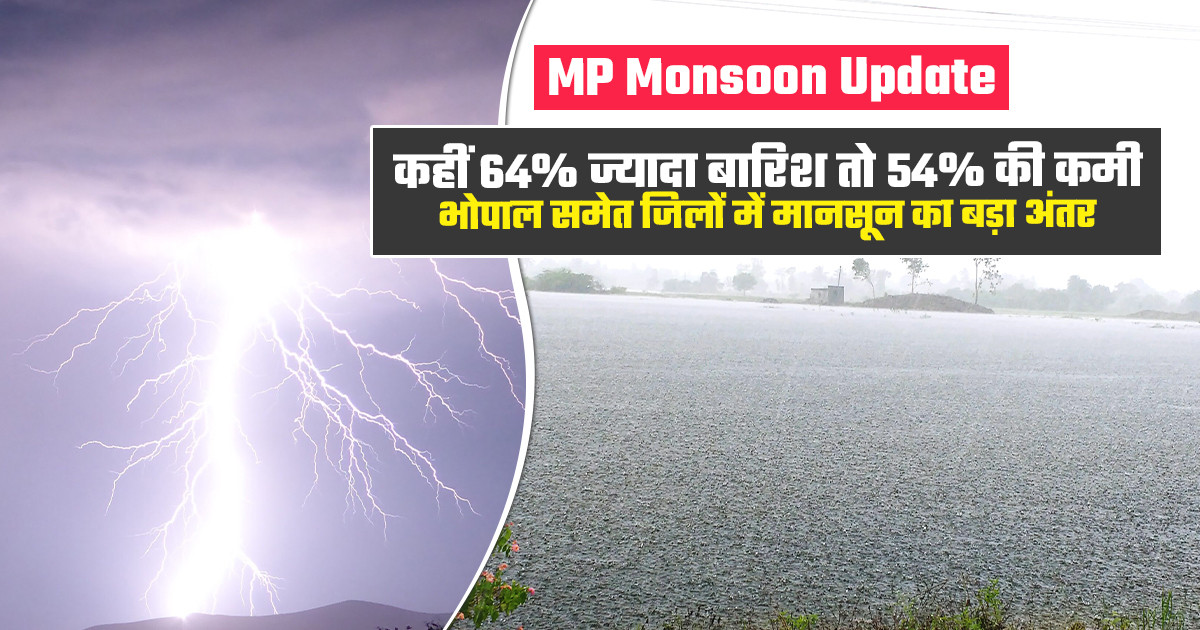
Madhya Pradesh has witnessed a highly uneven distribution of monsoon rainfall this season. Bhopal has received around 14% more rainfall than normal, while nearly 30 districts continue to record below-normal rainfall. In some districts, the rainfall deficit is above 50%, whereas a few areas have received more than 60% above their normal rainfall. As a result, the monsoon situation varies significantly from one district to another across the state.
Bhopal has received relatively good rainfall this monsoon. According to the available data, Bhopal district has recorded around 38.3 inches of rainfall, while the state capital has received nearly 43 inches. The district's normal monsoon rainfall is around 33.4 inches. This means Bhopal district has received approximately 4.9 inches, or 14%, more rainfall than normal. The frequent spells of rain have also resulted in noticeable changes in weather conditions across the city and surrounding areas.
While Bhopal has surpassed its normal rainfall mark, several districts across Madhya Pradesh have experienced relatively weak rainfall activity. According to the report, the state's overall rainfall remains around 6% below normal, with approximately 30 districts recording a rainfall deficit. However, the extent of the deficit varies considerably. Some districts are facing a significant shortfall, while others have received substantially more rainfall than their normal levels.
At the other end of the spectrum, several districts have received considerably more rainfall than their normal levels. The report indicates that Khargone and Niwari have recorded around 64% above-normal rainfall, while Satna has also received significantly higher rainfall than normal. This creates a contrasting situation across the state, with some regions dealing with excess rainfall while others continue to face a shortage. Such variations can have different impacts on waterlogging, crop health and soil moisture conditions across districts.
Excess Rain in Some Areas, Deficit in Others:
The most notable feature of this year's monsoon in Madhya Pradesh is not simply the total amount of rainfall, but its uneven distribution. Areas that remained under the influence of rain-producing weather systems for longer periods received substantial rainfall. In contrast, regions that remained farther from these systems experienced weaker rainfall activity.
This explains why the state's overall rainfall figure may remain close to the normal range, while the actual ground situation can be dramatically different from one district to another.
What Does This Mean for Farmers?
Uneven rainfall can have a direct impact on agricultural operations. In areas that have received excessive rainfall, farmers should focus on removing excess water from fields and preventing prolonged waterlogging. In districts facing a rainfall deficit, farmers should plan irrigation and crop management according to the moisture available in the soil. Farmers should not assess conditions solely on the basis of the state's average rainfall. District- and block-level weather forecasts are more useful when making decisions related to irrigation, crop protection and other farm activities.
Key Takeaway:
Madhya Pradesh is experiencing a highly contrasting monsoon pattern this season. While Bhopal has recorded 14% above-normal rainfall, around 30 districts are still facing rainfall deficits, with some areas reporting shortages of more than 50%. At the same time, Khargone and Niwari have received around 64% more rainfall than normal.
The contrasting rainfall pattern highlights the importance of local weather and rainfall data, especially for farmers planning irrigation, drainage and crop-management activities.
FAQs:
1. How much more rainfall has Bhopal received?
Bhopal district has received around 14% more rainfall than normal.
2. How many MP districts have below-normal rainfall?
Around 30 districts are currently recording below-normal rainfall.
3. Which districts received 64% more rainfall?
Khargone and Niwari have received around 64% above-normal rainfall.
4. Is Madhya Pradesh's overall rainfall normal?
The state's overall rainfall is around 6% below normal.
5. What should farmers do during uneven rainfall?
Farmers should monitor local weather forecasts, manage field drainage in rainy areas and plan irrigation according to soil moisture in rainfall-deficit areas.