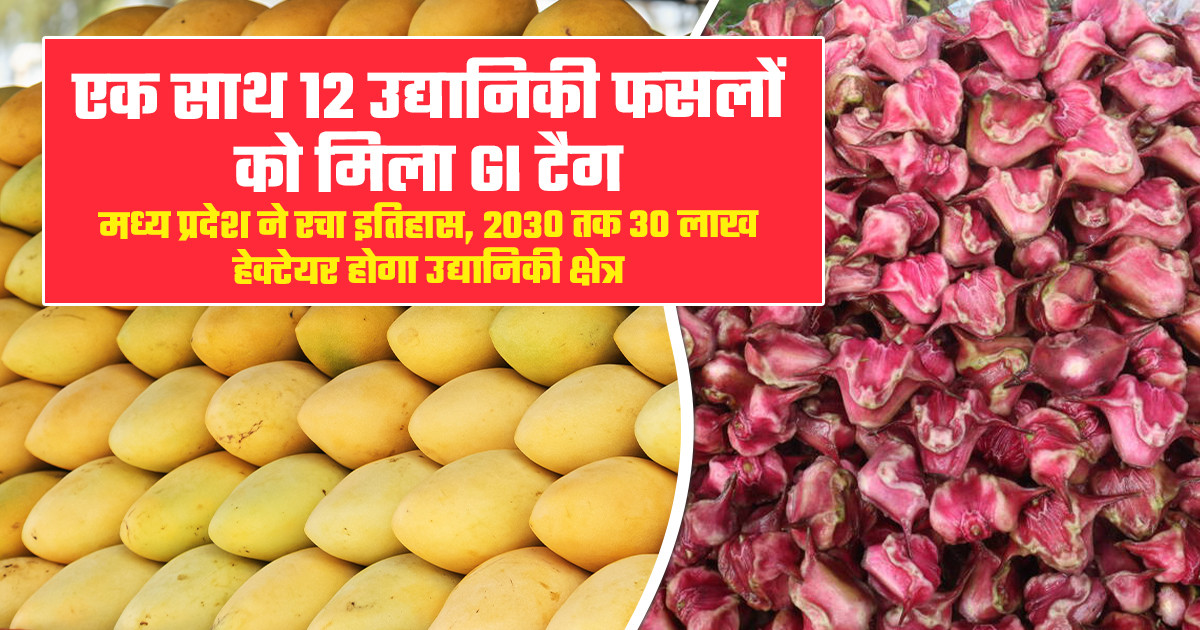
Madhya Pradesh has achieved a historic milestone by becoming the first state in India to secure Geographical Indication (GI) tags for 12 horticultural products simultaneously. The recognition highlights the state's rich agricultural heritage while opening new opportunities for farmers through premium pricing, stronger branding and expanded export potential.
The state government has also set an ambitious target of increasing the area under horticultural crops from 2.8 million hectares to 3 million hectares by 2030, with a focus on promoting high-value horticulture alongside conventional farming.
The state is also pursuing GI recognition for several other unique products, including Indori Jeeravan, Ratlam-Sailana Balam Cucumber, Chhatarpur Betel Leaf and Burhanpur Banana, among others.
Madhya Pradesh government is promoting horticulture as a key driver of agricultural diversification and higher farm incomes. Along with horticulture, allied sectors such as livestock, fisheries and food processing are being encouraged to strengthen rural livelihoods. Under the state's long-term development plan, the horticulture area is expected to expand to 3 million hectares by 2030, providing farmers with better market opportunities, year-round income and greater value addition.
How GI Tags Benefit Farmers:
Agricultural experts believe GI certification offers several long-term advantages for growers by legally protecting the unique identity of region-specific products.
Key benefits include:
Kumbhraj coriander from Guna district has been cultivated for nearly six decades and is renowned for its rich aroma, superior flavour and high essential oil content. The district produces nearly 32,000 metric tonnes of coriander annually, accounting for an estimated 20–25% of India's total coriander production. The produce is already exported to several international markets.
Unique Regional Products Gain National Recognition:
New Market Opportunities for Malwa and Mahakaushal Products:
The GI recognition is expected to significantly enhance the market value of products such as Malwa Potato, Malwa Garadu, Jabalpur Green Peas, Jabalpur Water Chestnut, Narsinghpur Jaggery and Alirajpur's Noorjahan Mango. Among them, the Noorjahan Mango stands out for its extraordinary size, with individual fruits weighing 3 to 3.5 kilograms, making it one of India's most distinctive mango varieties.
More Products Await GI Recognition:
These initiatives aim to preserve regional agricultural heritage while creating new economic opportunities for local producers.
A Major Step towards Higher Farm Income:
According to the Department of Horticulture and Food Processing, GI tagging is more than a geographical identity it is a powerful tool for enhancing product value, promoting branding, encouraging exports and increasing farmers' profitability. With continued investment in quality planting material, protected cultivation, micro-irrigation, food processing and value addition, the initiative is expected to strengthen rural livelihoods, improve farm incomes and position Madhya Pradesh as one of India's leading horticultural states.
FAQs:
1. What are Madhya Pradesh GI Tags?
Madhya Pradesh GI Tags are Geographical Indication certifications awarded to products that possess unique qualities linked to a specific region of the state.
2. How many horticultural products received GI Tags in Madhya Pradesh?
A total of 12 horticultural products received GI Tags simultaneously, making Madhya Pradesh the first Indian state to achieve this milestone.
3. How do GI Tags benefit farmers?
GI Tags help farmers receive premium prices, protect products from imitation, improve branding and increase export opportunities.
4. What is the horticulture target of Madhya Pradesh by 2030?
The state aims to increase the horticulture cultivation area from 2.8 million hectares to 3 million hectares by 2030.
5. Which is the most famous GI-tagged product in Madhya Pradesh?
Kumbhraj Coriander is among the most well-known GI-tagged products due to its rich aroma, superior quality and strong export demand.