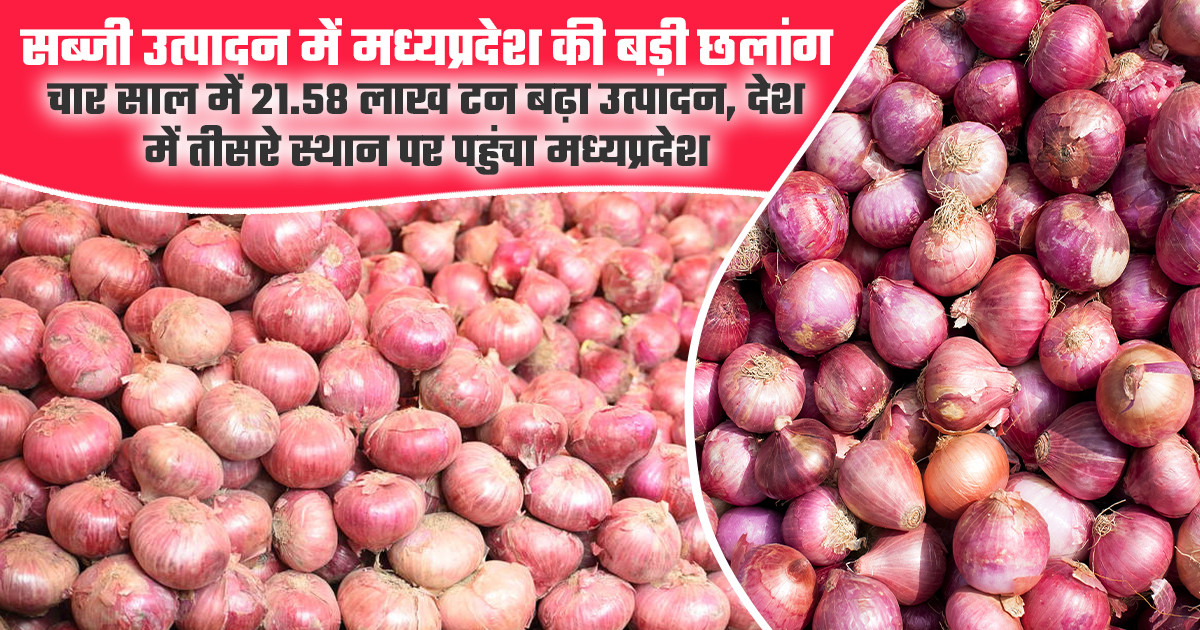
Madhya Pradesh has significantly strengthened its position among India’s leading horticulture states, recording remarkable growth in vegetable production over the past four years. The state has added nearly 21.58 million tonnes of vegetable output during this period, helping it secure the third position in the country in terms of vegetable production. The state government is now focusing on expanding vegetable cultivation to improve farm incomes and make agriculture more profitable and sustainable for farmers.
The year 2026 is being observed as the “Farmer Welfare Year” in Madhya Pradesh. The government believes that increasing farmers’ income requires equal emphasis on horticulture, animal husbandry, fisheries, and food processing alongside traditional crop cultivation. With this objective, a dedicated strategy has been prepared to promote vegetable cultivation, particularly among small and marginal farmers, enabling them to earn higher returns from limited land holdings.
Vegetable production in the state has shown consistent growth in recent years. Total production increased from 236.41 lakh metric tonnes in 2022-23 to nearly 258 lakh metric tonnes in 2024-25. Experts attribute this growth to favorable climatic conditions, expansion of irrigation facilities, adoption of modern farming technologies, and increasing farmer participation in vegetable cultivation.
Madhya Pradesh now plays a vital role in India’s overall vegetable production and nutritional security. Besides meeting domestic demand, vegetable farming has become an important source of income for millions of farmers across the state. Agricultural experts believe that expanding vegetable cultivation is essential for crop diversification, nutritional security, and long-term agricultural sustainability.
Onion Cultivation Continues to Expand:
Onion cultivation remains one of the most important segments of the state’s horticulture sector. The area under onion cultivation has steadily increased from approximately 2.17 lakh hectares in 2022-23 to nearly 2.30 lakh hectares in 2024-25. Rising market demand, better price realization, and improved marketing opportunities have encouraged farmers to shift toward onion cultivation. Apart from onions, the state also produces large quantities of potato, tomato, brinjal, cauliflower, cabbage, peas, okra, spinach, bottle gourd, bitter gourd, radish, carrot, capsicum, and several other vegetables.
Expansion Plan Covering 54,000 Hectares:
The Department of Horticulture and Food Processing has set a target to expand vegetable cultivation across 54,000 hectares in the coming years.
The proposed expansion includes:
Technology to Improve Productivity:
The government is promoting modern agricultural practices by providing quality seeds, improved planting material, micro-irrigation systems, and protected cultivation technologies. These initiatives are expected to improve both productivity and production levels. Farmers are also being supported through better marketing infrastructure, technical guidance, and market linkage initiatives to ensure better returns.
Vegetable Sector to Generate Rural Employment:
The benefits of vegetable cultivation extend beyond farming. The sector also creates employment opportunities in transportation, storage, processing, packaging, and marketing activities. Thousands of people in rural areas are directly and indirectly dependent on the vegetable value chain. Experts believe that the expansion of vegetable cultivation can play a crucial role in enhancing farm incomes, strengthening nutrition security, and accelerating rural economic growth.
Key Highlights:
FAQs:
1. Why is Madhya Pradesh becoming a leading vegetable-producing state?
The state has expanded irrigation, adopted modern farming technologies, promoted horticulture, and encouraged farmers to diversify into vegetable cultivation.
2. How much has Madhya Pradesh vegetable production increased?
Vegetable production has increased by nearly 21.58 million tonnes over the last four years.
3. What is the government's target for expanding vegetable cultivation?
The government plans to expand vegetable farming across 54,000 hectares in the coming years.
4. Which vegetable occupies the largest expansion area?
Onion cultivation has the highest proposed expansion with 16,500 hectares, followed by potato and tomato cultivation.
5. How will vegetable farming benefit farmers?
Vegetable farming offers higher income potential, year-round employment opportunities, crop diversification, and better market returns, especially for small and marginal farmers.