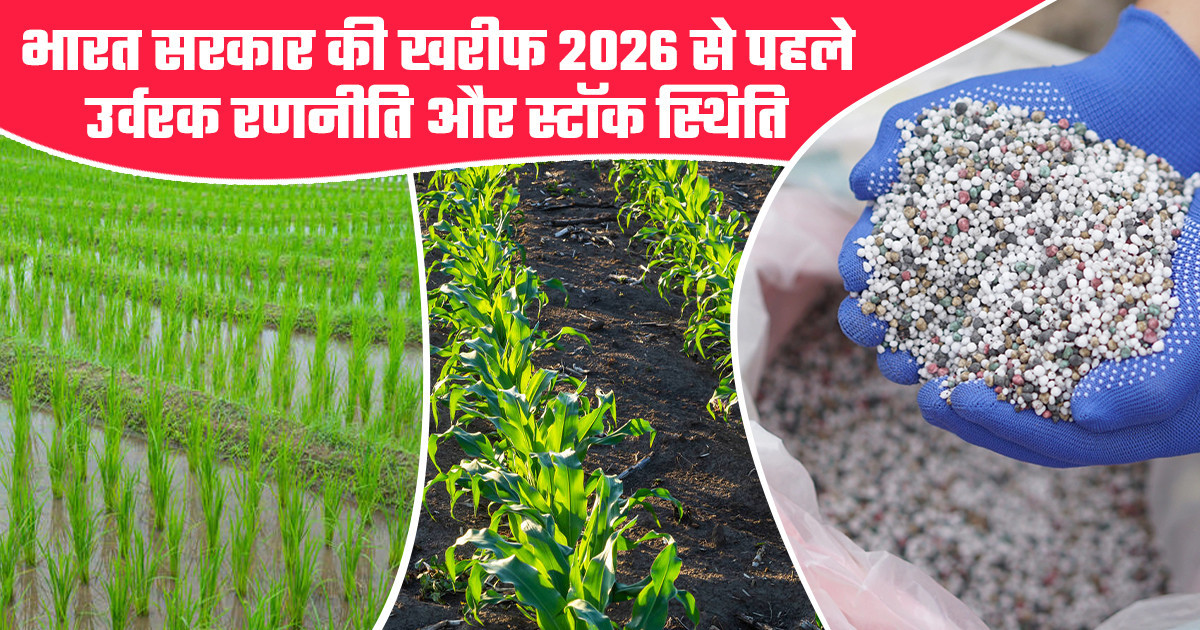
The Kharif 2026 sowing season is gradually gaining momentum across the country, with total crop coverage reaching 11.99 million hectares by mid-June. The sown area is approximately 0.19 million hectares higher than the corresponding period last year, indicating a positive start to the season despite weather uncertainties. Early sowing trends reveal increased acreage under rice, moong, bajra and maize, while soybean and cotton have witnessed a decline. The changing cropping pattern reflects farmers’ efforts to adapt to evolving weather conditions and market dynamics.
Rice acreage has shown a significant increase during the early phase of the Kharif season. The area under paddy cultivation has reached 1.24 million hectares, registering an increase of over 0.42 million hectares compared to the previous year. Favourable pre-monsoon rainfall in several regions has encouraged farmers to begin paddy sowing earlier, and experts believe that continued rainfall activity could further expand rice acreage in the coming weeks.
Pulse cultivation has recorded a modest increase, with moong emerging as the fastest-growing crop in the category. The area under moong cultivation has expanded to 0.41 million hectares, showing a substantial rise over the previous year. Arhar acreage has remained largely stable, while urad cultivation has declined slightly. Agricultural experts attribute the higher moong acreage to increasing market demand, better price realization and continued government support for pulse production.
Coarse cereals and millets have witnessed notable growth during the current sowing season. Bajra acreage has increased considerably, while maize cultivation has also expanded. The growing preference for these crops is linked to their lower water requirements and better adaptability to changing climatic conditions. As concerns over water availability and weather variability continue, farmers are increasingly adopting resilient crop options.
Oilseed crops have shown mixed trends during the current season. While groundnut and sunflower acreage has improved, soybean cultivation has declined significantly. Cotton has recorded the sharpest fall among major Kharif crops. Lower sowing area in cotton-producing regions may be linked to delayed monsoon activity, uncertain market conditions and shifting farmer preferences toward alternative crops.
Sugarcane and Jute Maintain Stability:
Sugarcane cultivation has remained stable with a slight increase in planted area. Similarly, jute and mesta crops have also shown marginal growth compared to the previous year. The steady performance of these crops provides some stability to farmers in the respective growing regions and supports rural agricultural economies.
Low-Water Crops Gain Importance:
With concerns over uneven rainfall and the possibility of a weaker monsoon in some regions, farmers are increasingly adopting short-duration and low-water-consuming crops. The expansion of bajra, maize, moong and other resilient crops highlights the growing importance of climate-smart agriculture. Experts believe that crop diversification can reduce production risks and improve farm resilience under changing weather conditions.
Monsoon Progress Will Determine the Season:
Agricultural experts indicate that the coming weeks will be crucial for the Kharif season. Monsoon progress, rainfall distribution and soil moisture conditions will significantly influence final crop acreage and production levels. If rainfall remains favourable, the country may witness improved Kharif output. However, in areas experiencing rainfall deficits, alternative cropping strategies, efficient water management and timely advisories will play a critical role in safeguarding farm productivity.
Changing Crop Choices Reflect New Farming Strategies:
The early Kharif sowing trends suggest that farmers are gradually adjusting their crop choices in response to climate variability, water availability and market conditions. Increased cultivation of pulses, millets and low-water crops may help strengthen agricultural resilience and improve long-term sustainability in Indian farming.
FAQs:
Q1. What is the current progress of the Kharif 2026 sowing season?
The total sowing area has reached around 11.99 million hectares, showing a slight increase over last year.
Q2. Which crop is leading in growth this season?
Rice and moong cultivation are showing the strongest growth trends.
Q3. Why are farmers shifting to bajra and maize cultivation?
Due to lower water requirements and better climate adaptability.
Q4. Which crops are seeing a decline?
Soybean and cotton cultivation have recorded a decline this season.
Q5. What factors will impact final production?
Monsoon progress, rainfall distribution, and soil moisture levels will be key factors.